Photo credit: SvetlanaSF/Shutterstock.com
You know the feeling: opening the safe, fingering a handful of cartridges that looked brilliant at the gun counter but haven’t seen daylight in years. Some of those rounds are guilty of overpromise — exotic ballistics that translate to more recoil, expense, or meat damage than usefulness. Others are perfectly fine on paper but get ignored because ammo is scarce, reloading parts are pricey, or local game laws and terrain make them a poor match. I’ll walk you through thirteen centerfire rifle calibers that often end up collecting dust when hunters start packing for season. Some deserve the bench; others are underrated or niche and only shine in the right hands and conditions. You’ll get practical reasons you’ll probably leave them home, and what situations — if any — might still make them worth a chambering.
.204 Ruger

The .204 Ruger is an engineering success: flat-shooting, very fast, and excellent on varmints. It falls down as a general hunting cartridge because it’s simply too light for medium game. The small .204 projectile delivers superb trajectory and minimal wind drift, but terminal performance on anything bigger than coyotes is marginal. Hunters who expect quick, humane knockdown on deer will find the .204 lacking, especially with broadside shots that require deep penetration and bullet mass.
Beyond performance, availability works against it. Ammo selection is narrow compared with mainstream cartridges, and factory defensive or big-game bullets aren’t offered. If you handload, you can squeeze everything reasonable from it for varmint work, but most hunters want a go-to rifle that covers deer, hogs, and coyotes. The .204 lives in the varmint bench — it looks attractive in the safe, but when season starts for big game, it’s the cartridge you leave behind for something meatier.
.223 Remington / 5.56 NATO

The .223/5.56 is everywhere for a reason: low recoil, cheap ammo, and excellent for varmints and predators. But for many hunters it’s a shelf candidate when deer season rolls around. Ethics and laws in many states prefer or require larger calibers for deer-sized game, and for good reason: the .223’s light-for-caliber bullets often lack the weight and frontal area to consistently break shoulders or reach vitals through bone at hunting ranges.
That said, it’s popular for small-game and coyote work, and it’s perfectly fine when used with the right bullet and at close ranges. Still, most hunters want a cartridge that spans more roles without question. When you only have one rifle in the blind, you usually pick something with a bit more on-tap energy and a wider bullet selection — the .223 stays home unless you’re specifically chasing varmints or hunting in a jurisdiction that approves it for deer with restrictions.
.22-250 Remington

The .22-250 is a classic varmint round: blistering speed, flat arc, and tiny bullet diameters perfect for explosive impact on ground squirrels. That’s exactly why it sits on the shelf come deer season. The cartridge’s light bullets simply don’t transfer the kind of mass or frontal area modern hunters expect for ethical deer kills at common ranges. You can push a .22-250 to impressively flat trajectories, but you can’t force terminal performance appropriate for medium game.
Practical concerns matter, too. If you handload, it’s a great tool for dispatching pests. But when packing for the field where deer, elk, or hogs are the goal, you want something that tolerates bone, heavy muscle, and longer shot windows. Most of us choose to carry a cartridge that won’t leave you guessing about penetration and blood-trail distance — and that’s not the .22-250’s job. It’s accurate and fun, but its hunting role ends at varmints.
.243 WSSM

The .243 WSSM promised magnum-class speed in a compact package, and at first glance that sounds great for long-range deer work. What killed its popularity was the price of admission: it’s overbore in many rifles, chews through barrels quicker than conventional .243s, and factory ammo is scarce and pricey. The ballistic edge over a well-tuned .243 Winchester is real but modest, and many hunters concluded the trade-offs weren’t worth it.
You’ll see the WSSM in the safe of tinkerers and velocity fans, but come season it’s often benched for a standard .243 or a 6mm cartridge with more forgiving barrel life and ammo availability. If you love chasing marginal ballistics and don’t mind rebarreling sooner, it can be rewarding. For the practical hunter who wants a one-rifle solution with ample ammo choices, the WSSM is a cartridge that usually gets left behind.
6.8 SPC

The 6.8 SPC occupies a strange middle ground. It was developed to give AR-platform rifles more punch at intermediate ranges, and it’s fine for certain brush scenarios. But for many hunters the 6.8 SPC is a specialty round that’s easier to shelf than use. Compared to .308 or even .30-30, it doesn’t offer a big enough terminal advantage to justify carrying extra magazines of a niche caliber. Ammo and component prices and selection are narrower, too.
If you’re running an AR in dense country and want a bit more than 5.56 with manageable recoil, 6.8 can be a tidy fit. For general-purpose hunting where long shots, broad bullet selection, and quick availability matter, most hunters favor more conventional cartridges. The 6.8 gets dust on the shelf when you need a true all-around performer and don’t want to chase oddball ammo.
.30 Remington

The .30 Remington is an example of a cartridge that faded on practicality rather than ballistics. It did its job as a medium-game cartridge decades ago, especially in autoloading platforms, but wild declines in ammo and chambered rifle availability left it stranded. Modern shooters have plenty of superior, better-supported options: .308, .30-06, and others offer equal or better performance with abundant factory loads.
Collectors and nostalgic shooters still love that round, and a reloaded .30 Rem can be perfectly capable in a classic rifle. For a contemporary hunter packing for season, however, you don’t tote a cartridge that forces you to special-order ammo or hunt with a rifle that’s an orphan by choice. It’s one of those rounds that’s honest and decent on paper but impractical for the modern hunter who wants options and convenience.
.300 AAC Blackout

The .300 Blackout is brilliant for what it was designed to do: supersonic performance in short barrels and subsonic loads for suppressed shooting. But that duality is why it often sits on the shelf when you load up for deer or elk. Supersonic .300 BLK is workable for deer in close timber, but the cartridge’s real advantage requires specialized gear (suppressors) and niche loads. Subsonic loads, intended for stealth, almost never deliver the brisk terminal performance desired on larger game.
If you hunt in thick cover with suppressed rifles and know the limits of your load, .300 Blackout can be lethal. For the wide-open season where ranges, shot angles, and quick follow-ups matter, most hunters default to established deer cartridges that don’t force a compromise between stealth and stopping power. The .300 BLK looks tempting in the safe but often gets skipped for a straight-up deer round.
.300 Winchester Short Magnum (WSM)

Short magnums like the .300 WSM promise magnum power in a short action. On paper, that’s attractive, but in the field many hunters shelve these cartridges for practical reasons: heavy recoil, more expensive ammo, and marginal advantages over more temperate choices for typical hunting ranges. The .300 WSM can push heavy bullets fast, but the real-world gain versus a .300 Win Mag or a .270 Win is often academic for most hunts.
Additionally, heavy recoil affects shot placement, and meat damage becomes a concern if you’re inside a tree stand or packing out on foot. You’re paying for ballistic bragging rights more than a meaningful increase in terminal performance for common shot distances. Many hunters find a good .30-06 or .308 gives similar utility with less recoil and abundant factory loads — so the WSM sits on the shelf when season arrives.
.338 Lapua Magnum

The .338 Lapua is a long-range specialist’s cartridge: extreme energy, very flat at long range with heavy bullets, and capable of taking anything on the planet. For general hunting, it’s the poster child of “overkill.” Recoil, rifle weight, ammo cost, and the logistical headache of carrying big ammo make it a poor practical choice for most hunts. You wouldn’t take it into dense brush or carry it for a long glassing day.
Unless you’re pursuing very large, dangerous game at extended ranges where no other cartridge suffices, the .338 Lapua is unnecessary. Most hunters simply don’t need its range or terminal power and choose lighter, more versatile cartridges. It’s respected and fearsome in photos, but it’s not the pragmatic pick for most seasons — and that’s why it ends up gathering dust when you head to the field.
.450 Bushmaster

The .450 Bushmaster is a straight-walled big-bore designed for heavy-hitting performance in brush. For hunters who need a guaranteed one-shot shoulder stop on big hogs or in states that restrict cartridges, it’s a useful option. For many others, though, it’s a round that sits on the shelf due to heavy recoil, limited ammo selection, and over-application. Many common hunting scenarios don’t require a .450’s blunt force, and the meat damage and recoil trade-offs push hunters toward lighter, flatter cartridges.
It fills a niche superbly, but outside that niche it’s overkill. Most hunters wanting versatility pick a mid-power .30 or a 7mm that covers everything from deer to elk cleanly. Unless you’re in thick country where a heavy, large-caliber bullet is a clear advantage, the .450 Bushmaster is the sort of cartridge you admire at the counter and leave at home on opening day.
.257 Weatherby Magnum

The .257 Weatherby Magnum was sold on speed and a flat trajectory. In practice, it’s a high-performance varmint/deer round that demands attention: it’s overbore for its size, heats barrels fast, and factory ammo options have narrowed. The marginal speed advantage over more common 6.5mm or .25-caliber cartridges doesn’t offset the extra recoil, barrel wear, and cost for most hunters.
If you chase long-range whitetail shots and love ballistic cut-and-thrust, it has appeal. But for general-purpose hunting where you want ammo availability, easy reloading components, and minimal barrel concerns, that Weatherby steps outside the practical. Hunters prefer rounds that deliver predictable terminal performance and plentiful factory choices — that’s often why the .257 Weatherby ends up on the shelf.
7mm Remington Ultra Magnum (7mm RUM)

The 7mm RUM is an example of a magnum that promises reach and energy but is often ignored by everyday hunters. It’s powerful, flat-shooting, and capable of long-range elk and moose work. The problems are the same story as other ultra-magnums: punishing recoil, heavy rifles to soak it up, and expensive, heavy ammo. For most hunting scenarios — especially where shots are inside a few hundred yards — the advantages don’t justify the penalties.
Most hunters pick a 7mm Rem Mag, .300 Win Mag, or a .280 for similar real-world performance with less weight and less punishment. The 7mm RUM is superb when you need the absolute maximum and can manage the recoil and cost, but for typical season use it’s a cartridge you leave behind for something more user-friendly.
.35 Remington
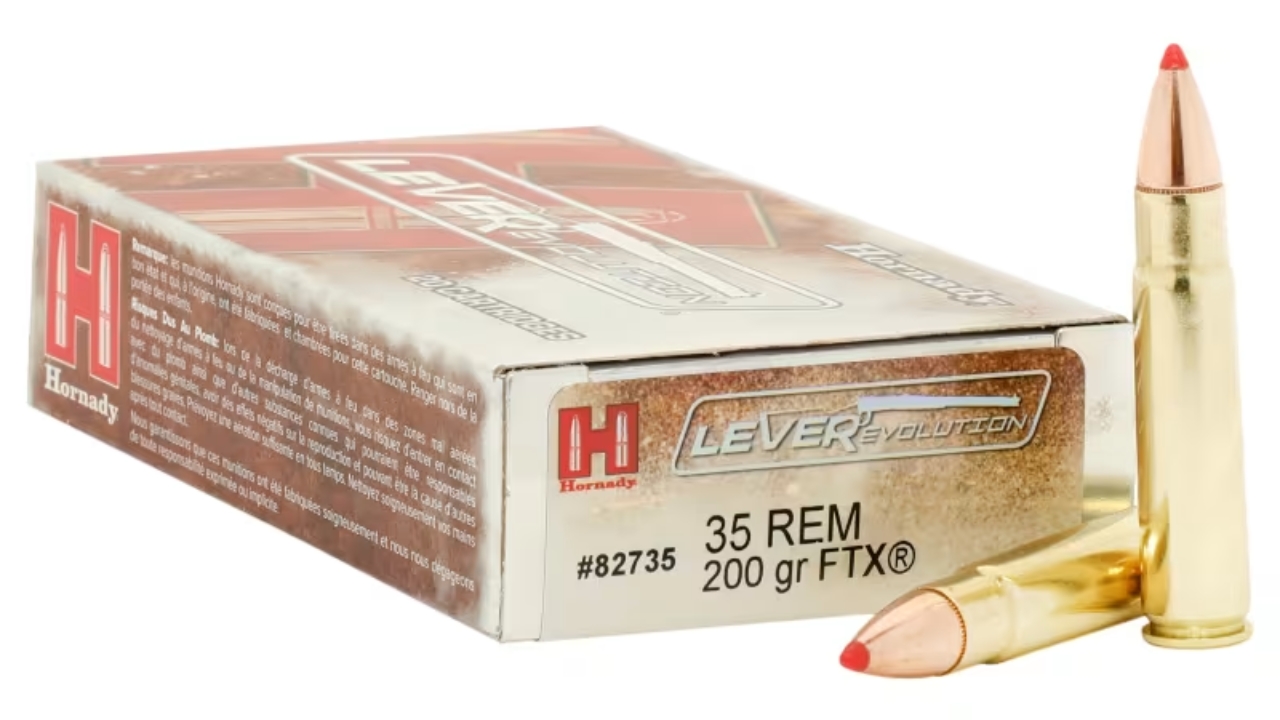
The .35 Remington is an honest, old-school woods caliber that’s underappreciated today. It isn’t flashy, and it doesn’t have the range or the velocity numbers that marketing loves, but it’s tough and practical in brush. Still, it tends to sit on the shelf during modern seasons because many hunters chase ballistic numbers and paper performance, favoring .30-cal or 7mm options with flatter trajectories and wider factory support.
That’s a shame, because in the right hands and ranges — brush and mixed timber — the .35 is a soft-shooting, effective stopper with good penetration and simpler reloading. The problem isn’t the cartridge so much as hunting trends: you’ll pack what you see recommended most, not what might be quietly ideal for local conditions. So the .35 Remington often collects dust despite being perfectly capable where its strengths matter.
*This article was developed with AI-powered tools and has been carefully reviewed by our editors.