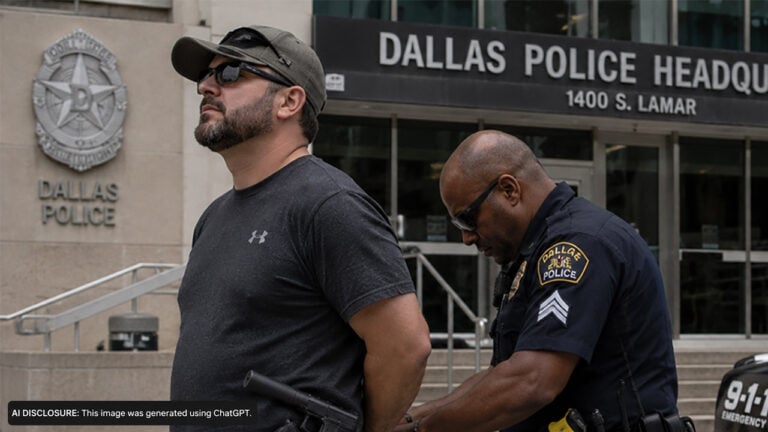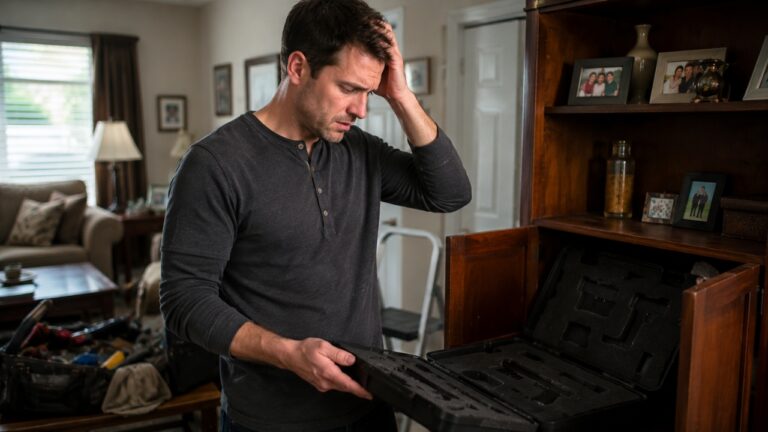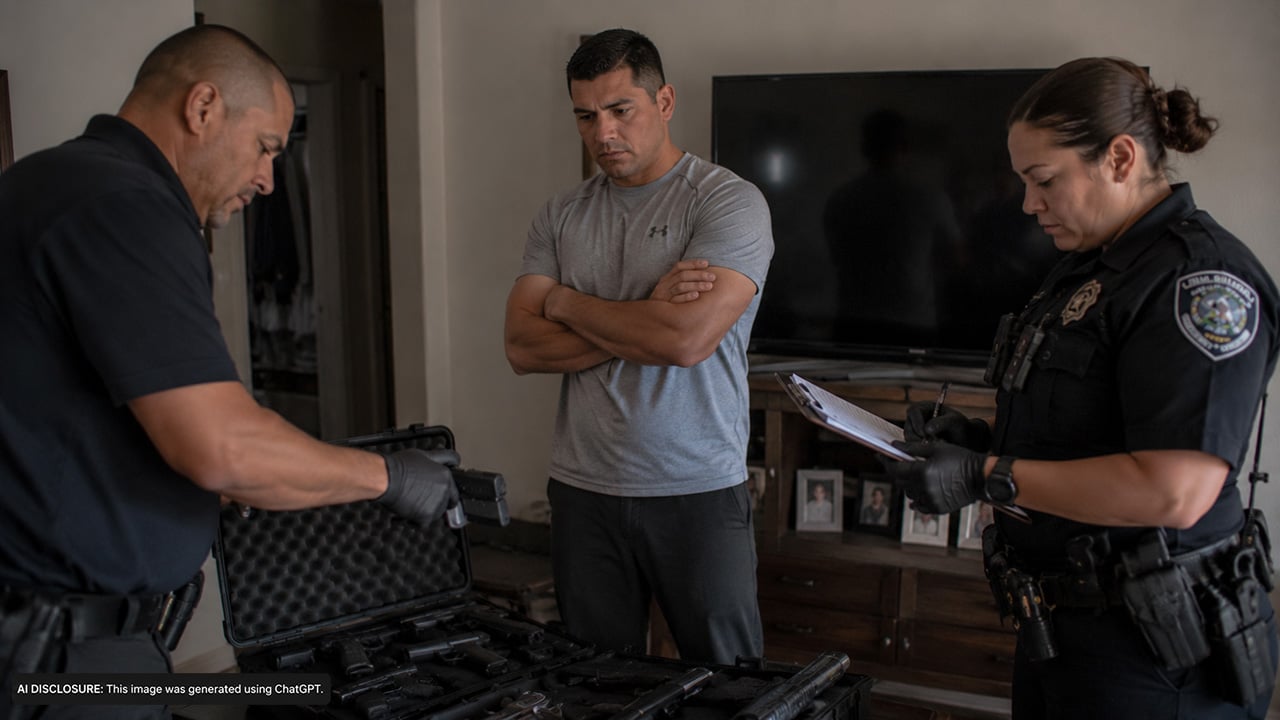
Photo credit: AI-generated image created using ChatGPT. Illustrative only
A lot of gun owners picture their worst-case scenario as a break-in, a carjacking, or some backcountry run-in where you wish you’d packed more than just a pocketknife. But sometimes the real gut punch is paperwork—fast paperwork—and the knock on the door that comes with it.
That’s the situation described in the original post, where a California gun owner reportedly had his concealed carry permit revoked and his firearms collected after an allegation that was later recanted. The details, as shared by a friend posting on his behalf, are the kind that make any parent and any gun owner sit up straight.
A family blow-up turned into a police report overnight
According to the account, the chain of events started with a plain, everyday parenting moment: an 11-year-old daughter was upset because her father wouldn’t let her play video games. The next day after school, she reportedly went into a police station and told officers he had thrown her to the ground the night before.
The friend says there were witnesses and even audio from that time period showing nothing like that happened. More importantly, the post claims the daughter later admitted to police—on a follow-up report the next day—that the allegation wasn’t true and that she said it because she was mad.
An ERPO and a CCW revocation came anyway
Here’s where the story takes the turn that’s hard for most outdoorsmen to swallow. Despite the reported recantation, the post says police issued an ERPO (an emergency restraining order intended to temporarily remove firearms from someone deemed a risk) that same day. The concealed carry permit was revoked as part of that process.
The gun owner now has a hearing set in November to appeal the CCW revocation. If you’ve never been through anything like this, that wait alone is enough to tie your stomach in knots—because in the meantime, your rights and your routine are already altered. No carry. No guns in the safe. And a whole lot of uncertainty about what comes next.
Police came for every firearm—and he complied
The post states that because of the ERPO, he had to surrender his firearms and did so without a fight. That detail matters. In the real world, compliance tends to keep a bad situation from turning into a catastrophic one, especially when emotions are running high and you’ve got family involved.
It’s also the moment that hits hunters and sport shooters the hardest: guns aren’t just “items” to most of us. They’re tools we’ve saved for, trained with, maybe used to put meat in the freezer or protect livestock. Losing access to them—even temporarily—can feel like getting benched from part of your own life.
The “grandfathered” AR problem is where it gets serious
The friend posting says two of the surrendered firearms were ARs that are legally registered “assault weapons” under California’s grandfathering scheme. And the police allegedly told him those rifles can never be transferred back to him—meaning he’s lost them permanently—even though the allegation that kicked the whole thing off was reportedly false and recanted.
That’s a very specific California nightmare. Those registered rifles sit in a narrow legal lane, and owners know the rules are strict. What’s being described here isn’t just a temporary loss of access while a court date is pending. It’s the fear that once those rifles leave your possession under an ERPO, you may not be able to get them back at all, regardless of how the underlying allegation shakes out.
If you’re a working guy who follows the rules, registers what the state demands, and keeps your nose clean, the idea that you can still lose property permanently based on an accusation—especially one that was reportedly walked back—lands like a punch.
What he’s up against at the appeal hearing
The post asks what to expect at the CCW revocation appeal hearing and how to prepare. Without getting into legal advice, there are some practical realities gun owners should understand when they end up in a “prove you’re not a problem” posture.
First, this isn’t like talking your way out of a speeding ticket. When carry privileges and protective orders are involved, paper trails matter. The friend says there are witnesses and audio, and that the child admitted the allegation wasn’t true in a follow-up report. Those are the kinds of things that typically need to be organized, documented, and ready to present in a clean, credible way—ideally through an attorney who knows the local process.
Second, time is not your buddy. There’s a hearing scheduled months out. In the meantime, it’s easy for memories to get fuzzy, phones to get replaced, files to get lost, and witnesses to get hard to pin down. Practical preparation often means preserving everything—screenshots, recordings, written timelines, names, dates, and any official documents served—so the story stays consistent and provable.
Third, a lot of sheriffs and issuing authorities treat CCW as “may issue in practice,” even when the law has shifted over the years. A revocation hearing can feel less like “innocent until proven guilty” and more like “show us why we should trust you again.” That’s not how it should feel, but anyone who’s dealt with permitting in a restrictive state knows the tone can be harsh.
The options that matter most: documentation and a real 2A lawyer
The friend also asks if there’s any way to fight the permanent loss of those registered ARs, and whether anyone can recommend a California Second Amendment lawyer who handles CCW revocations and firearm return issues. That’s the part of the post that reads like a man realizing he’s in deep water.
When you’re dealing with ERPOs, firearm surrender, and a carve-out category like registered “assault weapons,” you’re not just arguing feelings and fairness. You’re dealing with procedures, deadlines, property return rules, and whatever policies the agency follows. One missed step can turn “temporary surrender” into “sorry, can’t do it.”
Out in hunting and fishing circles, we like to solve problems ourselves—fix the fence, patch the roof, swap the fuel filter, re-zero the rifle. This is one of those times where doing it yourself can cost you. The post is essentially a plea for a lawyer who knows this niche: permit revocations and firearm returns, including tricky registered firearms.
And if you’re reading this thinking, “It could never happen to me,” keep in mind how fast this reportedly unfolded: a kid gets mad, a report gets made, and within days a man is disarmed, his permit is gone, and he’s being told some of his property may never come home.
For gun owners, especially parents, the lesson isn’t to be paranoid—it’s to be prepared. Keep your carry paperwork squared away. Store firearms safely. Document what matters when a situation starts turning sideways. And if the state comes at your rights with an emergency order, don’t treat it like a minor headache. Treat it like a wildfire: early action is the difference between a scare and a loss you can’t undo.
Like The Avid Outdoorsman’s content? Subscribe to our newsletter so you never miss an article.
Here’s more from us: