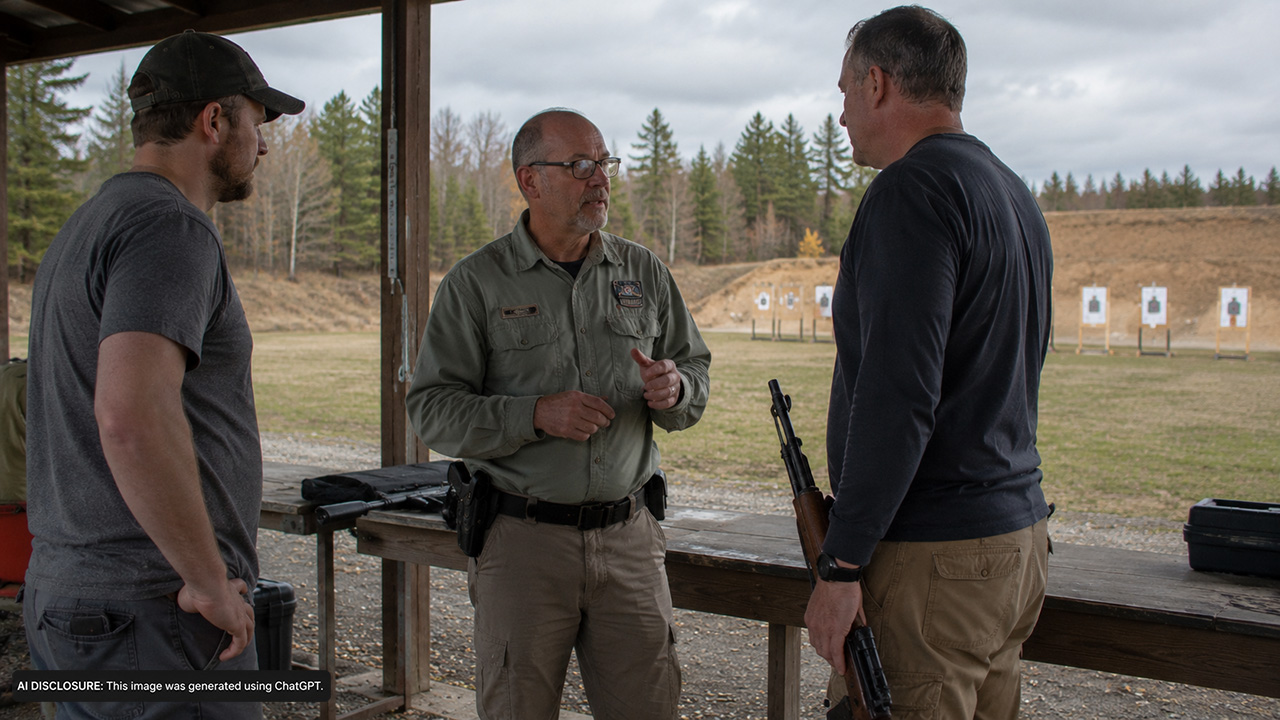
Photo credit: AI-generated image created using ChatGPT. Illustrative only
A surplus rifle can be a whole lot of fun right up until it reminds you why it was cheap and why old military guns demand respect. That’s what one Texas range trip turned into when an SKS reportedly went from normal semi-auto to an uncontrolled burst that didn’t stop until it jammed. The shooter walked away unhurt, but the range day ended with property damage, a serious safety scare, and the kind of attention nobody wants.
The details came from the original post, where the person holding the rifle described a Memorial Day outing that spiraled fast: a friend brought a “new” surplus SKS he’d paid $600 for, a few people shot it without incident, and then everything went sideways on the next magazine.
A normal range session turned into a runaway gun
According to the account, the rifle had run fine for “a few times” with multiple shooters. Then the poster inserted a fresh magazine and charged the SKS. At that moment, something in the firing system apparently failed in a way SKS owners have heard about for decades: the firing pin seemed to stick forward.
With the firing pin stuck, the rifle reportedly began slam-firing—igniting rounds as the action closed—until it ripped through about seven rounds in a hurry. The shooter said the burst caused him to lose control of the gun, and it only stopped when the rifle suffered a stovepipe jam.
Why slam-fires are a special kind of bad at a public range
A negligent discharge is one thing. A runaway semi-auto that suddenly behaves like a machine gun is another, because it overwhelms the shooter’s ability to manage direction, recoil, and trigger control—all while everyone else on the line is trying to figure out what’s happening.
In this case, the shooter said he only had his right hand on the rifle when charging it, and when the rifle started firing on its own, “everyone ducked out of the way.” That’s the nightmare scenario: even if the muzzle stays generally downrange at first, a surprise burst can torque the gun, shift your stance, and turn a “safe” lane into an unpredictable one in a heartbeat.
This is also where range staff tend to get very serious very quickly. When a rifle unexpectedly dumps rounds fast, the first assumption from bystanders is often, “Someone brought a full-auto,” whether that’s true or not. The second assumption is, “That shooter is out of control,” which is the part that gets people escorted out.
The damage wasn’t theoretical—two holes in a truck and a flat tire
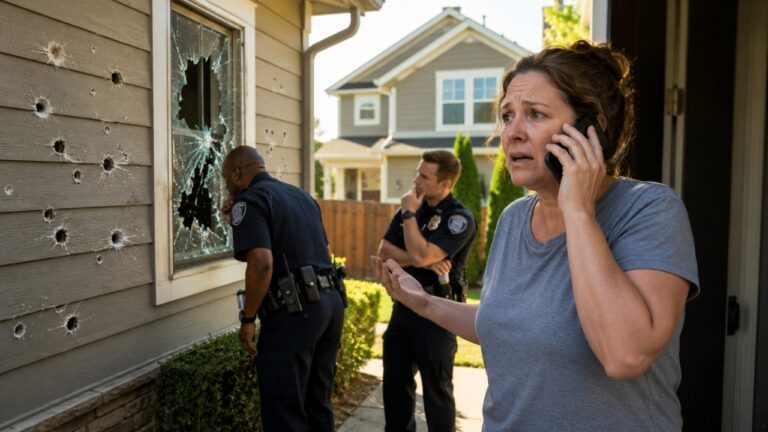
Once the rifle stopped, the immediate good news was that nobody was hit. The bad news showed up in the parking area. The poster said the owner’s truck—described as a relatively new 2016 Ford F-350—had two bullet holes in the truck bed and a flat tire.
That detail matters because it takes the story out of the realm of “range scare” and into dollars and responsibility. A stray round or two is all it takes to punch through sheet metal, wiring, and anything else in the wrong place. The poster later added an edit saying his friend texted him that the body shop was talking “over 6k worth of damages.”
Even if the dollar figure ends up changing, it’s easy to see how a modern truck can get expensive fast—especially if the tire, wheel, bedside, and anything behind that panel got tagged.
The fault line: “Your rifle malfunctioned” vs. “You were holding it”
The heart of the dispute wasn’t whether it happened. It was who should pay for the results. The shooter’s position was straightforward: it was the friend’s rifle that malfunctioned, so it should be the friend’s responsibility—similar to how a catastrophic equipment failure would be on the owner if it injured someone.
The rifle owner pushed back. He reportedly claimed the shooter had his finger on the trigger when he charged the SKS. The shooter responded that this was “impossible” on that rifle while charging it, which lines up with how most folks handle an SKS: your support hand is typically working the bolt/charging handle while your firing hand is on the grip, and proper technique keeps the trigger finger indexed outside the guard anyway.
Still, arguments like this are common after any gun incident. The owner wants to believe it was user error. The shooter wants to believe it was mechanical. And somewhere in the middle is the uncomfortable truth that both can matter: an old gun can be mechanically vulnerable, and a moment of less-than-perfect muzzle control during a malfunction can still put rounds where they don’t belong.
Where the range response changes everything
The headline angle here is what happened after the burst: the range master reportedly called police and had both men escorted out. That part tracks with how many public ranges handle any uncontrolled rapid fire, accidental discharge, or rounds leaving the intended impact area.
From a range operator’s perspective, it’s not a courtroom. It’s an immediate safety decision. If staff believes a shooter lost control of a firearm—whether due to equipment failure, panic, poor handling, or some mix of all three—they’ll shut it down, separate people, and call law enforcement if they think it’s necessary to document what happened or to keep the peace.
There’s also the machine gun question hovering in the background. A slam-fire out of a semi-auto can sound like illegal full-auto to anyone standing nearby. Even if everyone eventually agrees it was a malfunction, the range may still treat it as a major violation because the outcome—uncontrolled rounds—is what matters most on a firing line.
old surplus guns demand maintenance and a plan
This is a good reminder that “surplus” often means “unknown history.” An SKS can be a solid, simple rifle, but it’s also a platform where a dirty firing pin channel, cosmoline, stuck pin, or worn parts can create real problems. If you’re the owner bringing one to the range, it’s on you to make sure it’s inspected, clean, and running correctly before handing it to buddies.
And if you’re the guy accepting the invite to shoot someone else’s rifle, it’s smart to treat it like a test drive. Load one round first. Get a feel for the trigger reset and cycling. Keep the muzzle glued downrange. And if anything feels off—light primer strikes, weird reset, unexpected doubling—stop right there and clear it.
On the money side, the hard lesson is that friendships get expensive when bullets hit property. The cleanest path is usually the simplest one: document the damage, be honest about what happened, and handle it like adults. Because the minute police get involved at a public range, the situation stops being “a buddy’s truck bed” and starts being an official incident with consequences far beyond a repair bill.
Like The Avid Outdoorsman’s content? Subscribe to our newsletter so you never miss an article.
Here’s more from us: