Photo credit: The Avid Outdoorsman
Yard-sale guns are a funny thing. Most of the time they’re a dusty .22 in a soft case, a scope that’s seen better days, and a price tag that makes you feel like you stole it. But every once in a while, you get one that makes the hair stand up on the back of your neck—usually right about the time you start looking closely at the markings.
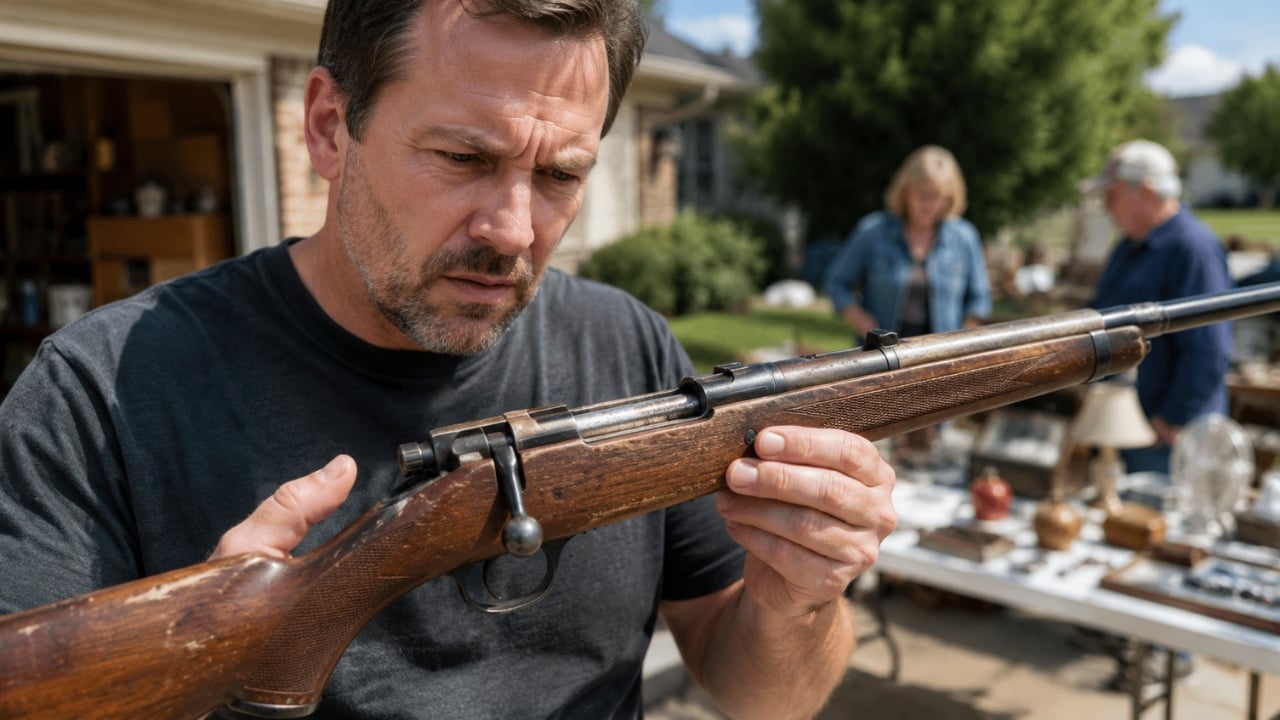
That’s what happened to one hunter who said he picked up a used bolt-action rifle off a folding table in a quiet neighborhood sale. The seller had a couple old tackle boxes, some hand tools, and the rifle sitting behind the rest like an afterthought. It came with a sling and a half-empty box of mismatched cartridges, and the story was simple: it belonged to a relative, it hadn’t been fired in years, and they wanted it gone.
The buyer did what a lot of folks do. He checked the bore, made sure it wasn’t loaded, worked the bolt a few times, and looked for obvious cracks in the stock. Everything seemed normal—until he got home, wiped the grime off the receiver, and took a hard look at the serial number.
The serial number didn’t look “normal”
Most hunters can’t tell you the year their rifle was made, but they can spot when something looks off. This one wasn’t just worn down from carry. The stamping looked uneven, like it had been struck twice in places. A couple digits didn’t match the depth of the rest. And around the number there were faint, shallow scratches that didn’t match the rest of the rifle’s honest wear.
That’s the kind of detail that makes a person stop thinking about sighting in for deer season and start thinking about where that gun has been. A gun with a questionable serial number can mean a few different things, and none of them are worth shrugging off.
He did the right first steps at home
Instead of running to the range, he treated it like any unknown firearm: cleared it again, kept it pointed in a safe direction, and set it on the bench under good light. He pulled the action screws and lifted the barreled action from the stock, looking for matching numbers or markings in hidden spots that might confirm what he was seeing on the outside.
That’s also when he noticed another odd detail—what looked like a replacement trigger assembly that didn’t match the rest of the rifle’s finish. Nothing about it screamed “danger” on its own, but it added to the feeling that this gun had been messed with.
From a practical standpoint, there are two lanes here: legality and safety. If the rifle has an altered or defaced serial number, that’s a legal mess nobody wants. And if someone has been swapping parts and sanding and refinishing without knowing what they’re doing, it can become a safety problem fast.
A quick call turned into a bigger decision
He started with what most folks start with: calling a local gun shop to ask how to check the manufacture date and whether “funny-looking” serial numbers happen on older rifles. The answer he got was what you’d expect from a shop that’s seen a little of everything—yes, old stampings can be rough, but uneven numbers and surrounding tool marks are a red flag.
At that point, he had a choice to make. Keep it, gamble, and hope it’s just old manufacturing and a sloppy refinish. Or bring it in to be looked at and risk finding out it’s something he shouldn’t possess.
That’s the part a lot of people don’t want to admit: doing the right thing can feel like stepping into trouble. But most of the time, ignoring it is what turns a small problem into a life-changing one.
Why a yard-sale rifle can come with baggage
Out in the country, guns get handed down and traded around like chainsaws. Sometimes paperwork never existed, and sometimes the original story gets lost after a couple estates and a divorce. A rifle can sit in a closet for 20 years and wind up on a card table because somebody doesn’t know what it is or doesn’t want it around.
But there’s another side to it that’s less comfortable. Stolen guns move through casual sales because they’re easy. A thief doesn’t have to walk into a gun store. He just has to find someone willing to pay cash and not ask questions. Even if the buyer is completely innocent, a stolen gun can still bring a headache when it gets traced back to the original owner.
And then there’s the serial-number issue. Sometimes a number is legitimately hard to read due to wear, rust, or an old, light stamp. Other times, it’s been intentionally altered. That’s where the situation goes from “interesting” to “put it down and make calls.”
Commenters and other hunters honed in on the same practical points
Whenever a story like this makes the rounds at the range or on hunting forums, the same themes pop up. First: don’t try to “fix” it yourself. People mean well, but scrubbing, polishing, or trying to make a number clearer can be interpreted the wrong way and can also destroy whatever evidence might show what happened.
Second: don’t go hunting with it “just this season.” A traffic stop on the way to the woods, a game warden checking rifles at a check station, or even a simple conversation at public land can put that rifle in the wrong spotlight at the wrong time.
Third: document what you can. If you bought a gun casually, write down where it came from, when, and any contact information you have for the seller. Even a screenshot of a neighborhood sale post or a text message helps establish that you weren’t trying to be sneaky.
Some folks also brought up a solid point: a competent gunsmith can often tell the difference between a factory stamp that’s ugly and a number that’s been altered. They can also spot dangerous shade-tree work—especially around triggers, safeties, and headspace-related parts.
What he could do next without making it worse
In a situation like this, the smart path is slow and boring. Secure the rifle, don’t transport it around unnecessarily, and don’t start tearing it up. If you have a receipt or any record of the purchase, keep it with your notes. If you don’t, write down everything you remember while it’s fresh.
From there, the options are pretty straightforward. Have a reputable gunsmith inspect it for safety and give an opinion on whether the serial number looks factory-correct for that make and model. If the number truly appears defaced or altered, the next step is talking with local law enforcement through the proper channels rather than trying to play detective yourself. And if the rifle turns out to be clean but just rough-looking, you still learned something: yard-sale guns can cost more in time and stress than they save in cash.
What stuck with me in this whole thing is how fast a “good deal” can turn into a long week. The woods have enough surprises—weather, wind shifts, and deer that disappear like ghosts. Your rifle shouldn’t be one of them. If a serial number makes you uneasy, trust that instinct, slow down, and handle it the same way you handle any other hunting problem: carefully, legally, and with safety first.