Photo credit: Theavidoutdoorsman.com
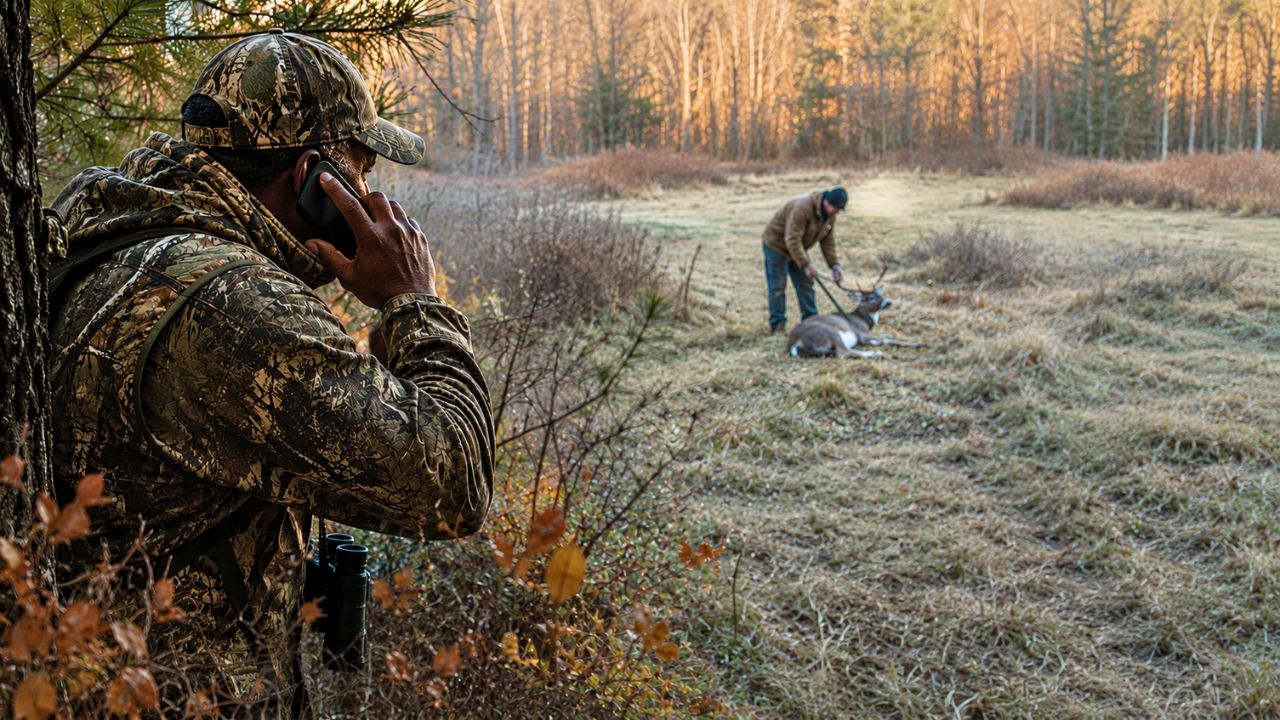
It happened the way a lot of rural problems happen—quiet, fast, and just far enough away that you’ve got a second to think before you do something you can’t undo. A hunter was glassing a cut bean field at last light when he caught movement on the far fence line. Through the binoculars, it wasn’t a deer slipping out. It was a person slipping in.
Then the shot cracked. A buck he’d been watching for weeks folded up, roughly 200 yards from his position. No orange, no clear line of sight to a safe backstop, and no behavior that matched a legal hunter working a plan. The hunter knew what he was looking at, and it wasn’t right.
The shot didn’t sound like a normal evening hunt
A legal hunter has a rhythm. Park in a sensible spot. Walk in with a light that isn’t sweeping the countryside. Ease into a stand or along a hedgerow. When the shot comes, it usually comes with a pause afterward—someone watching, listening, making sure the animal is down before moving.
This was different. The figure moved immediately, low and quick, like they were trying not to be seen. No pause to tag a deer. No visible pack frame or drag rope laid out. Just a straight line to the downed buck and a lot of urgency.
At that distance, the hunter couldn’t make out details like a license or whether the person had permission. But he could see enough to recognize the kind of “get in, get out” behavior that puts everybody on edge—especially when it happens on ground that’s posted or that butts up to private property boundaries.
He did what most of us say we’d do: observed, documented, and called
Instead of walking over there hot-headed, he stayed put and got eyes on the situation. He used his phone to zoom video as best he could, keeping the camera on the person, the deer, and any identifiable landmarks—fence corners, treelines, the edge of the field. He also watched for a vehicle.
That part matters. It’s easy to tell someone “I saw a guy poach a buck,” but it’s harder to prove without a plate number, a make and model, or footage that places the person where they shouldn’t be. In a lot of poaching cases, the cleanest evidence is the boring stuff: time, location, direction of travel, and what they were carrying.
With the deer down and the person working quickly, the hunter called the game warden. He expected the usual questions—where are you, are you safe, can you describe them, can you stay on scene. What he didn’t expect was the answer that came back.
The response he got: nobody can come until morning
The warden told him he couldn’t respond until the next day. Not because it didn’t matter, but because it was after hours and there wasn’t anyone available to come right then. In the real world, conservation officers cover big territories. Some counties have one officer. Some have one for several counties. Nights and weekends get thin.
That’s the part that frustrates hunters and landowners the most. Poaching isn’t a paperwork violation when it’s happening in real time. It’s a person with a weapon on the landscape, often near homes, roads, and other hunters. It’s also evidence that walks away.
On the phone, the hunter was stuck with a decision: do you keep watching and risk being spotted, or do you back out and hope your info is enough for a follow-up? The warden advised him not to confront the person and to stay safe. That’s good advice, even if it feels like swallowing a mouthful of gravel.
The risk wasn’t the deer—it was the human behavior
A lot of folks want to make these situations about antlers, but the real problem is people doing unpredictable things with firearms around property lines. If someone is willing to trespass and drop a buck under sketchy circumstances, you don’t know what else they’re willing to do when they realize they’re being watched.
At 200 yards, you’ve got distance, but you don’t have control. Closing that distance on foot, in fading light, with adrenaline running, is how bad decisions get made. Even a “polite” confrontation can go sideways when someone thinks they’re about to lose a deer, a rifle, or a truck.
The hunter stayed in cover and kept his focus on details: what the person dragged the deer toward, how they handled the carcass, and whether they crossed a fence line or ducked into a wooded ditch that led toward a road. That’s the kind of information that actually helps a case later.
Commenters zeroed in on the same things: cameras, plates, and boundaries
When hunters talk about situations like this, the comments usually split into two camps. One camp is all emotion—go get him, handle it yourself, don’t let it slide. The other camp is practical, and that’s where the good advice lives.
The practical crowd focused on documentation. Trail cameras on gates and pinch points. Cameras that catch plates, not just faces. Reflective address signs at entrances. Fresh paint on boundary trees. And clear communication with neighboring landowners, because a lot of “accidental” trespass starts with someone claiming they thought they were still on public ground or they “didn’t see the sign.”
Some also pointed out a hard truth: if the only enforcement presence is daylight hours, poachers learn that pattern. They’ll shoot late, load fast, and be gone before anybody with a badge can roll. That’s not a knock on wardens—it’s a staffing reality that rural folks live with.
What a hunter can actually do in the moment
In most places, you don’t have law enforcement authority just because you own boots and a deer tag. The smartest move is often the least satisfying one: don’t confront, don’t block vehicles, don’t point guns at people, and don’t turn a wildlife violation into a violence call.
What you can do is play it like an observer. Get safe. Get video if you can without exposing yourself. Write down the time of the shot, the direction they traveled, a description of clothing, the weapon type if visible, and any vehicle information. If they drive out, try to catch a plate number from a safe distance and note where they headed.
After that, you keep working the process. Stay in contact with the warden. Provide the footage. Offer to show the exact location in daylight. If it’s your property or you have permission to be there, mark the spot where the deer fell and where you saw them cross a fence line. Those little details can tie a person to a carcass later, especially if the deer turns up dumped, processed without a tag, or reported by someone else.
There’s also a community angle that matters: neighbors. When landowners and hunters communicate—who’s hunting where, what vehicles belong, what “normal” looks like—poachers stand out. Quiet coordination is often more effective than any single person trying to play hero.
When morning finally came, the hunter met the warden and walked him through what he saw. Maybe the buck was long gone by then. Maybe the evidence was thin. But the report still mattered, because patterns get built from reports—times, locations, and repeat behavior. That’s how a lot of these cases eventually get stopped: not by one perfect response, but by steady documentation from people who care enough to do it the right way.
Like The Avid Outdoorsman’s content? Be sure to follow us.
Here’s more from us: