Photo credit: AI-generated image created using ChatGPT. Illustrative only
It’s a sick feeling when you realize you’ve walked up to an airport checkpoint with something you never meant to bring. For one Florida gun owner, that mistake happened years ago—and now the bigger headache isn’t the embarrassment or even the charge. It’s the question of where his pistol actually went after it was taken.
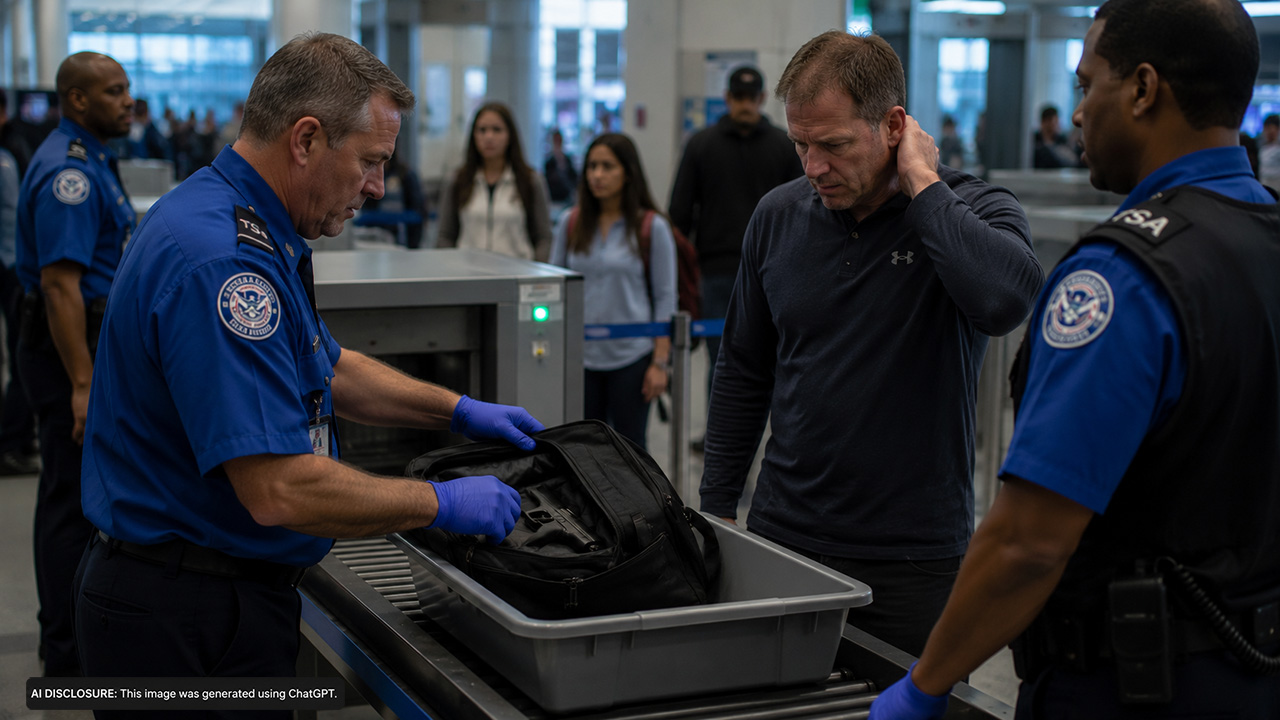
In the original post, the gun owner explained that he accidentally brought a legally owned firearm to a TSA checkpoint in Florida. He said he had a concealed carry permit, police were called, the gun was confiscated, and he was charged—something he believed was tied to carrying into a prohibited area, typically treated as a second-degree misdemeanor in that state.
A simple travel mistake turned into a years-long loose end
Most folks who carry regularly have a system: gun on belt, keys in pocket, wallet in the same place every day. That routine is exactly why airports can bite you. If you don’t have a hard “airport mode” checklist—unload, lock up, separate ammo, verify the bag—muscle memory can walk you right into trouble.
That’s what this sounded like: a genuine mistake, not some scheme. The gun owner said he was legally allowed to possess the pistol and had a carry permit. But the airport checkpoint is one of those bright-line places where intent doesn’t buy you much grace in the moment.
Police took the pistol, a charge followed, and then… nothing
According to the account, officers confiscated the firearm and a criminal charge was filed. The poster didn’t present it like a dramatic arrest story—more like a “this happened, I dealt with it” situation that many gun owners fear.
Then the paperwork side got murky. He said he was never formally fined by the court or by TSA, which he assumed might be because his financial situation was rough at the time. He also described appealing a fine using his tax return and then never hearing back.
That kind of silence can feel like a blessing—until years pass and you want your property back, or you need to know what’s still hanging out there with your name on it.
The real gut-check: trying to get it back without waking up old problems
After years, the gun owner now wants to see if getting the pistol back is possible. But he’s hesitant, and any experienced outdoorsman can understand why. Once you start calling agencies and asking questions, you lose control of the timeline and the attention your case gets.
He put it plainly: he doesn’t want to “poke the bear” and remind anyone of his case. That’s a common worry when someone isn’t sure whether an administrative penalty, a missed hearing, or some long-forgotten notice could still be lurking in a file somewhere.
He also noted another real-world complication: he no longer lives in Florida. Trying to resolve an old firearm confiscation across state lines isn’t impossible, but it usually means more phone calls, more waiting, and fewer easy in-person fixes.
Why “it was taken” doesn’t always mean “it’s where it should be”
The angle that makes this story hit hard for gun owners is the idea that a confiscated firearm should be traceable—booked, logged, stored, and retrievable if the law allows. In the real world, property rooms and evidence systems are run by humans. Transfers happen. Agencies change policies. Paperwork gets misplaced. Items can be logged under the wrong case number or wrong owner.
That’s why the most unsettling possibility in any confiscation story is that the firearm was never properly entered as evidence or property in the first place. If something isn’t logged correctly, it can be far harder to track down later, even if you’re completely entitled to it. The passage of time doesn’t help, either. Staff turnover alone can wipe out institutional memory.
And from a gun-owner standpoint, it’s not just about the cash value of the pistol. It’s about a firearm with a serial number tied to you—something you want properly accounted for, whether it comes home with you or not.
start with a firearms defense attorney
The poster asked the right kind of question: should the first call be to a local firearms defense attorney before contacting anyone else? When you’re dealing with an airport gun incident, there are usually at least two tracks—criminal court and administrative penalties—and they don’t always move in sync.
An attorney can help him figure out what actually happened in the case (not what it felt like happened), whether anything is still pending, and what the cleanest route is to request the firearm—if requesting it is even realistic after this much time. That also helps avoid the worst-case scenario of walking into a conversation blind and accidentally volunteering information that complicates things.
His other question—whether his fear of reviving a dormant TSA fine is valid—fits right in that lane. If there was an appeal, a dismissal, a missed deadline, or a bureaucratic “we sent a letter years ago,” you want someone who can read the docket and paperwork like a map, not like tea leaves.
For outdoorsmen who travel, there’s a lesson here that doesn’t require you to ever be in this spot: keep records. If an agency takes property, get receipts, case numbers, officer names, and the exact agency that physically took custody. If you ever need that gun back—or need to prove where it is—that paper trail is worth more than any spare magazine you packed.
In the end, this isn’t just about one guy’s long-ago checkpoint mistake. It’s a reminder that once a firearm leaves your possession under official custody, you want it documented like your hunting license and your land deed—clean, clear, and hard to dispute. If the system didn’t do its part, getting answers years later can be the toughest part of all.
Like The Avid Outdoorsman’s content? Subscribe to our newsletter so you never miss an article.
Here’s more from us: