Photo credit: The Avid Outdoorsman
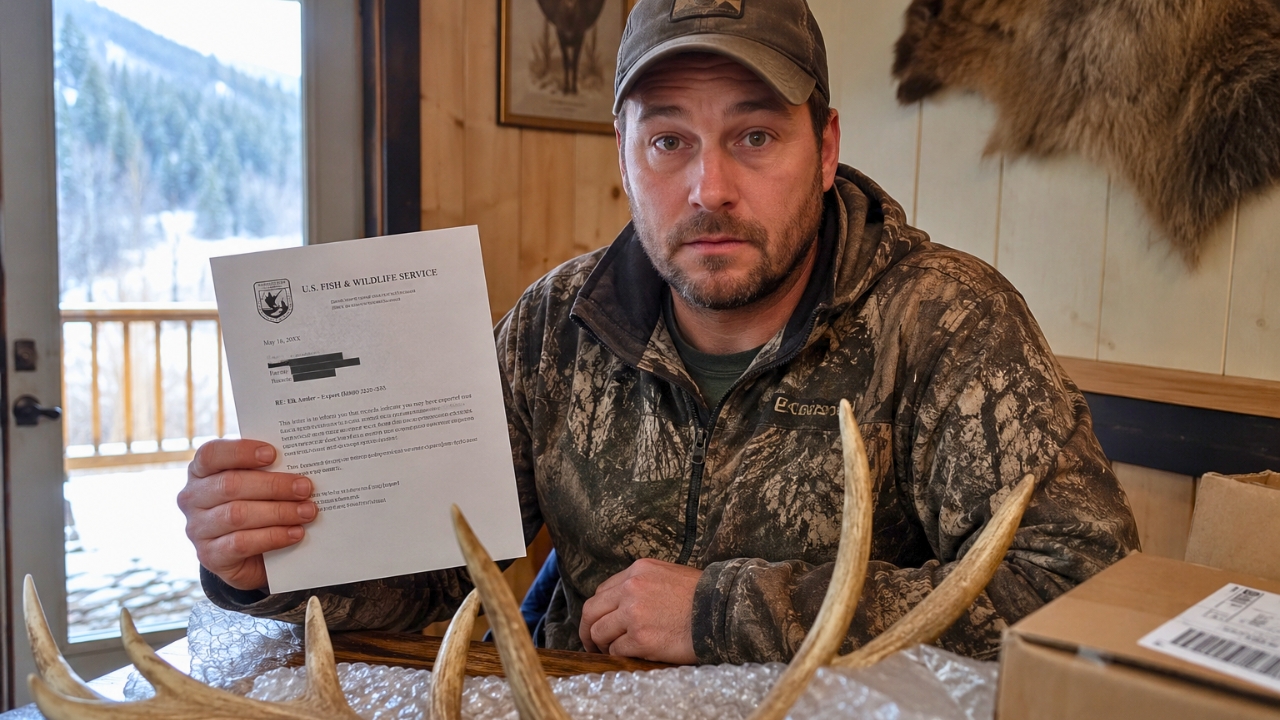
He’d done everything the way most of us would. Packed his bags, flew home, and paid a shipper to send the bulky stuff later. The guided elk trip was over, the meat was processed, and the antlers were headed back to Colorado in a long cardboard crate with enough tape to survive a rodeo.
Then the call came. Not from the outfitter. Not from the shipping company. From federal wildlife officers asking questions about a permit the hunter didn’t know he needed.
When a “trophy shipment” crosses a line you don’t see
On a lot of guided hunts—especially when you’re traveling—shipping is part of the package or at least part of the plan. Antlers are awkward on airplanes, capes need refrigeration, and most folks don’t want to wrestle with a bloody cooler at baggage claim. So you pay a local taxidermy shop or freight service to box it up and get it headed toward home.
The problem is that “home” isn’t always just another state. On certain hunts, that shipment can count as a wildlife export depending on where the animal was taken and where the crate travels before it lands at your door. Even if your zip code is the same and you’re a U.S. citizen, the route the package takes—and the exact species—can put you into federal paperwork territory fast.
The missing permit that can turn into a real headache
In this case, the hunter believed he was simply shipping legally taken elk antlers as personal property. The guided trip had been booked through a reputable operation, tags were filled correctly, and the hunter had no reason to think a set of antlers would trigger federal attention.
But wildlife shipments are tracked in a way most hunters don’t think about. Carriers scan labels, cargo moves through hubs, and some types of animal parts get flagged when they hit certain inspection points. If a shipment is treated as an export, federal rules can require an export permit (and sometimes inspection) before it leaves the country or even when it transits through certain channels.
That’s where things got sticky: US Fish and Wildlife reportedly contacted the hunter after the shipment had already been sent, asking why the required export paperwork wasn’t attached to the crate or filed ahead of time.
How hunters get caught in the gap between outfitter, shipper, and law
This is the kind of mess that happens when everyone assumes someone else handled it. The hunter assumes the outfitter knows the system. The outfitter assumes the shipper knows the system. The shipper assumes the hunter is handling any permits. Meanwhile, the crate is moving.
Guides are great at putting you on animals and keeping you safe in the field. They’re not always freight brokers. Taxidermy shops are great at capes and turning cartilage into clean bone. They’re not always experts in export rules, port inspections, and federal forms.
And here’s the kicker: “I didn’t know” doesn’t usually fix it once the box is already in the system. If officers believe the shipment violated a regulation, they can seize the parts, delay delivery for weeks or months, and require proof of lawful take and lawful transport before anything moves again.
What the hunter likely had to prove right away
When federal wildlife officers start asking about a crate, the first thing they generally want is a paper trail. Not stories. Paper. A hunter in this spot usually needs to round up a stack of documents quickly: hunting license and tag details, harvest report confirmation, a signed statement or receipt from the outfitter, and shipping receipts that match what’s in the box.
They may also want photos of the animal in the field and the antlers prior to packing. It sounds silly, but those time-stamped “grip and grin” shots can help show that the parts came from a legal hunt and weren’t swapped or substituted somewhere along the chain.
Then comes the permit issue itself. If the shipment truly met the definition of an export and lacked the required permit, the hunter’s options typically narrow to compliance and damage control: work with the agency, correct paperwork if possible, and be prepared for delays and potential forfeiture if the agency decides the shipment can’t be cleared.
What hunters online zeroed in on: “Who arranged shipping?”
When stories like this make the rounds in hunting circles, the comments usually split into two camps. One camp says it’s on the hunter to know every rule, every time, no matter what. The other camp points out the obvious reality: when you’re paying for a guided trip, you expect the “logistics” side to come with at least a checklist of what’s required.
A lot of hunters tend to focus on one practical question: who booked the shipment and whose name was on the paperwork? If the taxidermy shop arranged everything under their account and labeled it in a way that triggered export handling, that matters. If the hunter personally filled out the shipping form and didn’t mark something correctly, that matters too.
Another common theme is transit routes. Hunters have learned the hard way that packages don’t always go the way you think. A crate can bounce through a major hub, cross a border on a plane route, or end up in an inspection facility simply because of how carriers move freight. From the hunter’s perspective, it left Point A and was headed to Point B. From the shipping world’s perspective, it can be a whole different story.
How to keep your next trophy shipment from becoming an investigation
This isn’t a “don’t ship trophies” warning. It’s a “slow down and verify” warning. If you’re traveling for big game—especially out of state, out of country, or anywhere near an international border—ask specific questions before the hunt and again before anything leaves the shop.
Start with three basics: What permits (if any) are required for the species and the parts you’re shipping? Will the shipment be routed through any place that triggers inspection or export handling? And who is responsible for filing paperwork—hunter, outfitter, or shipper?
Also, keep your own folder. Screenshot confirmations. Photograph tags. Save receipts. Write down the date and location of harvest and the outfitter contact info. If an officer calls, you want to be able to answer with documents in minutes, not scramble for them over a week while your antlers sit in a warehouse.
The hard truth is that most of these situations don’t start with a poacher. They start with a normal hunter trying to do a normal thing, and running into a regulation that lives in the fine print. The best defense isn’t an argument—it’s paperwork, a clean chain of custody, and making sure that crate is as legal on the shipping dock as it was in the back of the truck.
Like The Avid Outdoorsman’s content? Be sure to follow us.
Here’s more from us: