Photo credit: The Avid Outdoorsman
The carrier probably thought the hard part was over.
He had driven to Costco, parked at the gas pump, and was doing one of the most ordinary errands a person can do. Get out, fuel up, maybe watch the price climb faster than it should, and leave. Nothing dramatic. Nothing tense. Just a normal stop.
Then his seat belt changed the whole mood.
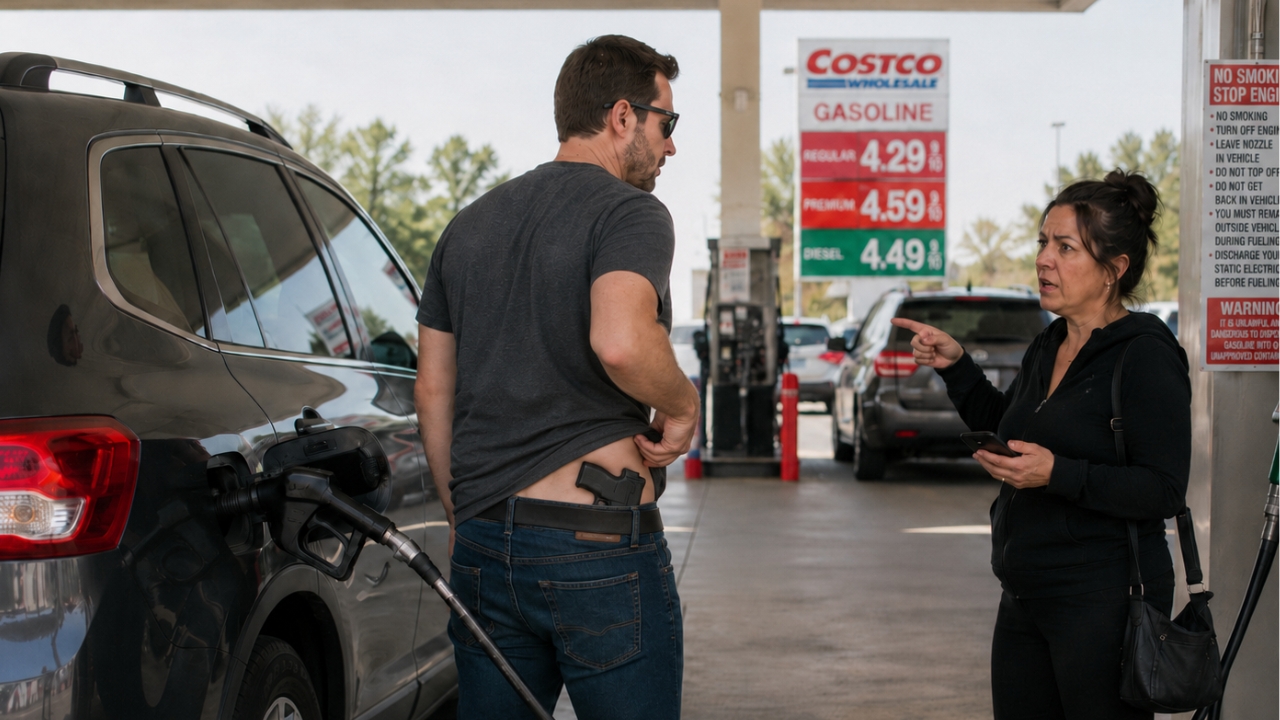
In a Reddit thread, concealed carriers were talking about times they had been noticed while carrying. One story involved a carrier whose shirt got lifted by his seat belt at a Costco gas pump, exposing enough of the gun that a woman noticed and threatened to call police.
That is one of those small carry failures that feels ridiculous because it came from something so normal.
A seat belt does not seem like a big deal until you carry a gun. Then suddenly it becomes part of the concealment equation. It can pull a shirt up. It can pin fabric behind the grip. It can shift a jacket open. It can make a holster print harder while sitting. Then when the carrier steps out of the vehicle, the cover garment may not fall back where it belongs.
That seems to be what happened here.
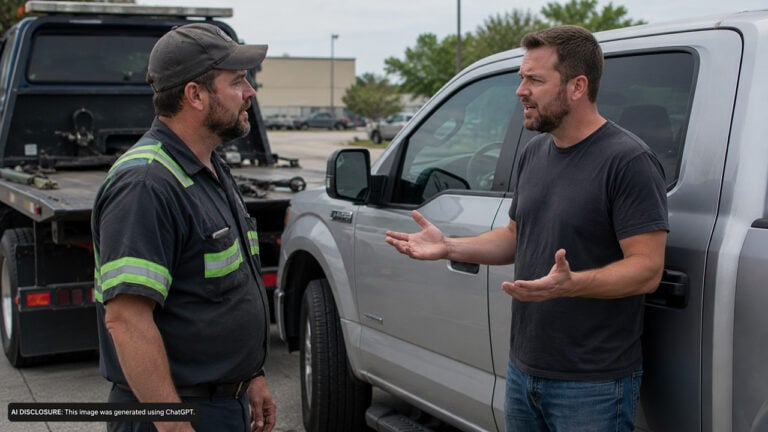
The carrier got out, started dealing with the gas pump, and the shirt was no longer covering the gun the way he thought it was. To him, it may have felt like a normal exit from the car. To the woman nearby, it looked like a man with a visible firearm at the gas station.
Those are two very different experiences.
The carrier likely knew he was legal, calm, and not doing anything threatening. But a stranger does not know his intentions, his permit status, or whether the exposure was accidental. Some people see a gun and simply react. In this case, the woman apparently threatened to call police.
That is the moment concealed carriers try to avoid.
Not because legal carriers should be ashamed, but because a misunderstanding can turn into a scene fast. Gas stations are public, busy, and already full of movement. People are getting in and out of cars, walking between pumps, reaching into vehicles, and handling payment screens. Add a visible gun and a worried stranger, and suddenly the carrier has to manage more than fuel.
He has to manage perception.
The safest response is calm. Do not grab at the gun. Do not snap back. Do not turn it into a rights argument at the pump. If the shirt is lifted, fix it discreetly and slowly. Keep hands away from the firearm. Speak normally if needed. If police are called, be polite, know the law, and let the situation cool instead of heating it up.
That can feel unfair when the whole problem came from a seat belt and a shirt.
But fairness does not matter much in the first few seconds of public panic.
The lesson is that concealment has to survive the car-to-public transition. A lot of carriers check themselves before leaving home, then forget that driving changes everything. Sitting compresses clothing. Seat belts drag fabric across the waist. Jackets shift. Shirts ride up. The gun may be perfectly covered in the mirror and partially visible after a 15-minute drive.
That means the final check needs to happen when getting out of the vehicle.
Before stepping fully into public view, glance down or sweep the cover garment back into place. Make sure the shirt is not trapped behind the grip. Make sure the seat belt did not tuck fabric in a weird way. If using strong-side carry, check that the shirt did not catch on the holster. If using appendix carry, check that the shirt still drapes naturally after sitting.
It takes one second.
It can prevent a police call.
Gas pumps are especially easy places to get noticed because people stand around with nothing to do. At a grocery aisle, everyone is moving. At a pump, people are waiting. They look around. They watch other cars. They notice odd movements. A shirt lifted over a gun may catch someone’s eye faster there than in a crowded store.
The carrier probably did not expect that.
Most people do not. They think about printing while walking around, not while standing at a pump after a seat belt lifted their shirt. But concealed carry is full of those little normal-life tests. Vehicles, bathrooms, reaching shelves, bending down, picking up kids, carrying bags, and pumping gas all reveal whether the setup truly works.
This time, the seat belt won.
The good news is that the gun did not fall, no one touched it, and the incident sounds like it stayed at the level of public discomfort rather than danger. But the carrier still learned that concealment can fail without him feeling anything obvious. That is the part worth remembering.
A shirt that rides up silently can create a very loud problem.
The gun was not the issue by itself. The exposure was. And if a cover garment keeps failing after car rides, the setup needs adjustment. Longer shirt. Different holster position. Better belt. Different ride height. A quick vehicle-exit check. Whatever solves the problem before the next stranger spots it.
A seat belt should not be enough to turn a quiet carry day into a public confrontation.
But if the routine does not account for it, it absolutely can.
Commenters mostly treated the story as a reminder that cars can ruin concealment fast.
Several people said the seat belt is a common culprit. It can pull shirts up, pin fabric behind the grip, or leave the gun exposed when the carrier gets out of the vehicle.
Others said a quick check before stepping away from the car should be part of the routine. Make sure the cover garment is down and the gun is not visible before walking into a store, standing at a pump, or moving through a parking lot.
A lot of commenters also focused on staying calm if someone notices. Grabbing at the gun or getting defensive can make the situation worse. Fix the clothing, keep hands away from the firearm, and avoid escalating.
Some people pointed out that gas stations are high-visibility places because people are standing around waiting. A small exposure may get noticed faster there than in a moving crowd.
The main lesson was simple: concealed carry has to stay concealed after sitting, driving, and getting out of the car. The mirror check at home is not enough.