Photo credit: Theavidoutdoorsman.com
A clean shot doesn’t always mean a clean recovery. Sometimes the hard part starts after the trigger pull—when the blood trail angles toward a fence line and every step feels like it’s going to turn into an argument.
That’s the spot one deer hunter found himself in during a recent firearms season hunt. He had permission to be on a piece of ground that backed up to a patchwork of small parcels—some posted, some not, and some with boundary markers that hadn’t been maintained in years. After the shot, the buck disappeared into brush and the hunter did what most of us would do: he waited, gave it time, and then started tracking.
A good hit, a short wait, and a trail headed the wrong direction
The hunter was set up on the edge of a cut cornfield that tapered into a low draw. The wind was right, visibility was decent, and the deer came out with a steady, unhurried walk. When the shot broke, the buck kicked hard and barreled into the timber—classic reaction that usually means you’re going to find him.
After waiting, the hunter climbed down and found blood fairly quick. It wasn’t a speck here and there, either. It looked promising. But the trail hugged the draw and started drifting toward a neighboring property line where the cover got thicker and the terrain funneled into a natural crossing.
That’s where things get complicated. You can do everything right on the front end—tags, permission, safe shot, patient tracking—and still end up staring at a “No Trespassing” sign when it’s time to finish the job.
The fence line decision that turns into a ticket
At the edge of the legal ground, the hunter slowed down and tried to keep it clean. He backed out once to call the landowner who had granted him access, then tried to reach the neighbor. No answer. He waited again, paced, glassed into the brush, and circled back to the last blood.
At some point, he made the call most hunters dread: follow the trail a little ways, just to see if the deer was down within sight. The blood was still there, and in thick cover it doesn’t take much for a wounded buck to vanish for good—especially if coyotes are thick or temperatures are up.
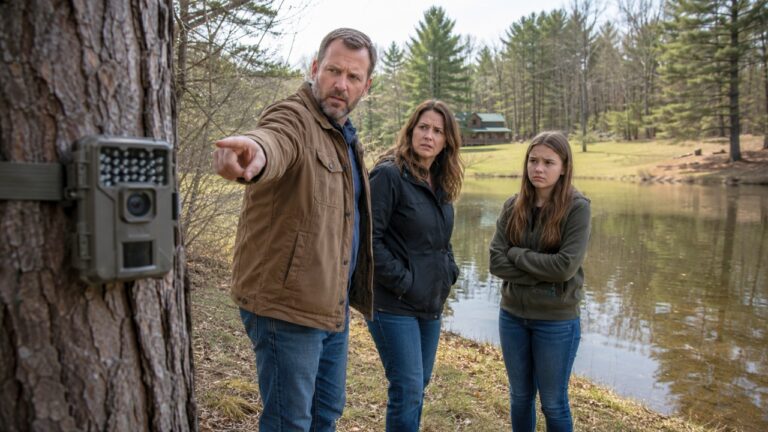
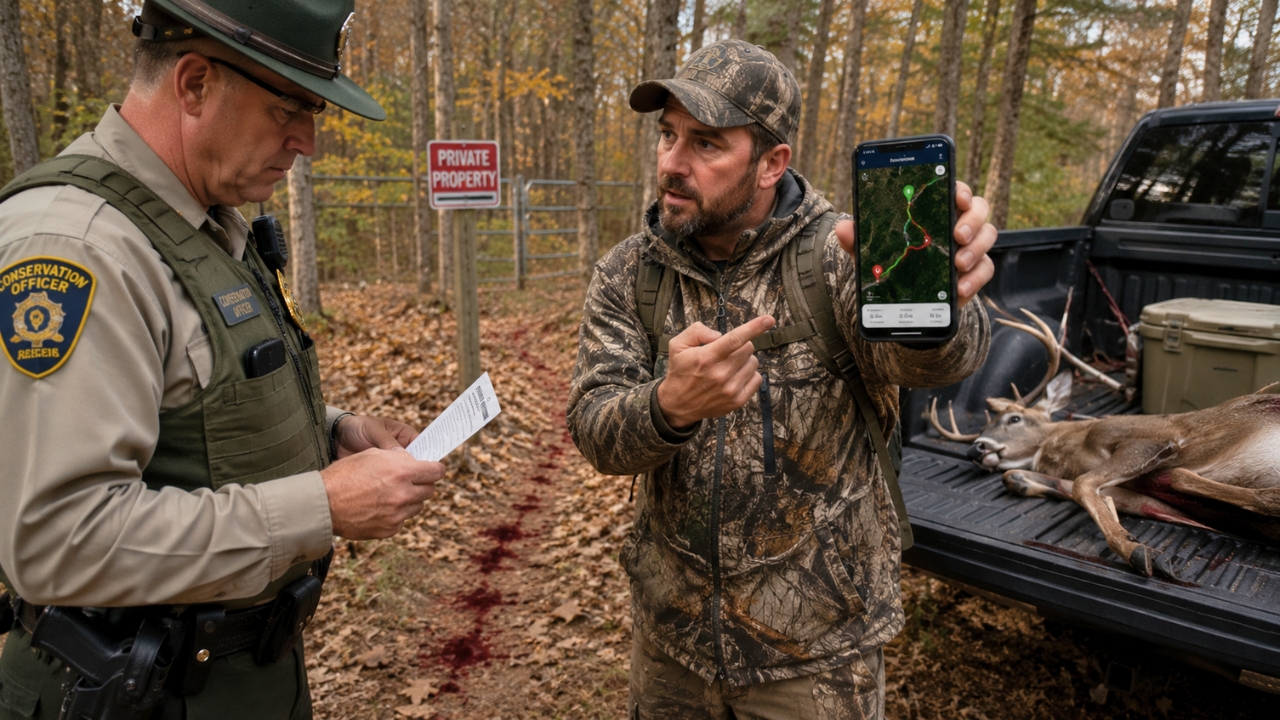
The problem is that “a little ways” is still across a boundary if you don’t have permission. According to the account shared among local hunters, the neighbor spotted movement and called it in. When the hunter came back out, he was met by an officer and issued a trespassing citation.
It’s a hard moment. You’re standing there trying to explain that you’re not joy-walking someone else’s place—you’re trying to recover an animal you already tagged in your mind. But the law in many states is simple: permission first, recovery second. And “good intentions” doesn’t always matter on the side of the road with a citation in hand.
When the GPS track tells a different story
The twist came later, when the hunter pulled GPS data from his mapping app. Like a lot of guys these days, he was running a phone-based map with property layers and location tracking turned on. Every step—field edge, last blood, the angle into the draw—was logged.
The GPS breadcrumb trail showed something important: the shot location and the first chunk of the blood trail were well within the property he had permission to hunt. More than that, the data suggested the buck was hit and started bleeding on legal ground before it ever crossed the line.
That might sound obvious to hunters, but it matters when the question turns from “Where did you walk?” to “Where did the incident begin?” If the narrative becomes “he shot it on the neighbor,” you’re suddenly dealing with a lot more than a simple trespass ticket in the court of public opinion—and sometimes in an actual courtroom.
GPS doesn’t fix everything. Phone location can drift, and property layers aren’t always survey-grade. But a time-stamped track, combined with photos of first blood, a pinned shot location, and even a witness on the original property can change how an officer or judge views the situation.
Why blood trailing across boundaries is a legal minefield
Most hunters agree on one thing: letting a deer go to waste is wrong. The trouble is that “do the right thing” can collide head-on with trespass law, and trespass law is built around property rights, not hunting ethics.
In plenty of places, you cannot cross onto private property without permission—even to recover a wounded deer. Some states offer a pathway: you can contact a warden, and the warden may attempt to contact the landowner or accompany you. In other states, it’s strictly a civil matter between you and the landowner, and the officer’s hands are tied.
That reality is why the best move is made before you ever climb into a stand. If a property line is close, it’s worth knocking on the door ahead of time and asking, “If one runs over, can I call you and come get it?” A lot of landowners will say yes if you’re respectful and you ask before there’s stress, flashlights, and a tracking job at midnight.
And if they say no, that’s good information to have. It might change where you sit, what shots you take, or whether you hunt that edge at all.
What other hunters fixated on: mapping apps, documentation, and staying calm
The hunting crowd that heard about this one didn’t spend much time debating whether a wounded deer should be recovered. Nearly everyone agreed on that. The arguments centered on how to keep a recovery from turning into a citation—or worse.
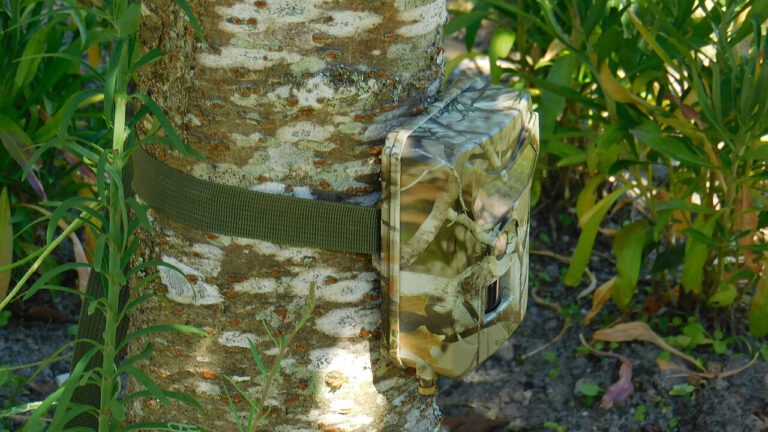
A lot of folks pointed to the value of running a mapping app with tracking turned on. Not because it gives you permission, but because it gives you a record. Several hunters mentioned dropping pins at the shot location and first blood, taking quick photos that show the terrain, and making a note of time. Those details can help if the story gets twisted later.
Others focused on the “don’t escalate” side. If a landowner shows up hot, it’s not the time to argue property lines in the dark while you’re holding a rifle. Back out, unload, get to the road, and call an officer if needed. You can fight a ticket in court. You can’t undo a confrontation that gets out of hand.
And more than a few landowners weighed in with their own perspective: they’re tired of strangers “just stepping over for a second,” tired of gates left open, and tired of folks assuming a deer gives them a free pass. It’s not always about that one hunter. Sometimes it’s the tenth bad experience that makes a landowner draw a hard line.
A simple lesson: plan for the fence line before the shot
In the end, the GPS track didn’t magically make the trespass go away, but it did support the hunter’s claim that the deer was struck where he was allowed to be. That distinction matters, especially when a situation starts getting repeated from one person to the next and the facts get muddy.
The practical takeaway is one most experienced hunters already live by: if you’re hunting tight to a boundary, you need a plan. Know exactly where the line is. Mark it in your app. Talk to neighbors before season if you can. And if you can’t get permission, hunt like you might not be able to take one step past that fence—even with a blood trail in front of you.
Because once a deer crosses onto someone else’s ground, the hunt turns into something else entirely. And it only takes one decision made in the heat of the moment to turn a good shot into a costly headache.