Photo credit: AI-generated image created using CHATGPT. Illustrative only.
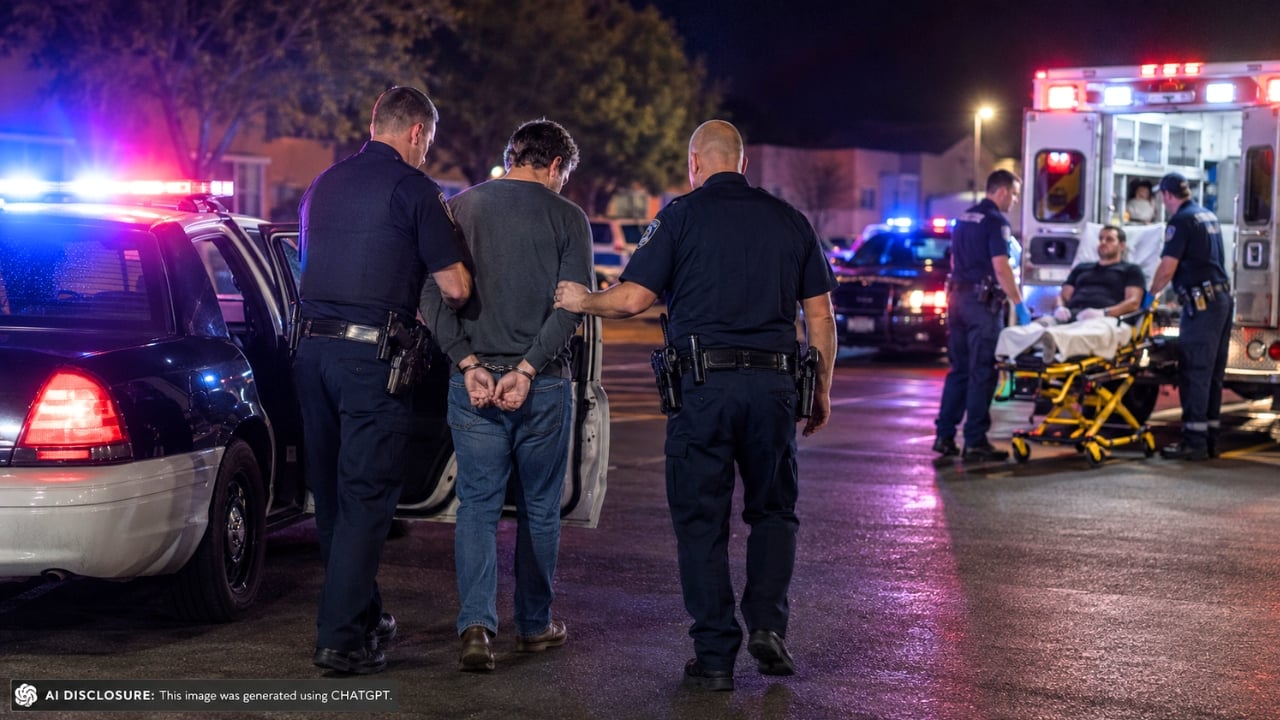
A hard lesson for any new concealed carrier is that even a clean, justified defensive shooting can still end with you riding in the back of a patrol car. In a recent question shared in the discussion, a new permit holder asked the thing most folks wonder but don’t say out loud: if you shoot in self-defense and the other person is dead or headed to the hospital, are you automatically arrested and taken to jail that night?
That worry isn’t paranoia. It’s a realistic look at how chaotic those first minutes are, and how law enforcement has to secure a scene before anyone’s story gets treated as gospel. And it explains the frustrating outcome people sometimes hear about: the person who pulled the trigger to stop the threat may spend the night in jail, while the person who started the mess might be released from the hospital before the dust even settles.
The part nobody practices: what happens after the shots stop
Most of us spend our training time on drawing, sights, and hits. Some classes cover de-escalation or safe storage. But the “after” portion—the phone call, the first officer arrival, the handcuffs, the questions—gets rushed, skipped, or handled with a few throwaway lines.
The original question framed the classic scenario: you defend yourself, and the other party is either dead or being transported. The big fear is getting treated like the criminal right away. The truth is that the immediate response is often procedural. Officers arriving at a shooting don’t know who is who, and they’re stepping into a situation where adrenaline, injuries, and weapons are all in play.
Being detained, disarmed, and separated from witnesses can happen fast. It doesn’t automatically mean you’re “going down for it,” but it does mean your night can get long in a hurry—even when you did what you had to do.
Why a “good shoot” can still end in handcuffs
Out in the country, we’re used to handling our own problems—trespassers, aggressive dogs, late-night noise at the gate—until it crosses a line. But once a gun goes off and someone is hit, you’re in a world that runs on documentation and liability.
From an officer’s standpoint, a shooting scene is a puzzle with missing pieces. Who called? Who’s lying on the ground? Where is the weapon? Are there other threats? Are there kids inside the house? Are there shell casings scattered in the yard or in the truck cab?
Handcuffing and detaining people while that puzzle gets sorted is common. Sometimes it’s done for safety. Sometimes it’s done because the investigation hasn’t caught up to what actually happened. And sometimes it’s done because the responding agency wants to lock down statements and evidence before stories shift.
That’s how you can wind up in a holding cell while the attacker—if they lived—may be sitting in an ER getting stitched up, then released once medically cleared. Hospitals don’t decide guilt. They treat patients.
The medical-angle advice: asking for an ambulance for you, too
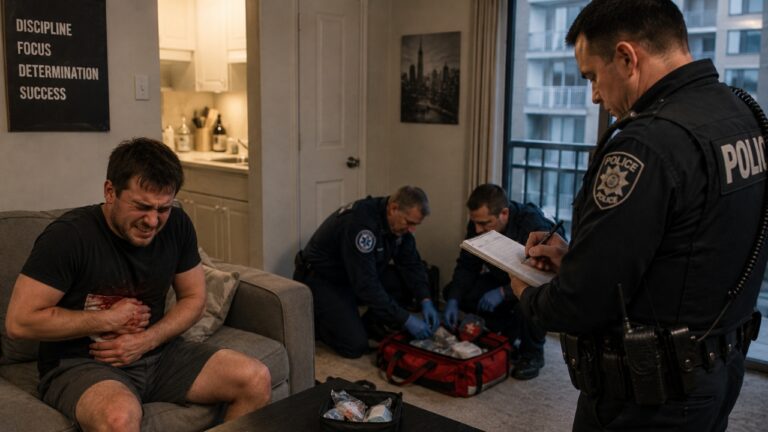
One commenter referenced advice shared during a concealed-carry class by a US Law Shield representative: when you call 911 after a defensive shooting, request an ambulance for the person who was shot, and another ambulance for yourself, saying you don’t feel well at all.
The reasoning was practical, not theatrical. After a life-or-death encounter, people shake, vomit, faint, and struggle to talk in complete sentences. Your body dumps adrenaline like you just ran a marathon uphill with a pack on. The comment argued that you have a right to medical attention, and getting checked out can buy time to calm down and for your lawyer to arrive.
That’s an angle many folks overlook. We tend to think “I’m not bleeding, I’m fine.” But post-incident shock is real, and a medical evaluation creates a clean, neutral reason for you not to be standing on the curb trying to explain a deadly event while your hands are trembling.
The 911 operator problem: they’re going to ask questions
Another commenter pushed back with a fair point: dispatchers don’t just take “send an ambulance” and hang up. They’re going to ask for details so they can brief responders—questions like whether someone is breathing.
This is where many well-meaning “script” ideas fall apart. In real life, 911 calls are recorded, and operators are trained to keep you talking long enough to get the basics: location, what happened, whether there are weapons, how many people are involved, and what kind of medical help is needed.
You don’t have to become your own investigator on the phone, but you should expect follow-up questions. You should also expect that whatever you say in that moment may be replayed later, with your tone and word choice analyzed by people who weren’t there.
For the everyday carrier, the takeaway is simple: think through that call now, while you’re calm. Not to “game the system,” but to avoid rambling, guessing, or trying to fill silence with details you can’t be sure about yet.
What outdoorsmen should take from it: plan for the night of the incident
Plenty of concealed carriers spend hours picking a holster and ten minutes thinking about what happens if they ever have to use it. The reality is that the gun part might last seconds, but the aftermath can swallow your whole night—and your savings—if you’re not prepared.
If you carry in rural areas, you might also be dealing with longer response times, fewer witnesses, and a more complicated scene—think gravel driveways, outbuildings, livestock, poor lighting, and family members stepping outside because they heard the commotion. That can make the initial report feel messy even if your actions were solid.
A smart plan isn’t about being sneaky. It’s about being ready for the predictable friction points: officers arriving keyed up, you being temporarily detained, your firearm being taken as evidence, and you being asked to explain yourself before you’ve even had a chance to breathe.
And yes—sometimes that means you could spend the night in jail even though you were defending yourself. It’s not fair, but it’s not rare enough to ignore, either.
Carrying a concealed handgun is about stopping a threat you can’t avoid. But being a responsible armed citizen also means preparing for what comes after: the phone call, the medical check, the questioning, and the possibility that the first “safe” place you go after a defensive shooting isn’t your couch—it’s a cell while the system sorts out what happened.