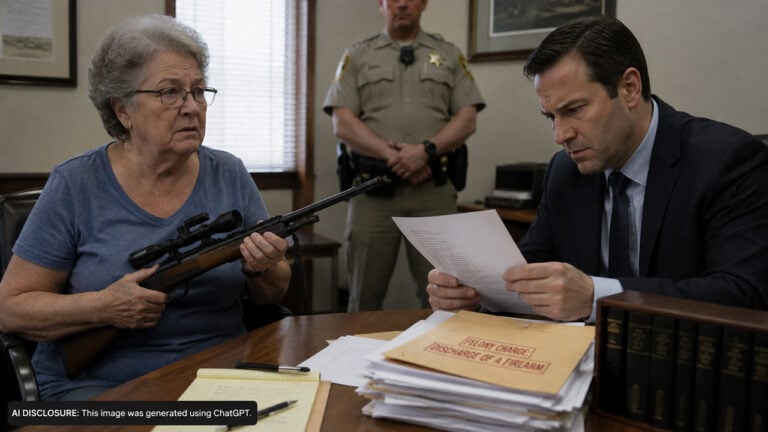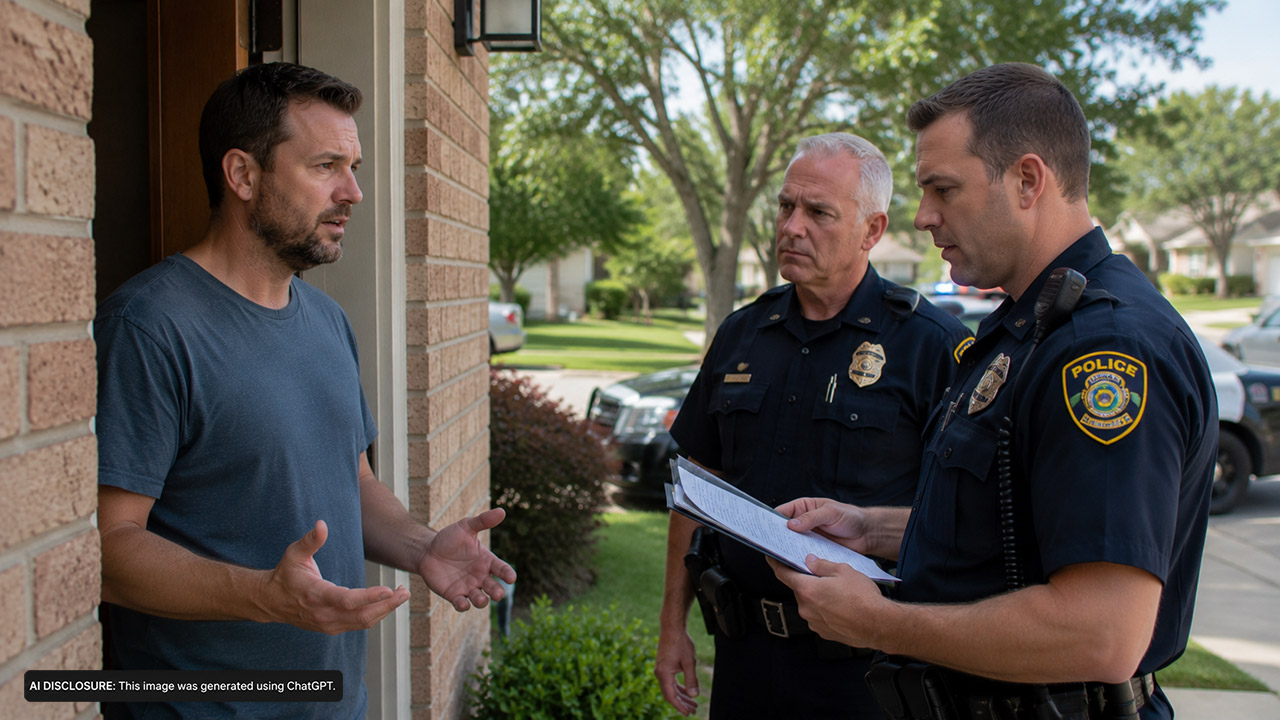
Photo credit: AI-generated image created using ChatGPT. Illustrative only
You do everything the right way: walk into a licensed gun store, buy a used pistol, fill out the paperwork, pass the background check, and take it home legally. Then one day you’re sitting in your truck outside another shop and the next thing you know, you’ve got flashing lights in your mirrors and multiple guns pointed in your direction.
That’s the situation one gun owner described after unknowingly buying a stolen 9mm 1911 from a shop he’d been a customer of for years. When he later tried to sell the pistol through a legal, face-to-face transfer at a gun store, police and ATF moved in and treated the meetup like a felony stop. The details were shared in the original post.
A routine used-gun purchase turned into a slow-burn problem
The buyer said he’d been “eyeballing” a used 9mm 1911 at a gun store he’d frequented for 6–7 years. After finally deciding to purchase it, he completed the background check and took the pistol home once he was cleared. Nothing about that is unusual for folks who buy used firearms from time to time.
Then reality set in: a single-stack 1911 didn’t match what he wanted for his setup. He’d picked up gear like a battle belt, IFAK, and chest rig, and he realized he wanted something different. So he did what plenty of gun owners do—he put the pistol up for sale or trade and planned to make the transfer the right way, at a gun store with a background check.
The meet-up happened at a gun store, but it still went sideways fast
He arranged to meet an interested buyer at a gun store so the buyer could inspect the pistol and run the transfer through the counter. That’s one of the cleaner, safer ways to handle a private-party sale: public place, cameras, and an FFL handling the paperwork.
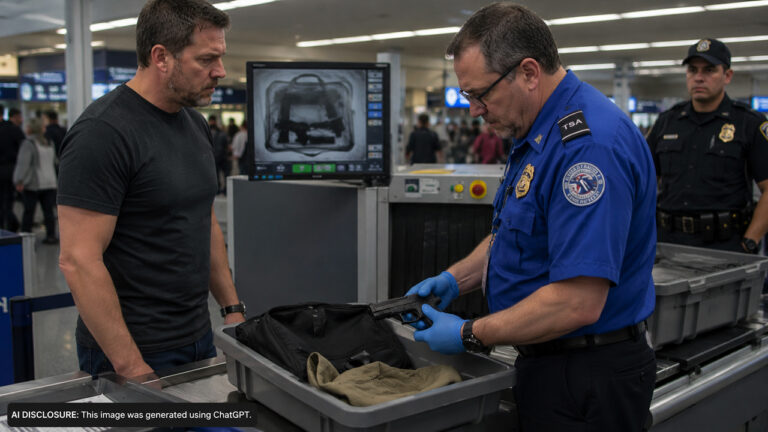
But before the planned buyer even got to the truck, the seller noticed “a ton of flashing lights.” Local police and ATF rolled up, and he said he suddenly had “about 8 Glocks and several rifles and shotguns” aimed at him. He hadn’t heard the approach because his music was up, and he went from texting a buyer to being ordered out and cuffed in a matter of seconds.
Police said the pistol was stolen, and they treated it like a hot gun
According to the account, officers told him he was trying to sell a stolen pistol and took him to speak with the ATF agent in charge. From the law enforcement side, that kind of response makes sense if a serial number is coming back as stolen and the gun is actively showing up in a transaction attempt.
From the citizen’s side, it’s a gut-check. Even if you’ve never been in trouble and you’re doing things by the book, being proned out or cuffed at gunpoint is not a small event. It’s the kind of moment that sticks with you, and it’s a reminder that “I didn’t know” may be true, but it doesn’t stop the immediate safety response when a firearm is flagged.
Paperwork was the difference between a bad day and a life-changing one
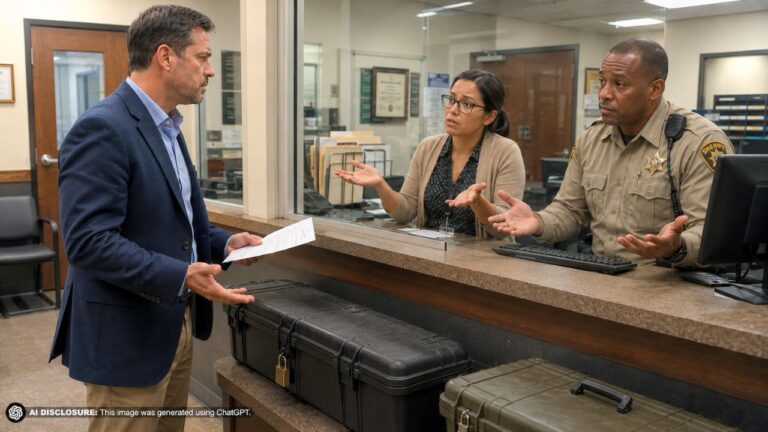
The seller said he had no idea the gun was stolen and told officers he’d purchased it at the original gun store. He also said he showed them his transaction information. That documentation mattered—because it gave investigators a clean trail that pointed away from him and toward the upstream problem.
In his telling, officers recorded the information, took the pistol, and let him go. He said he wasn’t charged and wasn’t treated as a suspect once he provided proof of purchase. The ATF agent reportedly told him it was the first time in 10 years he’d seen someone unknowingly buy a stolen gun and then try to sell it.
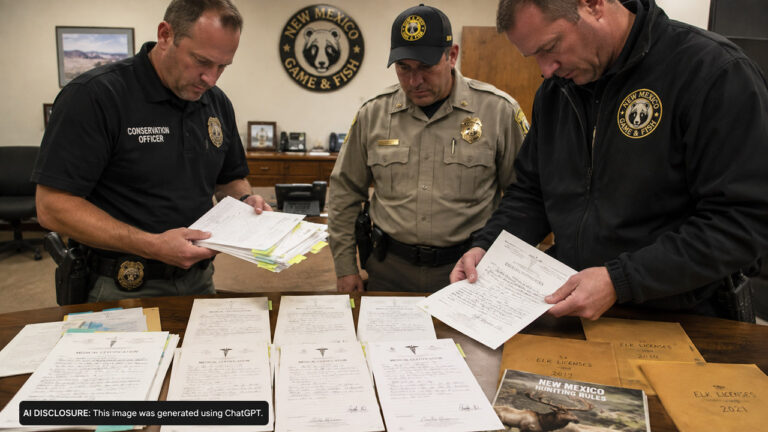
That’s a hard lesson for anyone who buys used firearms: your receipt, transfer paperwork, and any communication about the purchase aren’t just for your records—they can be your shield when something goes wrong later. Tossing those documents in a drawer and forgetting about them is easy, until you’re standing on asphalt with cuffs on.
The real punch in the gut: the gun is gone, and so is the money (for now)
Once the gun was identified as stolen, it was seized. That part is predictable. If it’s legitimately reported stolen, it’s evidence and potentially property that will be returned to the rightful owner through whatever process applies where this occurred.
But that leaves the buyer holding the bag financially. He said he didn’t expect “the government” to reimburse him and believed the loss fell on the store that sold it. That’s where the situation shifts from a scary traffic-stop moment to a slow, frustrating financial dispute—because the buyer paid good money for an item he can’t legally keep, and he didn’t do anything wrong based on the facts he shared.
What the gun-owning crowd tends to focus on in situations like this
In stories like this, most experienced gun folks zero in on a few practical points: keep your purchase paperwork, don’t do parking-lot deals at random locations, and when you sell a firearm privately, doing it at a gun store is a smart move. In this case, the seller did that last part correctly, and it likely helped keep the situation from getting messier.
The other common focus is the uncomfortable reality of used-gun inventory. Most gun stores do a lot of honest business, but stolen guns can slip into the stream through trades, estate lots, consignments, and private sales to the shop. People also tend to ask whether the store ran the serial number before putting it in the case, and what their policy is when something like this happens.
Finally, there’s the “what now?” question. The seller asked whether he needed a lawyer, whether he should wait until the investigation is complete, and what type of attorney would even handle it. He’s not talking about beating a case—he’s talking about trying to be made whole after a legal purchase went bad.
He didn’t share what outcome came next, but his questions are the ones most of us would have. If you’re ever in a similar spot, the practical move is to stay polite with investigators, keep copies of every document you can, and think carefully before freelancing conversations with multiple parties while an investigation is active.
Buying used guns is part of the culture—sometimes you find a gem, sometimes you find a headache. This one shows how fast a normal day can turn into an all-lights-and-sirens situation, and how much your paper trail matters when a serial number comes back dirty through no fault of your own.
Like The Avid Outdoorsman’s content? Subscribe to our newsletter so you never miss an article.
Here’s more from us: