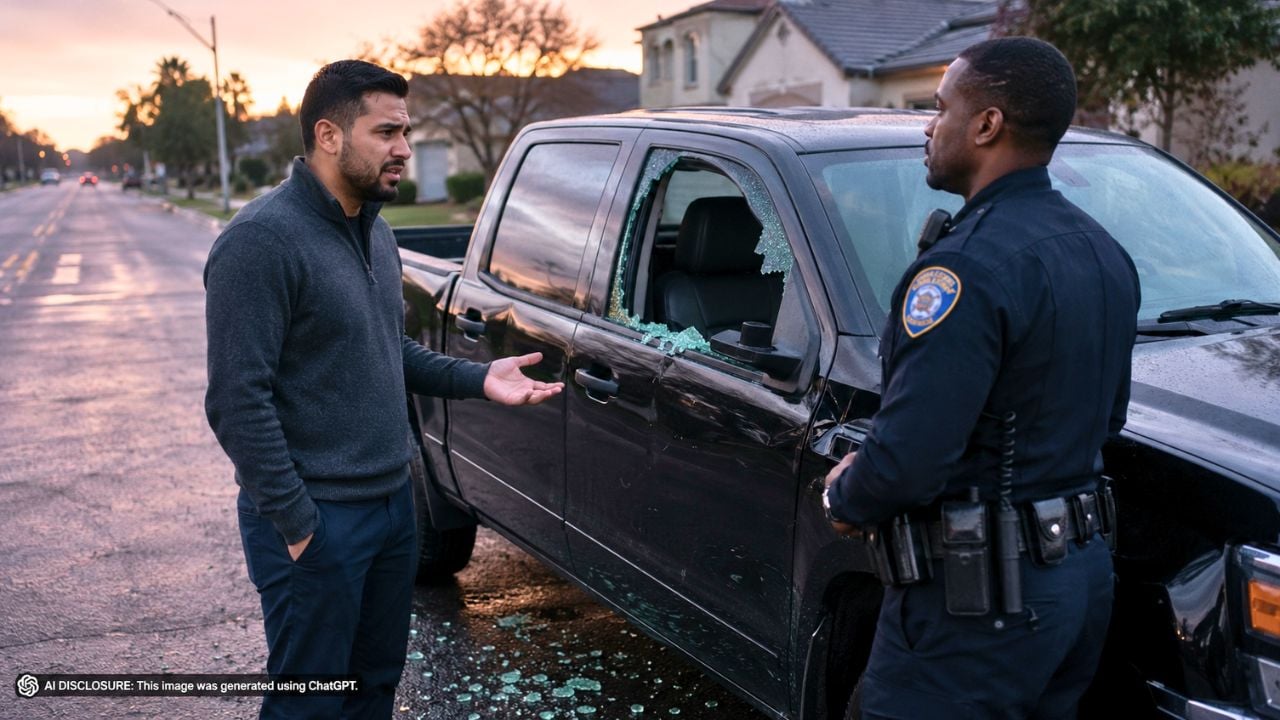
Photo credit: AI-generated image created using ChatGPT. Illustrative only.
Most of us have heard the advice a hundred times: don’t leave a gun in your vehicle. But advice hits different when it’s your rifle that’s gone and you’re standing there staring at an empty trunk, trying to figure out what to do next.
That’s the spot one gun owner found himself in when he posted about his Savage Axis bolt-action rifle being stolen out of his car trunk, asking if he needed to report it and whether he’d be in trouble for having it taken. In the original post, he kept it simple: his gun was gone, he believed he needed to make a report, and he wanted to know the right way to handle it.
The moment you realize it’s missing, the clock starts ticking
A stolen firearm isn’t like a missing set of jumper cables. Once it’s out in the wild, it can end up anywhere—pawn shop, black market, or in the hands of somebody who shouldn’t have it. That’s why the first practical step is treating it like an urgent problem, even if it happened overnight and you don’t have much to go on.
In this case, the rifle was reportedly taken from the trunk. That detail matters, because it tells you how the thief was operating: they weren’t just grabbing loose change or sunglasses. They got into the vehicle and went looking, or they already suspected there was something worth stealing.
Reporting it is the responsible move, even if it feels like a hassle
The poster’s main question was straightforward: “I think i have to report it right?” In plain terms, yes—reporting a stolen firearm is the smart, responsible move. Even where it’s not explicitly required by law in every jurisdiction, it’s still the best way to start a paper trail that says, “This gun was taken from me, and here’s when it happened.”
That paper trail matters later. If the rifle turns up in a traffic stop, a pawn shop, or at a crime scene, your report is what separates “stolen property” from “why is this registered/associated with you?” Most outdoorsmen don’t want to think about their hunting rifle being used for something ugly, but ignoring that possibility doesn’t help anybody.
The hard truth: sometimes law enforcement can’t do much immediately
The headline angle speaks to a frustration plenty of folks understand: you make the call, you file the report, and it can feel like the response is, “There’s nothing we can do.” Even when officers take the report seriously, the reality is that vehicle break-ins and thefts are often tough to solve without clear video, witnesses, fingerprints that go somewhere, or the gun popping up somewhere traceable.
That doesn’t mean you shouldn’t report it. It means you should go into the process with realistic expectations. A report is often about documentation and recovery if the gun turns up later, not an immediate investigation with a tidy ending by the weekend.
“Am I in trouble?” depends, but negligence is what you want to avoid
The other question the owner asked was the one that keeps people up at night: “am I in trouble?” There’s no one-size-fits-all answer because laws vary by state and even by city, especially around firearm storage in vehicles and mandatory reporting timelines.
What’s consistent is this: the more responsible you were leading up to the theft—and the quicker you are to report it afterward—the better. If a rifle was left unsecured in an easy-to-access spot for a long time, some places may treat that differently than a gun that was properly cased, locked up, or otherwise stored with reasonable care and still stolen. And regardless of the legal side, gun owners know there’s a moral weight to a stolen firearm that doesn’t go away just because you’re technically in the clear.
What to have ready when you make the report
If you’ve ever tried to remember a serial number from memory, you know how that goes. When you report a stolen firearm, the details are what make the report useful: make, model, serial number, caliber, and any identifying marks or accessories that were on it when it was taken.
For a hunting rifle like a Savage Axis, that might include the scope brand/model, rings, sling, stock modifications, or anything else that would help confirm it’s yours if it’s recovered. If you have photos—especially photos that show the rifle clearly—those can help too. It’s not about playing detective; it’s about giving the report enough teeth to matter if the gun resurfaces.
How hunters and gun owners can keep this from happening again
This is the part nobody likes talking about after a theft, but it’s the part that can prevent the next one. Vehicles get broken into. That’s true in the city, in small towns, and even out in rural areas where you’d swear nobody ever drives by after dark. A trunk isn’t a safe, and “out of sight” isn’t the same as “secured.”
The most practical habits are the boring ones: don’t leave firearms in the vehicle overnight, don’t advertise with gun brand stickers, and if you must transport a gun and stop somewhere, use a dedicated lockbox or secure container that’s anchored and not easily carried off. For long guns, that may mean planning your day so the rifle goes from house to range or house to woods and back again—no extra stops with it sitting unattended.
And if you’re the type who keeps gear in the truck “just in case,” this is the reminder that thieves love “just in case.” The best truck gun is the one that isn’t sitting in a parked truck when you’re asleep.
The owner who posted about the stolen Savage Axis was asking the right questions—what to do, and how to make it right. When a firearm gets stolen, you can’t undo the break-in, but you can handle the aftermath like an adult: report it, document it, and tighten up how you store and transport your guns going forward. That’s how you protect yourself, and it’s how you help keep a stolen rifle from becoming somebody else’s problem down the line.