Photo credit: The Avid Outdoorsman
The carrier did not feel the gun shift a little.
He felt the whole setup fail.
That is a very different kind of panic. A holster can ride up, print, dig into your side, or need adjustment, and that is annoying enough. But when a piece of the holster actually breaks, there is no small fix in the moment. The gun is moving, gravity is winning, and now the carrier has to keep a public gear failure from becoming a public gun incident.
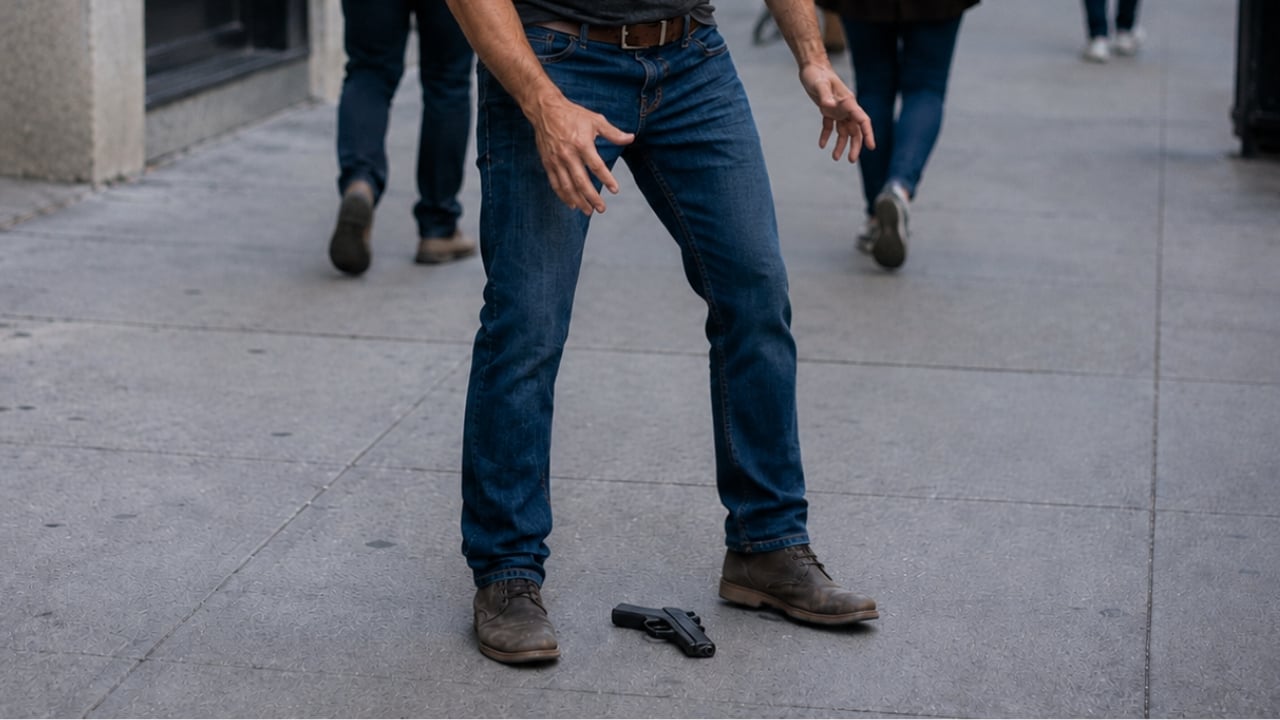
In a Reddit post, the carrier said a single point of failure on his Urban Carry holster caused the setup to come apart. The rivet failed, and his pistol fell down his pants leg in public.
That is about as bad as a holster failure can get without the gun hitting the ground in front of a crowd.
A carry holster is supposed to do a few boring jobs every second it is being worn. It keeps the trigger covered. It keeps the gun oriented properly. It keeps the firearm attached to the carrier. It keeps the gun from being accessible to anyone else. And it should do all of that through normal movement without needing constant supervision.
When one rivet can fail and send the pistol down your pant leg, the whole design starts looking questionable.
That is what “single point of failure” means in the real world. One part breaks, and the system stops doing its job. With concealed carry gear, that is not only inconvenient. It can become dangerous or humiliating fast. A pistol dropping inside clothing can snag, shift, expose itself, hit the floor, or force the carrier to grab at it in a way that looks alarming to everyone nearby.
And grabbing at a falling gun is never where you want to be.
The carrier probably had to think quickly. Do not let the gun hit the floor. Do not make sudden movements that draw attention. Do not sweep anyone with the muzzle. Do not put a finger near the trigger. Do not let the pistol slide out of the pant leg where a stranger, kid, or employee could see it first.
That is a lot to handle in a few seconds.
The public setting matters because the carrier’s options are limited. If a holster fails at home, you can stop, unload, inspect it, and deal with the problem privately. If it fails in public, you are managing safety and optics at the same time. Even if the gun never fires and never leaves your clothing completely, a bystander who sees you wrestling with something near your waistband may not understand what is happening.
If they do see the gun, the situation can become worse.
The Urban Carry style has always been debated because it is built around a different draw and concealment concept than traditional inside-the-waistband holsters. Some people like the deep concealment idea. Others criticize the draw speed, access, and mechanical complexity. This story hits the one issue no carry method can afford: the gear has to stay together.
No holster gets to be clever if it cannot be secure.
The rivet failure also shows why carry gear needs inspection. People inspect guns, magazines, ammo, and optics, but holsters often get ignored until something breaks. Clips loosen. Screws back out. Rivets wear. Leather stretches. Kydex cracks. Stitching frays. Soft materials collapse. Sweat, movement, and daily wear take a toll.
A holster is safety equipment, not just an accessory.
That means checking it should be part of the routine. Look for loose hardware. Tug on clips. Check retention. Inspect stitching, rivets, and attachment points. Make sure the holster still holds the gun the way it did when new. If anything looks worn, cracked, loose, or questionable, fix it before carrying.
Because the failure will not politely happen at home.
It will happen while walking, shopping, bending, climbing into a vehicle, or standing somewhere you absolutely do not want to deal with a pistol sliding down your leg.
The carrier’s story is embarrassing, but it is also useful because it reveals the difference between concealment and security. A gun can be deeply concealed and still not be safely carried if the system holding it depends on one weak part. Hiding the gun is not enough. Keeping control of it matters more.
That is why a simple, sturdy holster with reliable attachment usually beats a clever setup with a fragile failure point.
The pistol falling down his pants leg could have ended several ways. Maybe he got it under control quietly. Maybe nobody saw. Maybe he went home and retired the holster immediately. However the moment ended, the lesson was clear before he even finished dealing with the panic.
The holster failed.
And when carry gear fails in public, the carrier is the one left trying to catch up.
Commenters mostly focused on the danger of a carry setup that depends on one weak attachment point.
Several people said a holster failure like that is enough reason to retire the gear immediately. If one rivet can break and send the pistol down a pant leg, the carrier cannot trust that setup again without a major fix.
Others criticized holsters with complicated designs or weak hardware. Concealed carry gear does not need to be fancy. It needs to keep the firearm secure, cover the trigger, and stay attached through normal movement.
A lot of commenters talked about inspecting holsters the same way people inspect guns. Hardware loosens, rivets wear, clips break, and materials fatigue. Daily carry puts stress on gear, and small failures can become big ones fast.
Some also pointed out that public recovery is the scary part. A gun sliding down your leg can make you grab, twist, or move in ways that create more risk or draw attention.
The main lesson was simple: deep concealment is worthless if the holster cannot hold the gun.