Photo credit: Ambrosia Studios/Shutterstock.com
The Justice Department’s new lawsuit against Washington’s gun rules does more than challenge one city’s policy. It forces judges to say how far local governments can go when they try to keep semiautomatic rifles out of dense urban neighborhoods. As you follow the case, you are really watching a test of how courts will read the Second Amendment after a wave of recent decisions that expanded gun rights.
At the center is the District’s refusal to register many semiautomatic rifles, including popular AR-15 style models, for ordinary residents. By framing that refusal as a civil-rights violation, federal lawyers are asking courts to answer five hard questions about what counts as a “common” firearm, how much deference cities deserve on public safety, and whether registration rules can function as a quiet ban.
How the DOJ turned D.C.’s registry into a civil-rights test
You are not just looking at a technical fight over paperwork. The Justice Department has accused the District of Columbia of using its registration system to impose what it calls an unconstitutional ban on a broad category of semiautomatic firearms. In its complaint, the department argues that the District’s refusal to register many rifles that fire one round per trigger pull effectively blocks law‑abiding residents from owning weapons that are widely sold elsewhere in the country, treating the registry as a gate that never opens rather than a neutral recordkeeping tool.
Federal lawyers framed the case as a civil-rights enforcement action, not a routine regulatory dispute, by filing through the Civil Rights Division and describing the policy as a violation of citizens’ constitutional protections. In the department’s own words, the suit says the District’s registration restrictions on semiautomatic rifles amount to an “unconstitutional” bar on the possession of commonly used firearms by law‑abiding citizens. That choice of language signals that you should expect the government to argue that the Second Amendment sits on the same footing as other rights the division routinely defends, such as voting and free expression.
Why “commonly used” semiautomatics are the lawsuit’s pressure point
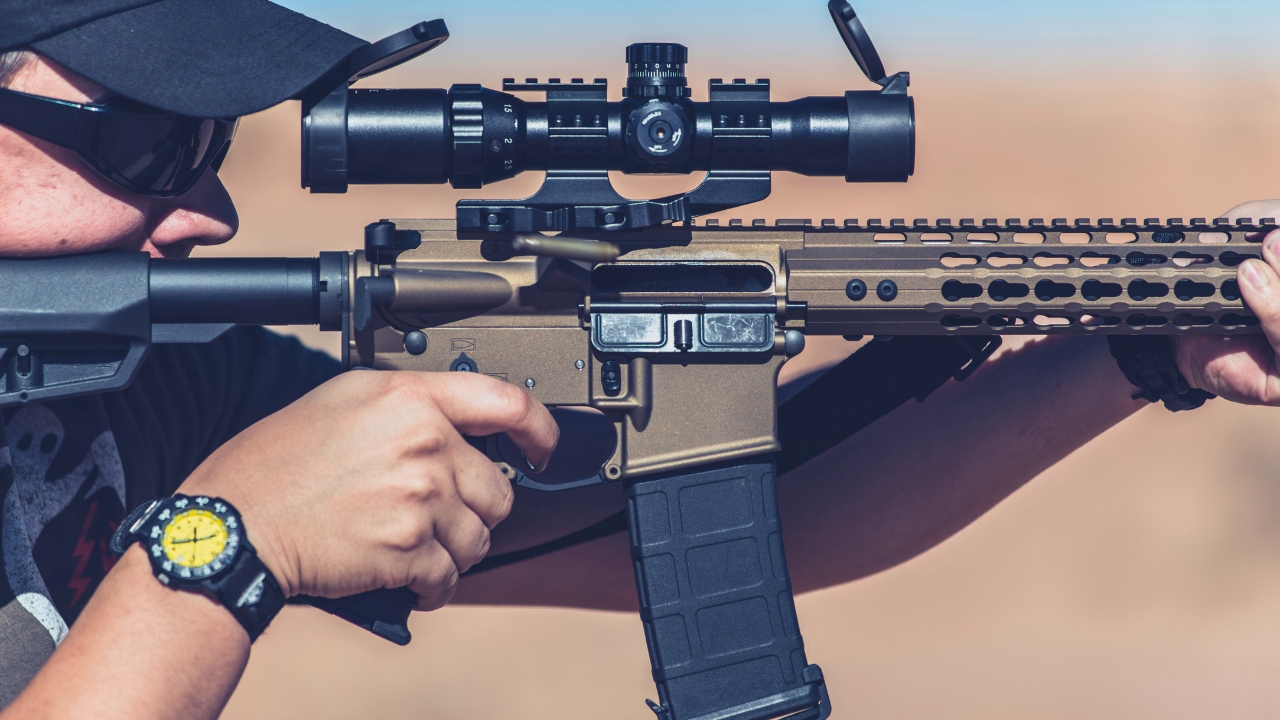
The phrase that will follow you through this case is “commonly used firearms.” The Justice Department is betting that judges will treat semiautomatic rifles, including AR‑15 style guns, as squarely within that category. Its complaint asserts that these rifles are owned by large numbers of Americans for lawful purposes like home defense, target shooting, and hunting, and that the District cannot single them out for near‑total exclusion while allowing other guns that are no less lethal in many scenarios.
That framing matters because the department is not challenging every aspect of Washington’s gun code, only the parts that keep ordinary residents from registering semiautomatic rifles that fire one round per trigger pull. In the filing, officials argue that the District’s approach “broadly” blocks registration of these weapons, turning what is supposed to be an administrative process into a substantive prohibition. The Civil Rights Division underscored that point when it said, in a separate statement, that “This Civil Rights Division will defend American citizens from unconstitutional restrictions of commonly used firearms”, casting the case as a defense of a broad class of weapons rather than a niche product.
What makes Washington’s rules different from other gun regulations
From your vantage point, Washington’s policy stands out because it does not simply add conditions to ownership, it draws a bright line around a whole class of guns. The District’s law treats many semiautomatic rifles, including AR‑15 style models, as prohibited for registration by ordinary residents, which means you cannot legally possess them inside city limits even if you pass background checks and meet other requirements. That is a sharper restriction than in many states, where semiautomatic rifles are regulated but still widely sold and registered.
The Justice Department’s complaint highlights this difference by arguing that the District has gone beyond regulating dangerous features and instead has chosen to bar a category of firearms that are otherwise lawful nationwide. Reporting on the case notes that the suit targets the District’s refusal to register AR‑15s and other semiautomatic rifles, describing it as a ban that reaches “a broad category of semiautomatic firearms” rather than a narrow set of military‑style weapons. One account explains that the suit claims that the registration restrictions on semiautomatic rifles in the District are an “unconstitutional” bar on the possession of commonly used firearms by law‑abiding citizens, underscoring how unusual it is for a city to close off an entire class of guns that are legal elsewhere.
How the case reframes local safety concerns as constitutional conflicts
City officials have long defended strict gun rules as essential to public safety in a compact jurisdiction with dense neighborhoods and a history of gun violence. If you live in Washington, you have heard arguments that limiting access to rapid‑fire rifles is a reasonable way to reduce the risk of mass shootings and to give police fewer high‑powered weapons to confront on the street. The District’s registration scheme grew out of that logic, treating semiautomatic rifles with detachable magazines and other features as especially risky in an urban setting.
The Justice Department’s lawsuit does not ignore those safety concerns, but it tells the courts that they cannot override what federal lawyers see as clear constitutional limits. By labeling the District’s policy a civil-rights violation, the department is asking judges to treat the Second Amendment as a constraint on local experimentation, even when city leaders say they are responding to specific crime patterns. Coverage of the filing notes that the complaint targets Washington’s ban on registering AR‑15s and other semiautomatic rifles, arguing that the District cannot justify a sweeping prohibition on weapons that are widely owned elsewhere simply by invoking public safety. One detailed account of the case explains that the suit sues D.C. over ban on AR‑15s and other semiautomatic guns, making clear that the federal government sees the city’s safety rationale as insufficient when it collides with what it calls “commonly used” firearms.
What counts as a “ban” when the law talks about registration
One of the most important questions for you to watch is how courts define a “ban” in the context of a registration system. The District does not criminalize every semiautomatic rifle by name, but it refuses to register many of them, which in practice makes it illegal to possess them in the city. The Justice Department argues that this kind of categorical refusal is no different from an outright prohibition, because residents cannot lawfully own guns that the registry will not accept, no matter how carefully they comply with other rules.
Judges will have to decide whether a registration scheme that excludes a broad class of weapons is functionally equivalent to a ban, or whether the District can defend it as a permissible condition on ownership. The federal complaint leans hard on the idea that the District’s approach “broadly” blocks registration of semiautomatic rifles, and that this breadth is what turns regulation into prohibition. Reporting on the case notes that the Justice Department is suing Washington DC over blocking registration of semiautomatic guns, describing how the city’s system leaves residents with no legal path to own AR‑15 style rifles and similar weapons. One overview explains that the Justice Department sues Washington DC over banning semi‑automatic gun registration, a phrase that captures how the fight over paperwork has become a fight over whether a de facto ban can hide inside a licensing process.
How the Civil Rights Division is reshaping the politics of gun enforcement
By routing the case through the Civil Rights Division, the Justice Department is telling you that it sees gun ownership as part of its core mission to protect individual liberties. That is a notable shift in emphasis, because the same department also prosecutes gun crimes and defends some federal firearms regulations. Here, the division is not defending a law, it is attacking a local rule as an infringement on the rights of “law‑abiding citizens,” language that echoes recent Supreme Court opinions that have elevated the status of individual gun ownership.
The division’s public statement, which declared that “This Civil Rights Division will defend American citizens from unconstitutional restrictions of commonly used firearms,” signals that federal civil-rights lawyers are prepared to challenge not only state‑level bans but also city ordinances that go further than national norms. For you, that means the politics of gun enforcement are no longer a simple split between federal prosecutors and local regulators. Instead, one arm of the Justice Department is now positioned as a watchdog over how cities like Washington design their registries, ready to argue that certain categories of restrictions cross a constitutional line even when they are framed as safety measures.
What the lawsuit could mean for other cities and “assault weapon” rules
If you live in a city that has considered or adopted strict rules on semiautomatic rifles, the outcome in Washington will matter. A court ruling that treats the District’s registration policy as an unconstitutional ban on commonly used firearms would give gun‑rights advocates a powerful precedent to challenge similar laws elsewhere. Local governments that have tried to keep AR‑15 style rifles out of their jurisdictions by limiting registration or imposing feature‑based bans could find themselves defending those choices under a more skeptical standard, especially if judges accept the Justice Department’s view that such rifles are firmly within the Second Amendment’s core.
On the other hand, if courts uphold Washington’s approach, you could see a wave of cities and counties adopting comparable registration limits, confident that they can draw sharp lines around certain semiautomatic rifles as long as they leave other guns available. The Justice Department’s decision to sue the District, rather than a state, also means that any ruling will be closely watched by local officials who manage their own registries and who may be weighing whether to treat semiautomatic rifles differently from handguns and shotguns. For residents, that could translate into a patchwork where your ability to own an AR‑15 style rifle depends heavily on your ZIP code, unless higher courts step in with a uniform rule.
How courts may weigh history, technology, and urban risk
When judges confront the District’s policy, they will have to balance three threads that you see running through modern gun cases: historical tradition, modern firearm technology, and the specific risks of urban life. The Justice Department is likely to argue that semiautomatic rifles that fire one round per trigger pull are the contemporary analog to the muskets and rifles that citizens kept at home in earlier eras, and that the Second Amendment protects today’s common tools of self‑defense just as it protected those older weapons. The District, by contrast, is expected to emphasize the distinctive features of AR‑15 style rifles, including their capacity to accept large magazines and their use in high‑profile mass shootings, as reasons to treat them differently.
For you, the key question is how much weight courts will give to the District’s claim that dense urban conditions justify stricter limits on certain weapons. The Justice Department’s complaint suggests that federal lawyers want judges to focus less on local crime patterns and more on whether a firearm is widely owned for lawful purposes nationwide. If courts adopt that lens, they may be less receptive to arguments that Washington’s unique security environment, with federal buildings and diplomatic missions, warrants special rules. The outcome will signal whether urban risk can still justify targeted restrictions on specific gun types, or whether the category of “commonly used firearms” now overrides those local distinctions.
The five big questions you should watch as the case moves forward
As hearings begin, you can track the lawsuit by watching how courts answer five intertwined questions. First, do judges agree with the Justice Department that semiautomatic rifles like AR‑15s are “commonly used firearms” that sit at the heart of the Second Amendment, or do they accept the District’s view that their features justify special treatment. Second, will the courts treat Washington’s refusal to register these rifles as a functional ban, or will they see it as a permissible condition on ownership that still leaves residents with meaningful alternatives.
Third, how much deference will judges give to the District’s public‑safety arguments, especially its claim that dense urban conditions and past gun violence justify tighter controls on rapid‑fire rifles. Fourth, what role will the Civil Rights Division’s framing play in the analysis, and will courts embrace the idea that federal civil-rights enforcement includes policing local gun registries. Finally, how broadly will any ruling sweep, and will it invite challenges to similar policies in other cities or instead reassure local officials that they can tailor registration rules to their own circumstances. The answers will not only decide whether Washington can keep its current system, they will shape the boundaries of gun regulation that you and your neighbors live with far beyond the District’s borders.
Like The Avid Outdoorsman’s content? Be sure to follow us.
Here’s more from us: