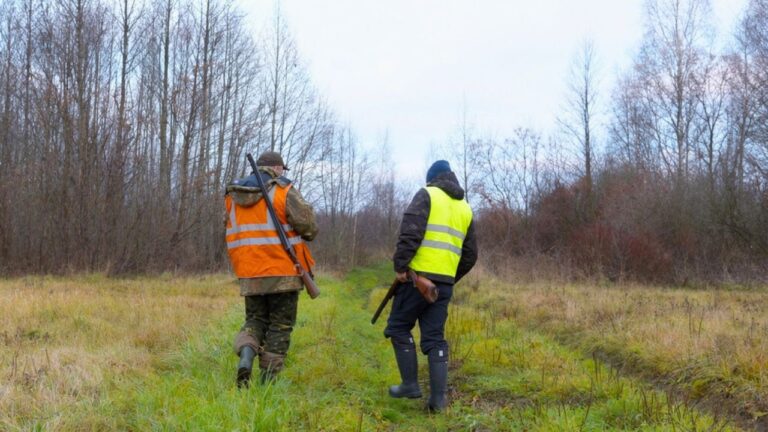
Photo credit: Mountains Hunter/Shutterstock.com
CWD is reshaping how you hunt deer across the Midwest, from where you can take a shot to what you must do with a carcass before you head home. Heading into next season, the most important changes involve new management zones, special seasons, carcass transport limits, and testing rules that now vary sharply from state to state. If you want to stay legal and keep whitetails on the landscape for the long haul, you need to understand how those rules are evolving before you climb into a stand again.
1. Why CWD Is Driving So Many New Rules
Chronic wasting disease is no longer a distant problem confined to a few Western herds, it is now a defining factor in how you hunt in core Midwestern states such as Missouri, Illinois, Wisconsin, and Minnesota. Wildlife agencies are tightening regulations because CWD spreads silently through prions in brain and spinal tissue, and once it is established in wild deer, there is no practical way to remove it from the landscape. That reality is why you are seeing more management zones, targeted harvests, and disposal rules that focus on keeping infected material from moving into new areas.
States are also responding to the way CWD clusters around specific counties and travel corridors. In Missouri, for example, the disease has prompted a formal CWD Management Zone that expands whenever a new positive is found or a neighboring county falls within a 10 mile radius of a detection, a structure spelled out in the state’s Chronic Wasting Disease Regulations. Illinois has taken a similar approach with a long running Illinois CWD Surveillance and Management Program that sets explicit CWD Management Goals and adjusts surveillance counties over multi year windows. For you, that means the rules you hunted under a few seasons ago may no longer apply in the same woods.
2. Missouri’s Rapidly Expanding CWD Management Zone
If you hunt in or near the Show Me State, the most consequential change is the growth of The CWD Management Zone and the new restrictions that come with it. The zone consists of counties that have had a CWD positive detection and those that are within 10 miles of a detection, according to The CWD Management Zone rules. Earlier updates added eighteen counties to the zone, including Audrain, Boone, Cole, Dent, Douglas, Howard, Lewis, Macon, Osage, Phelps, Pulaski, Randolph, Saline, Scotland, Shelby, Sullivan, Warren, and Wright, as detailed in the state’s CWD info for the 2024–2025 deer season. That expansion pulled a wide swath of central Missouri farms and timber lots into a more restrictive regulatory framework.
New counties have continued to join the zone as testing finds additional positives. The latest list of new counties in the CWD Management Zone includes Callaway, Cape Girardeau, Daviess, Harrison, Henry, Marion, Miller, Moniteau, Morgan, Ralls, St. Louis, and Texas, a list spelled out in the state’s new counties update. If you hunt in any of these counties, you now fall under special carcass transport limits, feeding bans, and mandatory sampling periods that did not exist a few years ago.
3. Missouri’s Season Structure, APR Changes, and Landowner Rules
Missouri is not just redrawing maps, it is also reshaping when and how you can hunt deer in response to CWD. The Missouri Department of Conservation has announced that the CWD portion of deer season took place Nov. 26–30 within Management Zone counties this year, and after reviewing that framework, the agency plans to fold CWD focused opportunities into a more streamlined season structure so dates are easier for landowners and hunters to track, according to a regulation changes summary. A separate announcement on upcoming 2026–27 seasons notes that Missouri created a CWD core area and a CWD buffer area to better target disease hot spots while still offering statewide opportunity, a structure described in detail in the Missouri Department of Conservation announcement. For you, that means paying close attention to which side of a county line you are on when you buy tags and plan vacation days.
Antler point restrictions are also shifting in response to the disease. Given the current distribution of CWD, the APR remains in place in only 18 counties, and the state has removed the APR from other counties to encourage harvest of younger bucks that may be more likely to move the disease, a change outlined in the agency’s changes to deer hunting regulations. At the same time, Missouri is increasing acreage thresholds for CWD Management Permits so that a landowner with at least five acres in a CWD core area can request additional harvest authority, a detail highlighted in a separate Increase Acreage for CWD Management Permits report. If you own or lease ground in a core area, those permits can significantly change how aggressively you manage your local herd.
4. Carcass Transport and Disposal: The Rules After the Shot
Once you tag a deer in a CWD affected area, the most important legal decisions you make may come after the photo session. Missouri now requires that Hunters dispose of unused deer parts in trash that is dumped in a sanitary landfill or on the property where the deer was taken, a rule spelled out in the state’s Chronic Wasting Disease guidance. That means you cannot legally haul a full carcass from a CWD Management Zone county to a distant camp or taxidermist unless you first remove high risk tissues such as the head and spine, and you must think about where your processor sends waste.
Other Midwestern states are pairing similar disposal expectations with incentives to test your deer. In Wisconsin, if a hunter receives a CWD positive test result, a replacement authorization will be added to the hunter’s GoWild account within two to four days of the positive result notification, according to the state’s CWD test results page. That replacement tag softens the blow of losing venison and encourages you to submit samples, while the same guidance points you to carcass handling rules that keep infected material out of the general waste stream. If you hunt across state lines, you should assume that moving whole heads or spinal columns from a CWD county into a clean county is either tightly restricted or outright banned, even if the exact wording differs.
5. Mandatory Sampling, Special Seasons, and Late Hunts
Testing is the backbone of every CWD program, and states are increasingly tying your ability to hunt certain seasons to your willingness to submit samples. Missouri’s CWD info for the 2024–2025 deer season highlights Mandatory CWD Sampling during the opening weekend of the November portion of firearms season in Management Zone counties, and notes that hunters who harvest a deer in those counties must present the animal for sampling on the day of harvest, as detailed in the Mandatory CWD Sampling guidance. That requirement can change how you plan your hunt, especially if you are used to dragging a deer to camp and dealing with it the next morning.
Other states are layering on special CWD hunts that extend your season but come with extra responsibilities. In Minnesota, wildlife managers have created a late CWD season in southern zones where some public lands that are normally closed to hunting are opened to late season deer hunts, a strategy described in the state’s late CWD season information. That same guidance notes that CWD testing during the late hunts is mandatory in designated areas to limit the spread of CWD, so if you take advantage of those extra days, you are also committing to check station stops or mail in kits. In North Dakota and Minnesota border country, a late season deer hunt to manage CWD is scheduled for Dec. 19–21 in select areas, according to a notice carried by The Mighty 790 K KFGO, which underscores how agencies are using short, targeted hunts to knock back local infection rates.
6. Illinois: Special CWD Deer Season and Easier Test Results
Illinois has been managing CWD for years, and the state is now fine tuning its approach with a Special CWD Deer Season that overlays the regular framework. To participate, you must OBTAIN a PERMIT by purchasing an OTC county specific Special CWD Deer Season permit, which is Sold over the counter by IDNR license vendors, as spelled out in the state’s Special CWD Deer Season hunting information. Those permits are only valid in designated CWD counties, which include long monitored areas in northern Illinois such as Bureau, Ford, Lee, Grundy, and LaSalle, as well as other counties identified in the broader Illinois CWD program. The Illinois CWD Surveillance and Management Program Updates for 2025–2029 explain that, despite long term efforts, the state still needs focused harvest in these areas to meet its CWD Management Goals, so your participation in the special season is a direct part of disease control.
Illinois is also trying to make it easier for you to get and act on test results. A recent update from SPRINGFIELD, Ill. notes that Deer hunters will have an easier way of getting Chronic Wasting Disease results, with notifications sent through email and text so you do not have to keep checking a website, according to a report highlighted by KFVS. That same notice directs you to IDNR’s online resources for more information, which is critical if you hunt in multiple counties or cross into neighboring states like Kentucky where import rules may differ. Faster results mean you can decide sooner whether to consume or discard venison from a tested deer.
7. Wisconsin and Minnesota: Units, Late Hunts, and Public Land Access
To the north, Wisconsin and Minnesota are refining their maps and seasons to keep up with shifting CWD patterns. In Wisconsin, the agency brought the proposed DMU map to the Wisconsin Natural Resources Board (NRB), where it was approved, and the new map will guide how each deer management unit number appears in regulations and on tags, according to the state’s DMU update. That change matters if you hunt in a county that is split into multiple units, because CWD related baiting, feeding, and carcass rules can now be tied to unit boundaries rather than just county lines, a nuance highlighted in preseason coverage that reminds you to check whether baiting and feeding bans are in place in your county in light of everything you need to know about CWD. The statewide 2025 Wisconsin Hunting Regulations also spell out Zone specific permits and list seasons such as Crow from Oct. 18 to Nov. 9, along with SMALL game frameworks, in a comprehensive Wisconsin Hunting Regulations booklet that you should read alongside CWD guidance.
Minnesota is pairing its late CWD seasons with special access to public lands that are normally off limits to deer hunting. The state’s late season information notes that Special public land access will open some public lands in southern Minnesota where deer hunting is not normally allowed, and that a state park permit is required in certain areas, as described in the Special public land access section. Part of the Nerstrand Big Woods area, for example, will be opened to public hunting during this hunt, and some of these opportunities are archery only, with access coordinated through the Owatonna area wildlife office. If you are used to thinking of Minnesota state parks as off limits, those CWD hunts are a rare chance to step into lightly pressured ground, provided you are willing to follow strict testing and carcass rules.
8. How Enforcement and Communication Are Changing on the Ground
As rules multiply, enforcement and communication are becoming just as important as the regulations themselves. In Missouri, conservation officers have already shown they are willing to act aggressively when CWD related violations intersect with broader poaching or illegal possession cases, as illustrated by a recent operation where multiple search warrants led to the seizure of 50 whitetailed deer heads and antlers, one wild turkey head, and an illegally possessed fox squirrel, a case highlighted by the Missouri Conservation Commiss. That same update notes that Missouri deer hunters could see major changes to hunting regulations next year, reinforcing that the state is willing to pair new rules with real enforcement. If you are transporting heads or capes across county or state lines, you should expect officers to ask where the deer was taken and how the carcass was handled.
States are also investing in clearer outreach so you are not caught off guard. A regional outdoors roundup notes that Missouri deer hunters face updated rules for the 2025–2026 season, including changes to CWD regulations, carcass disposal, management zones, sampling requirements, and permit limits, a summary captured in an outdoors section that underscores how quickly the rulebook is evolving. In Wisconsin, preseason coverage underlines that hunters should be aware of baiting and feeding bans that may be in place in your county, and that you should check harvest testing sites and carcass handling guidance before the opener, as detailed in the What to know about CWD as hunting season gets underway. The message across the region is consistent: you are expected to know the rules before you pull the trigger.
9. Practical Steps You Should Take Before Next Season
With so many moving parts, the smartest thing you can do before next season is to build a CWD checklist tailored to where you hunt. Start by confirming whether your county is inside a CWD Management Zone or similar designation, using state specific tools such as Missouri’s Chronic Wasting Disease Regulations page, Wisconsin’s updated deer management unit map, or Illinois’ county lists in the 2025–2026 Special CWD Deer Season information. If you cross borders into places like North Dakota or back into Missouri from neighboring states, double check import and export rules for whole carcasses and high risk parts. Then, map out where you will take deer for testing, whether that is a staffed check station, a self serve kiosk, or a mail in kit.
Next, plan your season dates and permits around CWD specific opportunities and obligations. If you hunt in Illinois, decide whether you will buy an OTC Special CWD Deer Season permit for your county and mark those dates on your calendar alongside regular firearm and archery seasons. In Minnesota, consider whether the late CWD season and Special public land access in southern zones fit into your schedule, and remember that CWD testing during the late hunts is mandatory in those areas, as explained in the state’s CWD hunts guidance. Finally, think through carcass disposal before you ever leave the driveway: line up a processor who follows landfill rules, stock heavy duty bags for bones and trimmings, and be ready to quarter deer in the field so you can comply with transport limits. If you treat CWD regulations as part of your preseason scouting, rather than an afterthought, you will be better positioned to protect both your hunting privileges and the herds you depend on.
Like The Avid Outdoorsman’s content? Be sure to follow us.
Here’s more from us: