Photo credit: Bykfa/ShutterStock.com
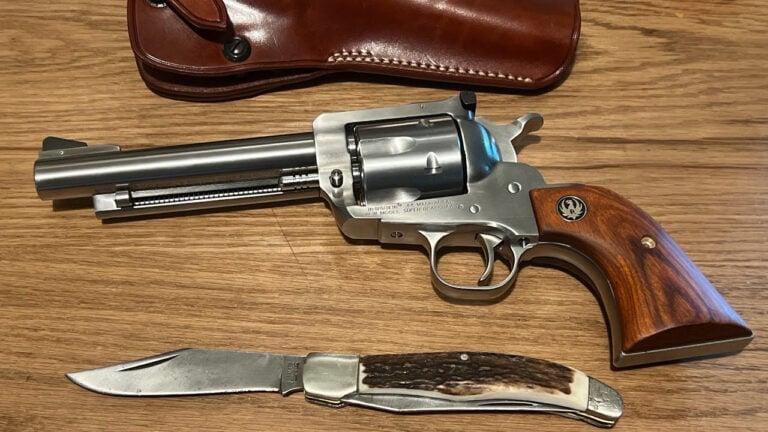
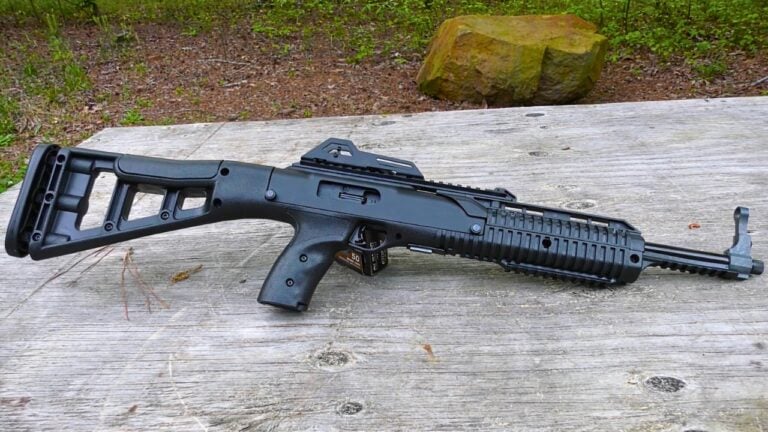
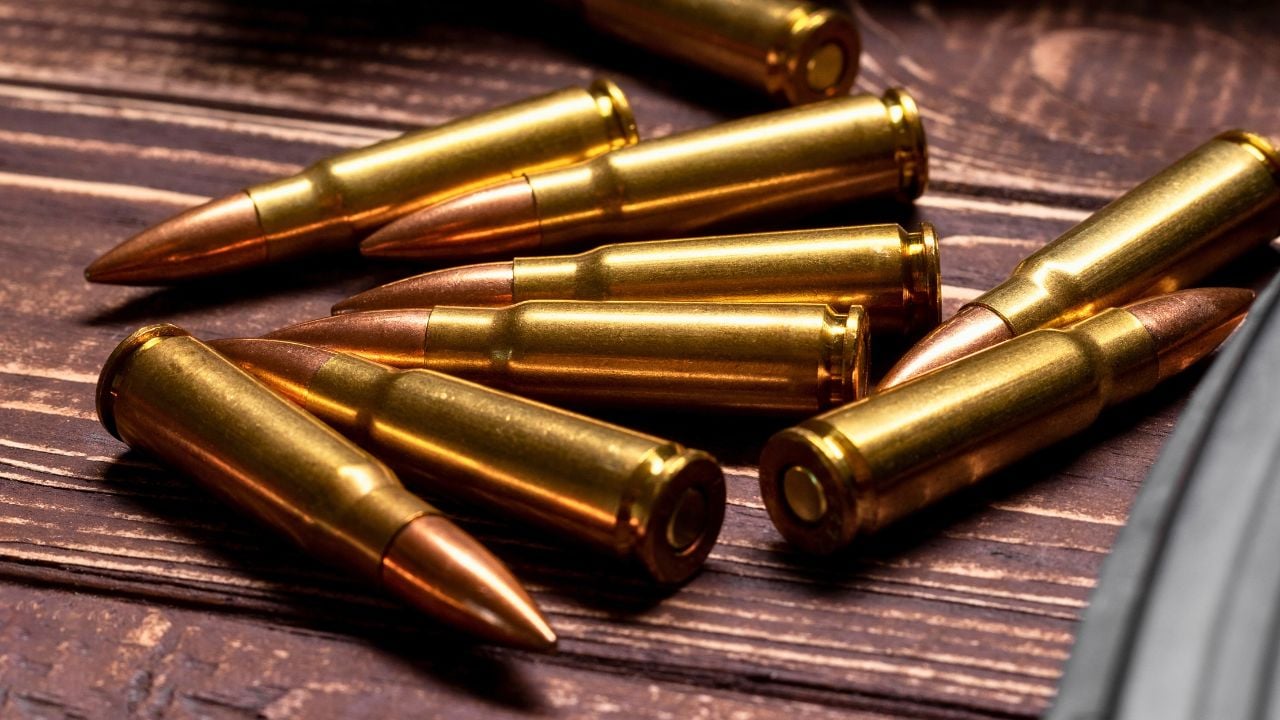
There are cartridges on store shelves that hang around not because they still make sense, but because folks have fond memories of them. Ammo companies know people hang onto Grandpa’s rifle or Dad’s old revolver, and they keep producing small runs of these calibers for sentimental reasons. You rarely see hunters or shooters picking them for their ballistics today. Most modern loads will outperform them in every measurable way, yet you’ll still find a box tucked away at the shop. These calibers survive because of nostalgia, not because they’re practical, and if you’ve shot them, you probably already know why they never left the past behind.
.32-20 Winchester

Once a popular round for small game and early revolvers, the .32-20 Winchester has long since been surpassed. With modest velocity and limited stopping power, it doesn’t offer much that modern .22 Mag or even light .223 loads can’t do better. Its rimmed case also limits the kinds of firearms it can function in smoothly.
Ammo makers keep it alive for those holding onto old Winchester lever guns or Colt revolvers chambered in the caliber. It’s a throwback to the frontier days, but performance-wise, it has been outdated for decades. While it still has a following among collectors and cowboy action shooters, the cartridge is more a piece of history than a practical hunting or defense option. If you’re reaching for it today, chances are it’s because you love the nostalgia, not because it gives you an edge in the field.
.38 S&W

The .38 S&W isn’t the same as the more modern .38 Special, and it shows in performance. It’s a low-pressure, slow-moving cartridge that doesn’t compare well to nearly any contemporary handgun round. Despite that, you’ll still find it on shelves because so many old British service revolvers and American break-top revolvers are chambered for it.
Shooters rarely pick it for serious use today, since even the smallest 9mm pistols leave it in the dust. Its only real function now is feeding vintage guns that folks don’t want to retire. Ammo makers keep it around to support those older revolvers, not because it’s competitive. If you’ve shot .38 S&W, you know the recoil is soft, but so is the terminal performance. It’s not a round that stands on merit anymore—it’s a cartridge preserved by nostalgia for an era when pocket revolvers and service pistols chambered in it were still in circulation.
.25 ACP

The .25 ACP was designed for tiny vest-pocket pistols in the early 20th century. Back then, it offered more reliability than rimfire cartridges of similar size, but times have changed. Today, with better ammo and improved rimfire designs, the .25 ACP’s advantages are gone. Its tiny bullet, low velocity, and poor penetration leave it badly underpowered for defense.
Despite its shortcomings, ammo companies still make it for the old pocket autos people keep around, whether as heirlooms or collector’s items. You’ll almost never see anyone carrying one for serious protection anymore. It survives as a curiosity, a link to an age when deep concealment meant tiny calibers. If you line it up against even the .22 LR or modern .380 ACP, it fails across the board. But nostalgia ensures it’s not disappearing completely. If you own one, you probably shoot it for fun at the range, not because it’s giving you any real advantage.
.41 Long Colt

The .41 Long Colt once had a niche following in revolvers, but it was never a powerhouse. It offered awkward ballistics, with soft lead bullets that didn’t perform consistently, and it faded quickly when more effective rounds like the .38 Special and .45 Colt came into play. Still, you can occasionally find factory ammo for it, kept alive by nostalgia and collectors.
The design quirks of the cartridge made it unreliable even in its prime, with bullets that sometimes didn’t grip rifling well. That inconsistency meant accuracy suffered, and power was always marginal compared to its peers. Yet, some shooters still hold onto the revolvers chambered in it, which explains why ammo makers continue limited runs. It’s a cartridge that lives in the shadow of more successful rounds, kept around so older firearms don’t become completely obsolete. If you shoot one today, it’s about honoring history more than relying on performance that simply isn’t there anymore.
.44 Russian

Before the .44 Special and .44 Magnum came along, there was the .44 Russian. It served its purpose in the late 1800s, especially in early Smith & Wesson revolvers, but its usefulness has long passed. Ballistically, it’s soft-shooting but weak, offering far less than modern revolver rounds.
Ammo manufacturers still keep it on life support for collectors and shooters of antique revolvers. Cowboy action shooters sometimes load it for authenticity, and that’s where most of its small demand comes from. In terms of practical use, though, there’s no reason to choose it when .44 Special offers a direct upgrade with better performance and more flexibility. The only reason the .44 Russian hasn’t fully disappeared is because nostalgia keeps people reloading and shooting it for fun. It’s an artifact of a transitional time in revolver history, and ammo companies recognize there’s still a small but loyal market for that connection to the past.
.30 Luger (7.65 Parabellum)

The .30 Luger was the original chambering for the Luger P08 pistol before the 9mm became the dominant version. It’s a bottleneck cartridge with interesting history, but its performance doesn’t match modern standards. Light recoil and flat shooting were once its selling points, but today it’s outclassed by more powerful and versatile rounds.
Ammunition is still manufactured mainly for collectors and owners of Lugers chambered in the caliber. It’s a round you shoot to keep a piece of history alive, not because it’s effective for defense or hunting. Compared to 9mm, it lacks punch and practicality. Ammo makers keep it around because of the prestige and nostalgia tied to the Luger name. Without those pistols in circulation, the cartridge would have disappeared long ago. Shooting it today is more about reliving a piece of firearm heritage than chasing performance that holds up in the modern world.
.351 Winchester Self-Loading

The .351 Winchester Self-Loading was tied to the Winchester Model 1907 rifle. While it had its uses in law enforcement in the early 20th century, it quickly became outdated. The cartridge offered middling ballistics and poor range, and with the rise of more capable intermediate cartridges, it had no place left to compete.
Ammo makers still produce small batches because collectors and shooters with Model 1907 rifles keep the demand alive. There’s little practical reason to hunt or defend with this round today when countless better options exist. Its straight-walled design limits its performance, and accuracy past moderate distances is unimpressive. Nostalgia for the unique rifles chambered in it keeps the cartridge alive, but that’s the only reason. It’s more of a novelty now, a way to experience the history of early self-loading rifles rather than a cartridge anyone would consider effective by modern standards.
.32 S&W

The .32 S&W was introduced for small revolvers in the late 1800s, and at the time, it offered a manageable option for concealed carry. By today’s standards, it’s completely outclassed by modern cartridges. With very low energy and shallow penetration, it simply doesn’t stack up for defense or hunting.
Despite that, you’ll still find ammo manufacturers loading it for the many old top-break revolvers chambered in it. Collectors and casual shooters like keeping those guns alive, even if performance is an afterthought. For nostalgia and the love of old revolvers, it makes sense that companies keep a small trickle of ammo in production. But if you’re comparing it to modern small-caliber revolver rounds like .38 Special or .327 Federal, the difference is night and day. The .32 S&W hangs on out of loyalty to the past, not because it has any edge in the real world today.
.38 Super

The .38 Super was once considered a powerhouse, especially in the 1930s when it could penetrate car doors and body armor that other rounds couldn’t. Today, though, its advantages are gone. Modern 9mm +P and .40 S&W offer equal or better performance with wider availability and cheaper cost. Despite that, the .38 Super is still loaded by major manufacturers.
The reason isn’t practicality—it’s loyalty to a following that grew around it, especially in competitive shooting and with certain 1911 enthusiasts. Nostalgia for the era when it was cutting-edge keeps it relevant, even if it’s no longer needed. While it’s capable, it’s not superior anymore. Ammo companies know there’s a small but passionate base that still wants it, and that’s what keeps it alive. For most shooters, it doesn’t provide any advantage that other cartridges don’t already do better, making it more about history than performance today.
.30 Carbine

The .30 Carbine was the round for the M1 Carbine in World War II, and it served fine in that role. But compared to modern intermediate cartridges, its performance leaves a lot to be desired. Ballistics are closer to a hot pistol round than a true rifle cartridge, and penetration is limited.
Even so, ammo makers continue producing it for the large number of M1 Carbines still in circulation. Collectors, reenactors, and nostalgic shooters keep the demand alive, not hunters or serious shooters who need performance. It’s fun to shoot, especially in a piece of military history, but no one is choosing it over a .223 or 7.62×39 for practical use. Its survival on shelves is entirely because of the rifle it’s tied to, not because the cartridge holds any edge today. If you shoot it, chances are you’re doing it to relive history, not because it beats modern designs.
.41 Magnum

The .41 Magnum was introduced to fill a supposed gap between .357 Magnum and .44 Magnum, but it never gained much traction. Performance-wise, it didn’t offer enough advantage over either cartridge to justify its existence, and ammunition has always been harder to find. Yet, ammo makers still produce it in small runs.
Its survival comes down to nostalgia and the loyal base of shooters who still run revolvers chambered in it. While it’s perfectly capable, it never earned widespread popularity, and most shooters see it as unnecessary when .357 and .44 cover the ground so well. If it weren’t for that small group of enthusiasts, the .41 Magnum would have faded entirely. Ammo makers cater to that nostalgia, knowing there’s a market for it, even if small. The round’s reputation is more about “what could have been” than actual performance that stands above other magnums today.
*This article was developed with AI-powered tools and has been carefully reviewed by our editors.