Photo credit: True North Outdoors TV/YouTube
When you’ve hunted long enough, you remember rifles that had no business leaving the market. Some were accurate beyond their price point. Some carried easier than anything we have now. Others hit like a hammer without punishing your shoulder. These rifles earned trust over decades, and when the manufacturers pulled the plug, hunters were left shaking their heads. Plenty of modern guns shoot well, but some discontinued models had a kind of reliability and balance that made them perfect whitetail tools. You still see them in deer camps, often held onto tightly because there’s nothing comparable on the shelf today. These are the rifles that should still be rolling out of factories.
Marlin 336 (JM-stamped era)

The JM-marked Marlin 336 earned its place in whitetail history. It carried easily, mounted fast, and handled tight woods better than most rifles made today. Hunters loved how the rifle settled into the shoulder, and the .30-30 chambering was more than enough for the ranges most deer are taken. When Remington bought Marlin and the quality fell apart, the older rifles became prized tools that simply refused to die.
You still see the old 336s taking deer every fall, and there’s a reason hunters hold onto them. They were accurate enough, rugged enough, and simple enough to run for decades with hardly any fuss. Even with Ruger bringing Marlin back, nothing fully replaces the confidence those original rifles delivered.
Winchester Model 88

The Winchester Model 88 brought a unique lever-action feel with bolt-gun performance. Its rotating-bolt design locked up tight, which gave hunters a real accuracy advantage over traditional levers. The .308 and .243 versions were especially popular because they provided flat trajectories for open-country deer while still cycling quickly when a second shot was needed.
The rifle balanced beautifully and carried far better than the weight suggested. Hunters who grew up with the 88 will tell you it pointed naturally and seemed to hit where you were looking. When Winchester discontinued it, there was nothing similar left on the market. To this day, finding a clean Model 88 in good condition is a treat because it still checks every box a deer hunter wants.
Remington Model 600

Short, handy, and surprisingly accurate, the Remington Model 600 was decades ahead of its time. Its lightweight design and dog-leg bolt were unconventional, but the rifle shot far better than it looked. Hunters loved how quick it was to shoulder in the thick timber, and the .308 versions were absolute deer killers. It had the soul of a modern mountain rifle long before that market existed.
Many hunters regret letting theirs go because nothing currently made feels quite the same. The 600’s balance, compact size, and real-world accuracy made it a perfect woods rifle. Even though Remington followed it up with new models, none of them captured the magic that made the 600 such a practical deer rifle.
Ruger M77 RSI

The Ruger M77 RSI with its full-length Mannlicher stock wasn’t just a pretty rifle—it was incredibly handy in the deer woods. The 18.5-inch barrel made it maneuverable in stands, blinds, and thick cover. Chamberings like .308 Winchester made it more than capable of taking deer cleanly, even at moderate distances.
Hunters loved how it carried slung across the shoulder and how quickly it came on target. The RSI was accurate enough for realistic ranges, but what really made it special was the feel in hand. Ruger eventually discontinued it, leaving a gap for hunters who valued compact rifles that didn’t sacrifice power. The used market proves how much people still want them.
Browning BLR Steel Receiver Models

Before Browning switched to aluminum receivers, the original steel-framed BLR rifles were built like tanks and shot incredibly well. The smooth lever action combined with pointed bullets made them superior to traditional lever guns in open country. The .308, .358, and .243 versions became favorites among deer hunters who wanted bolt-action performance without giving up the lever-gun handling.
Those early BLRs cycle like nothing else, and the accuracy often surprises hunters who expect a lever gun to open up groups. When Browning discontinued the steel versions, many hunters were left wishing they had grabbed one. Even today, the older BLRs command strong prices because they were the perfect blend of speed, power, and precision.
Savage Model 99

The Savage 99 has been gone for decades, but it still outperforms many new rifles. The rotary magazine allowed pointed bullets long before other lever guns could use them. Chamberings like .300 Savage earned a reputation for excellent deer performance, and the rifle itself handled like an extension of your body.
The 99 was rugged, accurate, and unbelievably dependable. It didn’t rattle, it didn’t jam, and it didn’t punish your shoulder. Hunters who grew up with one often refuse to switch to anything modern. When production ended, many felt the industry lost one of the most practical deer rifles ever created.
Winchester Model 70 Classic Featherweight

Before recent revivals, the original Classic Featherweights were among the best all-around deer rifles ever built. Controlled-round feed made them dependable, and the light barrel profile kept them easy to carry through long days in the woods. The .270 and .30-06 versions were especially common in deer camps.
The Featherweight was accurate enough for any practical deer shot and balanced beautifully offhand. Hunters loved that it pointed naturally and didn’t wear them out during long hikes. Modern versions exist, but the older guns had a certain character that made them feel like true hunting tools rather than production rifles.
Marlin 1894 (early .44 Mag and .357 Mag)

The earlier production runs of the Marlin 1894 were smooth, accurate, and reliable. Deer hunters loved the .44 Mag and .357 Mag versions for thick woods where shots stayed inside 100 yards. The rifles were light, fast to mount, and carried well in rough terrain.
Once Marlin changed hands, consistent quality became a problem, and many hunters realized how good the early rifles had been. They cycled smoothly, grouped well, and hit hard enough to anchor deer quickly when paired with the right loads. Today, those older models are treasured because they performed exactly as a short-range deer rifle should.
Sako L61R Finnbear

The Sako L61R Finnbear was one of the smoothest, most accurate factory hunting rifles ever built. The workmanship was remarkable, and the long-action chamberings like .30-06 and .270 Winchester were perfect matches for whitetail hunters who valued long-range consistency and smooth cycling.
The rifle’s triggers were crisp, and the actions ran like polished glass. Hunters who bought them rarely felt the need to upgrade. When Sako transitioned to newer models, the Finnbear remained the benchmark many still judge rifles against. It was the kind of deer rifle you kept forever.
Winchester Model 54
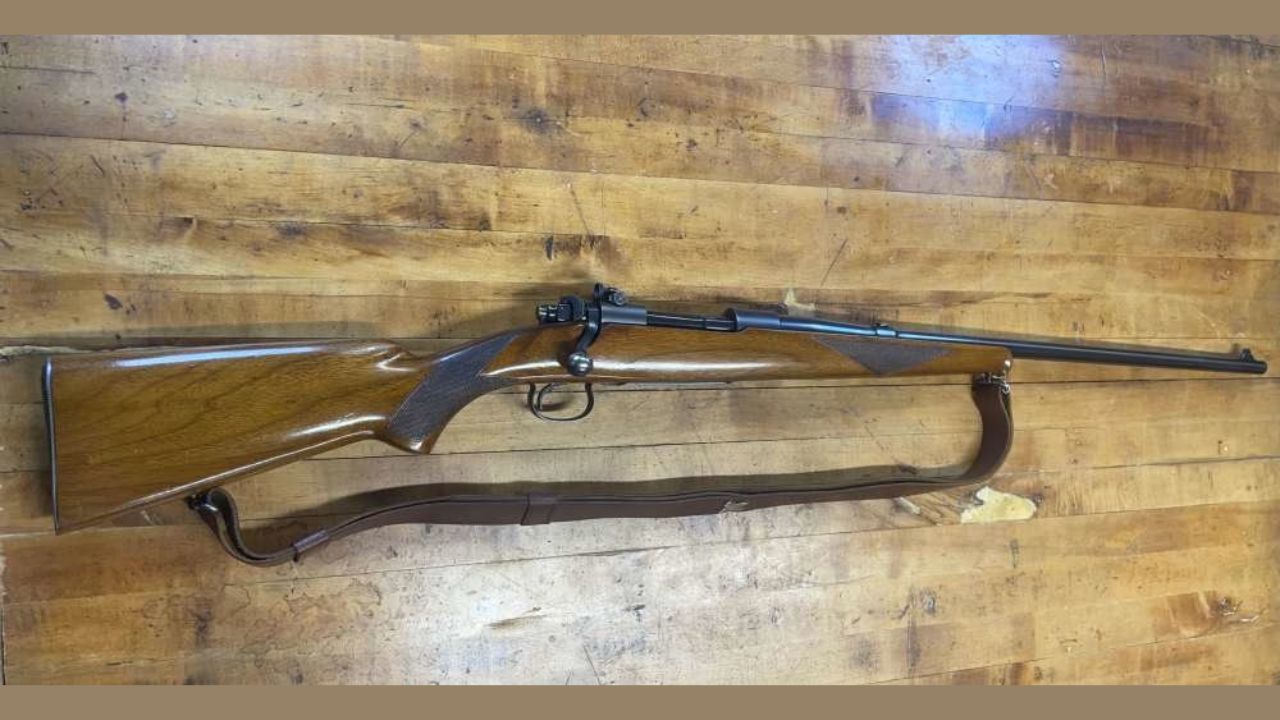
The Winchester Model 54 often gets overshadowed by the Model 70, but it was a fantastic deer rifle in its own right. It offered dependable accuracy, solid machining, and clean handling. Chamberings like .30-06 made it versatile for both whitetails and mule deer.
Hunters appreciated how predictably it shot and how it stood up to years of field use. It lacked some refinements of later rifles, but none of that affected its performance where it mattered. Losing it meant losing a piece of rifle history that punched far above its age.
Ruger No. 1 Medium Sporter

The Ruger No. 1 gave hunters a compact, classy rifle with surprising accuracy for a single-shot. Its short length made it excellent for blinds and timber hunts, and calibers like .270, .280, and .30-06 made it plenty capable for any deer you’d ever face.
The rifle’s simple break-open design was nearly indestructible, and the triggers on many examples were outstanding. Hunters loved the challenge and the confidence it required. When Ruger scaled back production, it left a void for those who appreciated compact, precise rifles with the spirit of an older era.
Remington Model 721

The Remington 721 was the predecessor to the famous 700, but many hunters still argue it was the tougher rifle. Its simple, robust design made it a reliable deer gun that handled rough weather without complaint. Chamberings like .270 and .30-06 gave hunters everything they needed for whitetails nationwide.
The rifle’s accuracy was excellent for its time and still holds up today. Many hunters kept theirs for decades because they simply never failed. Ending its production made sense for Remington’s catalog, but the 721 deserved a longer run based on performance alone.
Browning A-Bolt (early Japan-made models)

The first-generation Browning A-Bolt rifles built in Japan were among the most consistent factory rifles ever made. The triggers were excellent, the actions were smooth, and the accuracy was reliable right out of the box. Deer hunters admired how the rifles handled and how easily they printed tight groups.
Chamberings like .270, 7mm Rem Mag, and .30-06 made them versatile tools for deer across the country. When Browning shifted the lineup, many hunters wished the original A-Bolt had stayed in full production because it simply worked without asking anything in return.
Like The Avid Outdoorsman’s content? Be sure to follow us.
Here’s more from us:
The worst deer rifles money can buy
Sidearms That Belong in the Safe — Not Your Belt
*This article was developed with AI-powered tools and has been carefully reviewed by our editors.