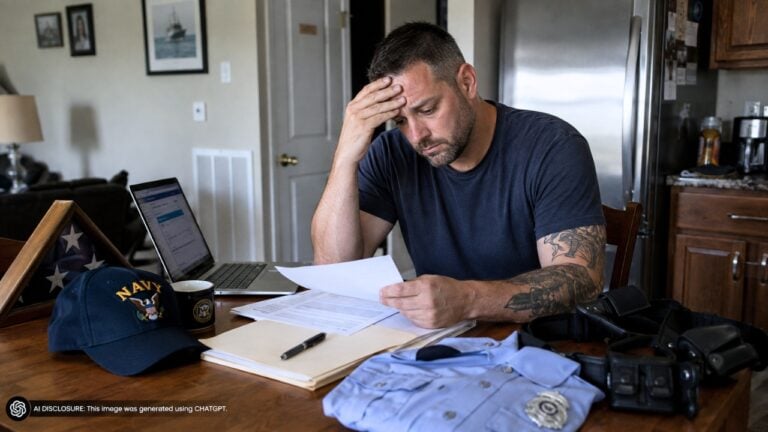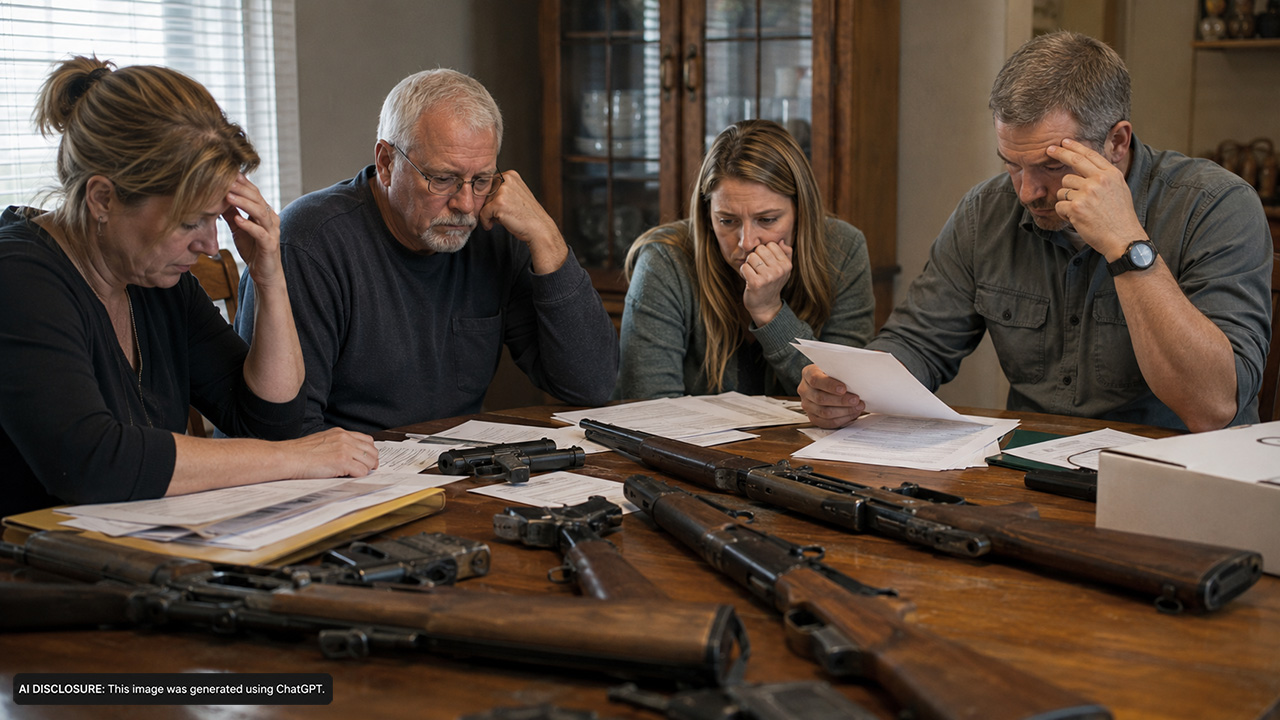
Photo credit: AI-generated image created using ChatGPT. Illustrative only
When a father passes and leaves behind a few well-used firearms, most families think the hard part is deciding who gets what. In this case, the personal representative of the estate was fine handing the guns to a brother who wanted them. The snag was the paperwork—and the fact that the brother lives in New Jersey, where “simple” and “firearm transfer” don’t often belong in the same sentence.
In the original post, the personal representative explained that their father left several revolvers, a pistol, and a “circuit judge rifle.” There wasn’t any clear written direction about who should inherit them. The brother would like them, and he already has New Jersey licenses for both pistols and rifles. The representative isn’t a gun person, tried working with a lawyer, and got slow, unhelpful responses.
A common family plan runs straight into federal transfer rules
Plenty of folks assume that if you’re the executor or personal representative, you can just hand the guns to the family member who wants them. Sometimes you can—especially if everyone’s in the same state and the heir is clearly identified by a will.
But once state lines are involved, you’re in federal territory. Under federal law, transfers between residents of different states generally have to go through a federally licensed firearms dealer (an FFL). Estates have a narrow set of exceptions, and they don’t cover every “my sibling wants Dad’s handgun” situation people expect them to.
“Rightful heir” gets tricky when there’s no written direction
The personal representative’s core problem wasn’t just logistics. It was the question of who, legally speaking, is supposed to receive the guns when the deceased didn’t spell it out. Families often use “rightful heir” to mean “the person we all agree should have them.” Probate court doesn’t always see it that way.
If there’s no will directing those firearms to a specific person, they’re part of the estate property, and the transfer usually has to follow the same rules as anything else: distribute according to the will’s general terms, or—if there isn’t a will—according to the state’s intestate succession rules. Even when everyone is on good terms, the personal representative still has to be able to justify what they did if the estate is ever questioned.
New Jersey is its own layer of “not so fast”
The brother being in New Jersey matters. A lot. New Jersey has its own permitting system and rules about what can be possessed, how handguns are acquired, and what kinds of long guns and features are allowed. The poster noted the brother has licenses for pistols and rifles, which is a good sign—but it doesn’t automatically greenlight an out-of-state transfer.
It also raises a practical concern: not every dealer wants to touch estate transfers coming from out of state, and not every dealer handles handguns the same way. Add in the possibility that one of the firearms could be something New Jersey treats differently—whether due to magazine capacity, configuration, or simply classification—and the “just ship them” idea can turn into a dead end fast.
That “circuit judge rifle” detail is more important than it sounds
Most outdoorsmen hear “Circuit Judge” and think of the Rossi Circuit Judge: a revolving long gun that can be chambered in .45 Colt and/or .410 shotshell depending on the model. That matters because some states and agencies don’t treat every oddball hybrid the same way, and terminology can confuse the people processing the transfer.
When paperwork starts, you want exact make, model, and caliber/gauge. “Revolvers and a pistol” is fine for a kitchen-table conversation, but a dealer will want specifics, and some states care a whole lot about how a firearm is categorized. If the personal representative is “not a gun person,” it’s easy to get tripped up right here—before you even reach the big legal hurdles.
The safest path is boring: use an FFL and document everything
When you strip away the noise, the practical goal is simple: move the firearms from the estate to the brother without creating a mess for the personal representative—or putting the brother at risk of a bad possession situation. The boring, reliable way to do that is usually to involve an FFL on the receiving end in New Jersey, and possibly an FFL on the sending end depending on how the firearms are transported and what the dealers require.
On top of that, the estate side should keep clean records: an inventory of the firearms, how they were stored, and a clear paper trail showing that the transfer was part of lawful estate distribution. That’s not about paranoia. It’s about treating guns like the regulated property they are, especially when handguns and state lines are involved.
And while it wasn’t spelled out in the post, safe storage matters in the meantime. When families are sorting out probate, firearms can end up in closets, vehicles, or spare rooms where they don’t belong. A locked safe or locking cabinet and a clear “who has access” rule prevents the kind of accident or misunderstanding that turns a paperwork problem into a real-world problem.
Why the lawyer delay is a red flag for gun owners planning their estates
The personal representative said they reached out to a lawyer who took months to respond and wasn’t very helpful. That’s frustrating, but it’s also a good warning to the rest of us: if you own guns, leaving “who gets what” vague can dump stress on your family at the worst possible time.
A basic estate plan that specifically lists firearms—or at least clearly identifies the intended recipient—can save a pile of trouble. Even then, you still have to follow federal and state law. But you’re no longer guessing at intent, and the personal representative has clearer authority to move forward.
For folks with family across state lines, it’s worth thinking through ahead of time. The deer rifle you bought in cash 20 years ago might be emotionally “obvious” to your brother or your kid, but the legal transfer may require a dealer, permits, and patience. That’s not the family being difficult. That’s the system.
What this family ran into is something a lot of outdoorsmen don’t consider until it’s too late: firearms aren’t just heirlooms. They’re heavily regulated property, and the moment an estate is involved—especially across state lines—good intentions don’t count for much without the right process.
Like The Avid Outdoorsman’s content? Subscribe to our newsletter so you never miss an article.
Here’s more from us: