Photo credit: AI-generated image created using ChatGPT. Illustrative only.
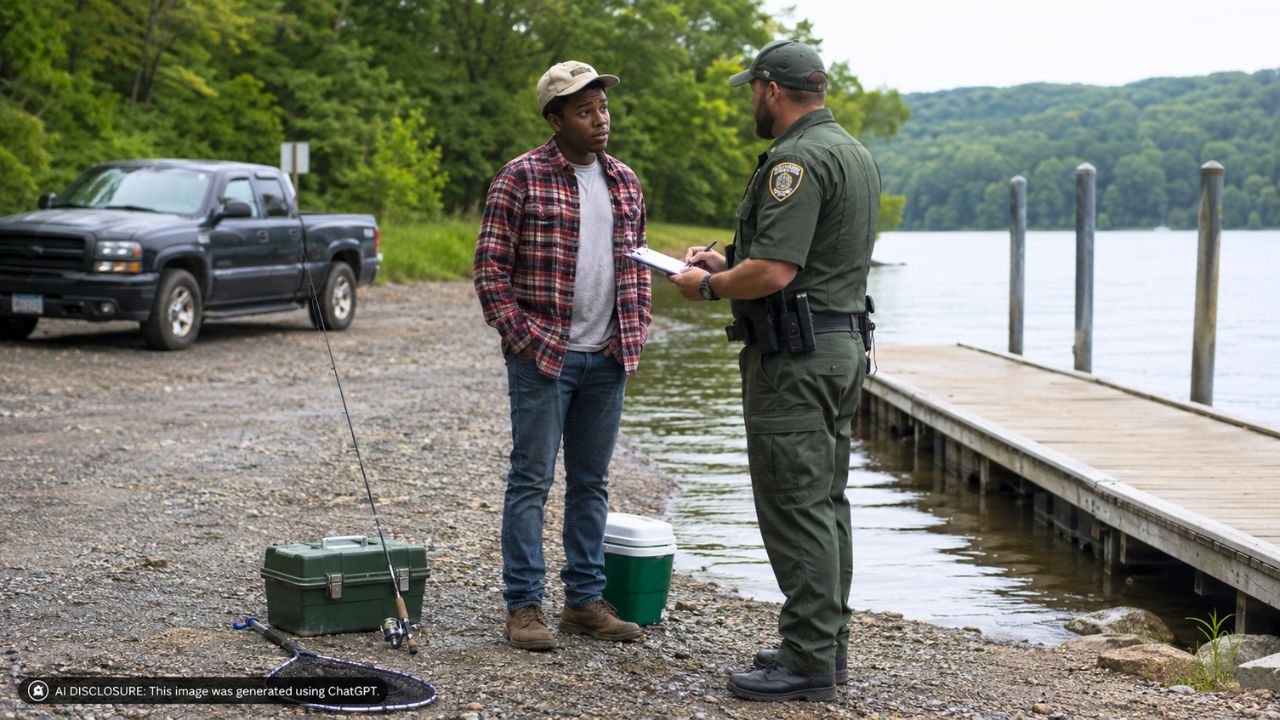
A lot of folks imagine their first few fishing trips are going to be simple: buy a license, bring some bait, keep what’s legal, and go home with a cooler and a good story. For one brand-new angler in the Florida Keys, it didn’t go that way. On just his third time out, he and a few buddies ended up with wildlife citations after unknowingly fishing inside a wildlife sanctuary.
In the original post, the new fisherman said he’d bought his fishing license only two days earlier. The group was on a friend’s boat, catching fish that were in-season and legal size. The problem wasn’t the fish. It was where the lines were in the water.
A perfectly “legal” catch can still be illegal if you’re in the wrong water
This is one of the hardest lessons for new anglers to learn, especially in a place like the Keys where boundaries can change fast and protected areas can be mixed right in with popular fishing zones. The poster said they “were fishing in a Wildlife Sanctuary without even knowing,” and that they didn’t see any signs.
That last part matters emotionally, but it doesn’t usually matter much on the enforcement side. On the water, you’re expected to know where you are. It’s no different than a deer hunter stepping over a property line because a fence is down, or a waterfowler setting up too close to a closed refuge boundary because they “didn’t see the marker.” The rule is still the rule.
Getting cited is one thing; learning you may have to go to court is another
Plenty of outdoor citations are handled like a traffic ticket: pay it, learn from it, move on. But the poster’s big stress point was realizing this wasn’t necessarily going to be a simple mail-in fine. He asked what to do next—whether to plead guilty, whether he’d end up with a criminal record, and whether he should spend money on a lawyer to fight it.
That’s the gut-check moment for a lot of working folks. Even a “minor” infraction feels a whole lot bigger when the paperwork says “court.” And when you’re brand new to fishing, it’s easy to assume that because the fish were legal, the whole trip was legal. The citation says otherwise.
Why wildlife sanctuary boundaries are easy to mess up in the Keys
The Florida Keys are a maze of channels, flats, mangroves, islands, and marked-and-unmarked zones that don’t always look different from one another on the surface. A “wildlife sanctuary” doesn’t always scream no fishing the way a fenced area on land does. Sometimes the line is a GPS boundary. Sometimes it’s a sign on a key you never get close enough to notice. Sometimes it’s a marker you don’t recognize because you’re focused on wind, current, and not getting seasick.
For boat anglers—especially beginners—the real-world navigation looks like this: you trust the guy running the boat. If he says, “This spot’s good,” you rig up and fish. That’s normal. But if the boat operator doesn’t have the sanctuaries dialed in on a chartplotter or phone app, everybody on board can wind up holding the same citation.
The real fear wasn’t the fine—it was his work and his record
What made this story feel personal wasn’t just the mistake. It was the worry behind it. The poster said he works and does contract work with the government and “can’t have anything on my records.” That’s a real concern. Lots of outdoorsmen hold jobs where background checks, clearances, or simple reputation matter.
Here’s the practical part: the citation itself is already a problem you have to treat seriously. Ignoring it or guessing wrong can turn a small mess into a bigger one. Whether it becomes something that follows you depends on how the jurisdiction handles that specific type of violation and how you respond to it. That’s why “just pay it and forget it” isn’t always the right move if you have employment or credentialing risks.
If you’re cited, your next steps should be boring and methodical
No chest-thumping, no arguing on the dock, no trying to talk your way out of it after the fact. The best play is usually the most boring one: read the citation carefully, track the deadline, and figure out whether you’re required to appear or whether there’s an option to resolve it without a court appearance.
The poster asked if he should plead guilty and whether it’s worth hiring a lawyer. Nobody wants to spend money on an attorney over a mistake made on a buddy’s boat, but if your livelihood depends on keeping your record clean, that expense can be cheap insurance. At the very least, it can be worth getting an actual legal opinion specific to the county and charge you’re facing, not just general “internet advice.”
There’s also the basic documentation piece. Write down what happened while it’s fresh: where you launched, who operated the boat, where you fished (as close as you can get), what the officer told you, and whether there were any markers or signs you did or didn’t see. Don’t embellish it. Just get it on paper for your own reference before details fade.
The outdoors lesson: don’t rely on “no signs” and don’t rely on the other guy’s GPS
Every new angler eventually learns that “we didn’t see any signs” doesn’t hold much water. On public land and public water, the burden is on you. That’s not said to pile on—just to keep the next trip from ending the same way.
If you fish new water, especially in a patchwork of closures, sanctuaries, refuges, and seasonal zones, you need a habit: check the area before the boat leaves the ramp. That can be a navigation app, a marked chart, or even saved coordinates with a buffer zone you refuse to cross. Sanctuary lines are often tight, and “close” can still be inside.
And if you’re the new guy getting invited along, don’t be afraid to ask, “Are we clear to fish here?” Good captains and experienced buddies won’t take offense. The ones who do are the same ones who will shrug when everyone gets cited.
The hard part about this incident is it came right at the beginning—license purchased, early trips, learning the ropes. But it’s also the kind of mistake that can sharpen you up fast. Take the citation seriously, handle it on time, and let it change how you plan every trip from here on out. That’s how you keep fishing fun—and keep it from spilling into a courtroom again.
Like The Avid Outdoorsman’s content? Be sure to follow us.
Here’s more from us: