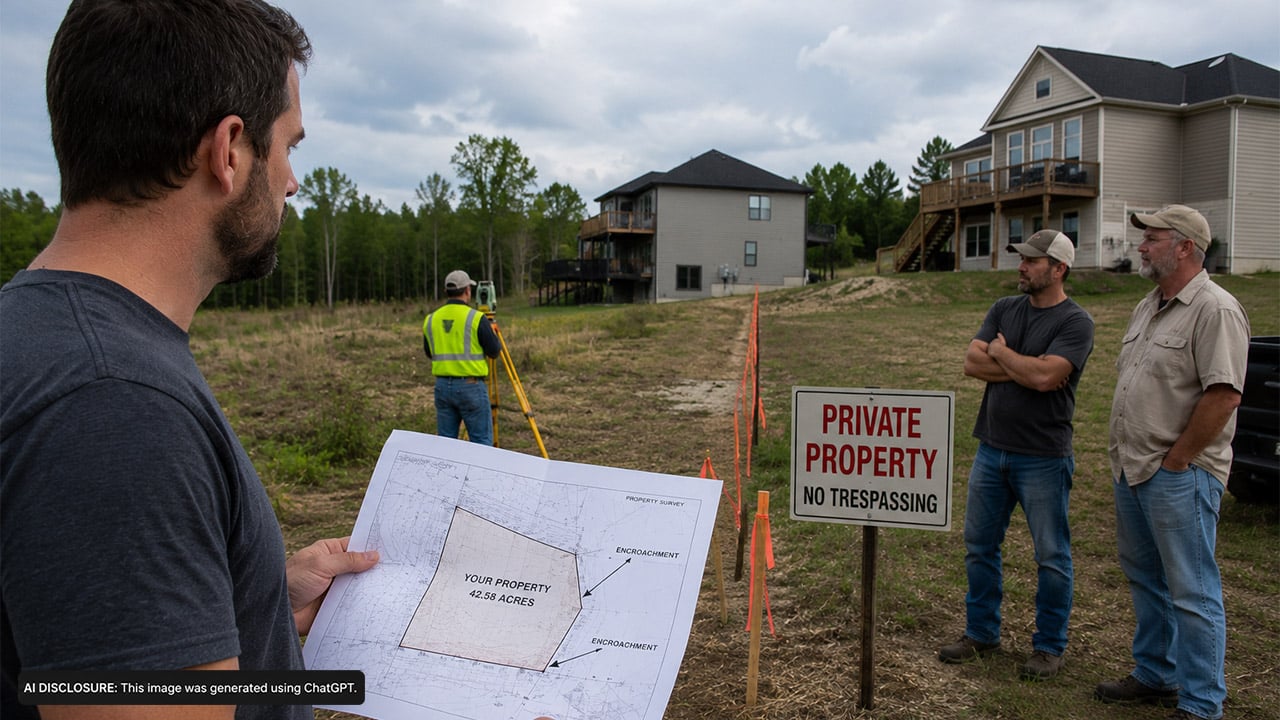
Photo credit: AI-generated image created using ChatGPT. Illustrative only
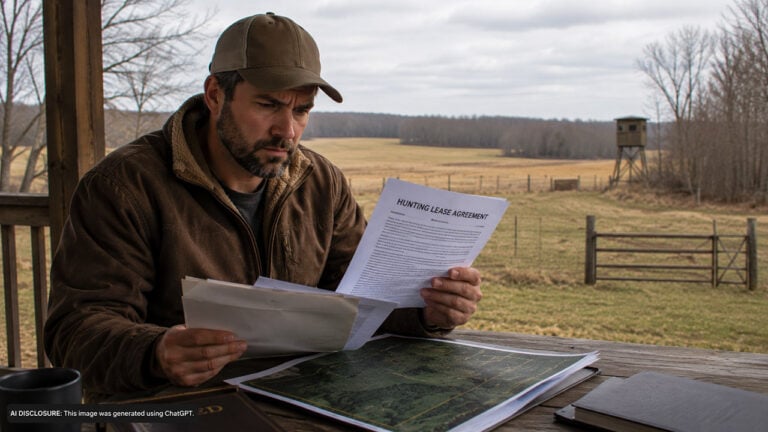
Most folks think inheriting land means you’ll spend your first weekend fixing fence, hanging trail cams, and figuring out where the good deer trails cross the creek. This one started with a survey map and a gut punch: the new owner realized parts of his late grandfather’s property weren’t just being used by neighbors—they’d been built on.
In the original post, the man explained that his grandfather passed in 2020, and the estate only wrapped up in recent weeks. After getting the property lines run and the boundaries mapped using a drone, he noticed two things: the parcel was larger than he’d ever believed, and there were multiple houses sitting inside the lines—apparently with no record of permission ever being granted.
A survey turned up more land—and more problems
The first surprise was actually the kind most outdoorsmen daydream about. He wrote that the land was “way larger” than he thought, to the point he wasn’t sure his grandfather even knew the full extent of what he owned. The property had been bought from the man’s great grandmother, and the poster suggested she wasn’t in a condition at the time to be clear on details.
Then came the second surprise, and it wasn’t the fun kind. The drone map and boundary work showed that people had built their own houses on the inherited land. Not a camper. Not a shed. Houses—plus signs of years of use like tree clearing, digging, and adding pools.
It wasn’t just trespassing—it sounded like outright occupation
A lot of rural folks deal with trespassers: somebody cuts across a corner to fish, kids ride four-wheelers, a neighbor “forgets” where the line is when it’s time to stack firewood. What this man described sounded bigger than that. He said people had been tearing down trees and altering the property “for years,” and that the homes looked “pretty recent,” meaning it didn’t feel like some decades-old handshake deal either.
That’s the part that makes your stomach turn if you’ve ever paid taxes on acreage. Trees don’t grow back quickly, and land disturbance—especially around drainages—can create erosion and access issues that cost real money to fix. Even if you don’t mind a neighbor personally, it’s hard to shrug off the idea that someone treated your family’s dirt like a free-for-all.
One neighbor raised the temperature right away
The post also included a detail that changes how most landowners would approach this. He mentioned having personal history with one neighbor in particular, saying that person shot one of his dogs when he was a kid. That’s not a “we argued about a fence line” kind of dispute. That’s the sort of history that makes any future face-to-face conversation feel risky.
In rural settings, boundary disputes and access issues can go from civil to dangerous faster than people in town realize. When firearms are part of everyday life—and they are for plenty of folks—the smart play is to keep emotions out of it and let process do the work. This is exactly the kind of situation where you don’t “go have a talk” by yourself at the property line.
What he wanted to know: do the houses become his, and can he make them leave?
His questions were straightforward, and they’re the same questions most landowners would ask after staring at that map for an hour. Do I have legal claim to the houses? Can I tell them to get off the property? What can even be done?
Real life isn’t always as clean as folks want it to be. Owning the dirt is a big deal, but so are things like recorded deeds, easements, boundary errors, and the ugly word that comes up in situations like this—adverse possession. The post didn’t provide details on what state he’s in, only that he’s in the U.S., and that matters because land and eviction procedures can vary a lot by state.
Still, the general shape of the problem is clear: he now has documentation suggesting multiple structures sit on his inherited parcel, and he believes there’s no record they ever had permission. That’s not something you handle with a handshake and a warning sign from the hardware store.
Why documenting everything matters before anyone steps on a hornet’s nest
He did one thing right from the jump: he got the property lines done and boundaries mapped. In the country, “I’ve always thought the line was that big oak” doesn’t hold up when things get serious. Survey work—especially if it’s properly recorded and tied to existing markers—creates a foundation for whatever comes next.
From there, the practical outdoorsman approach is to slow down and build a paper trail. Photos of encroachments, notes on where the structures sit relative to the boundary, and copies of any plats or surveys are the kind of boring prep work that keeps you from getting steamrolled later. If there’s been timber cut, grading done, or other damage, you want it documented clearly and calmly, not argued about in a driveway.
Just as important: safety. When there’s known bad blood with a neighbor—especially one tied to violence toward an animal—handling this through attorneys and official channels is the common-sense move. It reduces the chance of a confrontation and keeps the focus where it belongs: on facts and legal rights.
He already had a lawyer—he just didn’t trust him
Another piece of the story that’ll sound familiar to anyone who has dealt with estates: he said he already had a lawyer who helped with matters related to his grandfather’s death, but he felt that attorney was “kind of stupid throughout the whole thing.” Now he’s wondering if it’s worth finding someone else.
On land issues like this, the right lawyer is the one who routinely handles real estate disputes and title issues in that county, not just general paperwork. The guy doesn’t need a courtroom cowboy; he needs someone who understands surveys, deeds, local records, and the process for sorting out whether these homes are there because of a mistake, a fraud, a bad boundary assumption, or something more complicated.
The hard truth is that land problems can be expensive even when you’re in the right. Surveys, title work, and attorney time add up. But doing nothing can be worse, especially if people keep improving and using the land as if it’s theirs. If he wants to protect the property—and especially the forest he’s upset about losing—he’ll likely need to act deliberately and sooner rather than later.
Inheriting land ought to feel like gaining a piece of your family’s history. Instead, this one turned into a reminder that boundaries aren’t real until they’re enforced, and “neighborly” use can cross the line into something else entirely. If there are houses sitting on your ground, the best tools you’ve got aren’t loud conversations and posted signs—it’s a clean survey, solid documentation, and the right local legal help to sort out who actually has the right to be there.
Like The Avid Outdoorsman’s content? Be sure to follow us.
Here’s more from us: