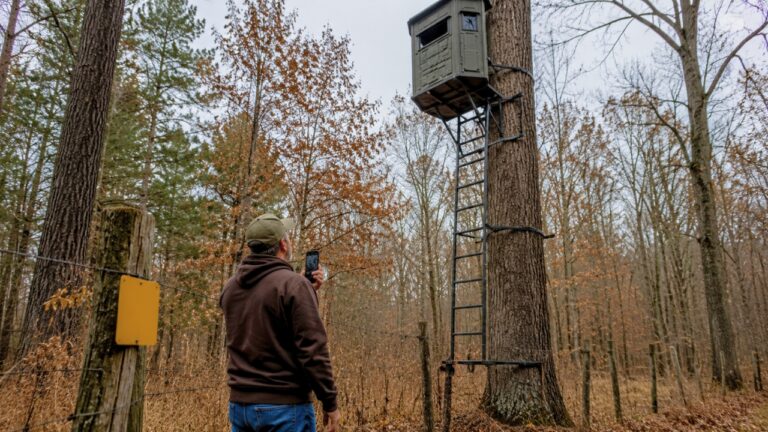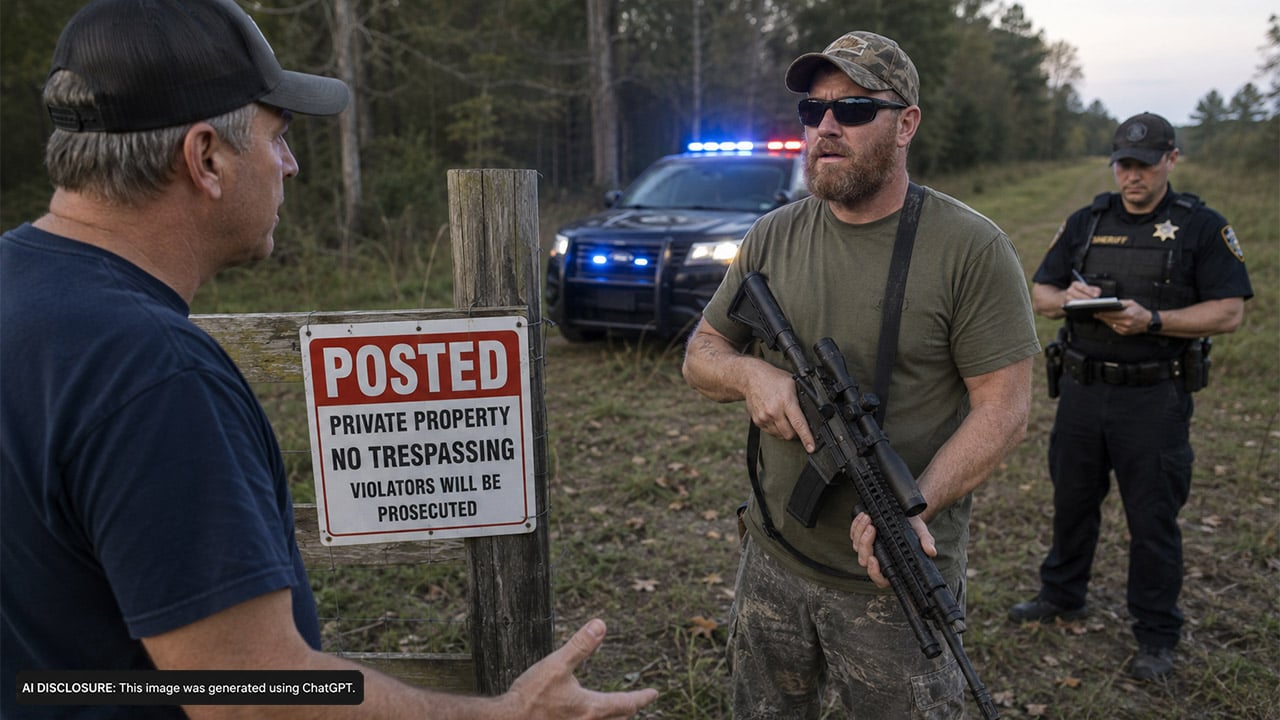
Photo credit: AI-generated image created using ChatGPT. Illustrative only
Ten acres can feel like plenty of breathing room—right up until a neighbor decides your fence line is a suggestion. That’s the corner one rural landowner says he got backed into after a nearby neighbor became convinced a drone was flying over his place and started “handling” the problem with a firearm.
In the original post, the landowner describes a situation that went from irritating to dangerous fast: an armed neighbor allegedly crossing onto his property looking for a suspected drone operator, a follow-up accusation from the neighbor’s wife, and multiple calls to law enforcement that ended with officers suggesting the reports “appear malicious.”
A drone rumor turned into armed trespassing
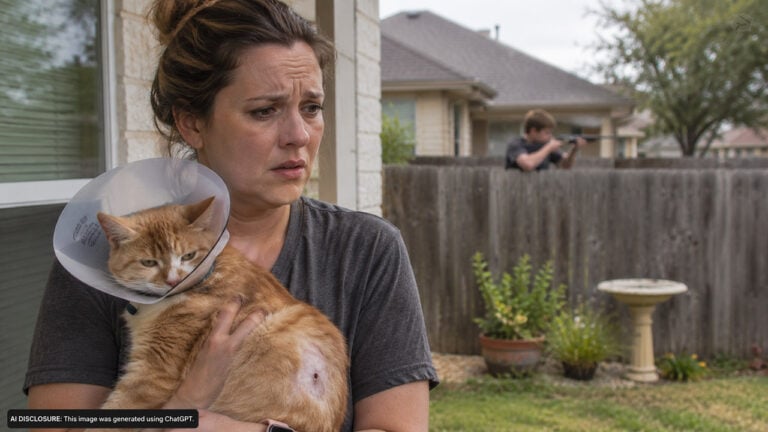
According to the landowner, the neighbor to the north—on a separate rural tract—claimed he kept seeing a drone flying around his property. Instead of treating it like a nuisance to document and report, the neighbor allegedly took a more direct route.
The landowner says the neighbor came onto his land with a gun, looking for him, believing he was the one flying the drone. That’s not a misunderstanding you shrug off in the country. When someone shows up armed and uninvited, it changes the whole temperature of the day.
Accusations didn’t stop at the property line
The next day, the landowner says the neighbor’s wife came over and accused him directly of flying the drone, adding that it “won’t end well for me.” No matter how you slice it, that’s not neighborly talk—it reads like a warning.
This is also where rural reality kicks in: once you’ve been singled out as “the guy causing the problem,” normal interactions—checking cattle, walking fence, running a chainsaw—can suddenly feel like you’re being watched. And if the other party is already willing to cross the line, folks start wondering what comes next.
Shooting at night and firing “into the air” raised the stakes
The landowner says police had been called twice for trespassing, then a third time after the neighbors were “casing the property line in the SUVs and discharging firearms at night” at the alleged drone. Even people who shoot regularly and safely tend to get real serious, real quick, about rounds going up without a clear, safe backstop.
Hunters and landowners know bullets don’t disappear when they leave the muzzle. A shot “into the air” still comes down somewhere, and nighttime makes it worse—not just because visibility is limited, but because it’s harder to confirm what you’re actually shooting at in the first place. If you can’t clearly identify your target and what’s beyond it, you’re already in the red zone.
When law enforcement says the complaints look “malicious”
What really put the landowner on his heels wasn’t just the neighbor’s behavior—it was the response he says he got from local law enforcement. After the third call, he says officers told him his reporting “appears malicious,” and that the neighbors were allowed to fire at anything so long as it was below the tree line.
That kind of comment, if it’s relayed accurately, is hard to square with common sense gun handling. “Below the tree line” isn’t the same thing as “safe.” Trees aren’t a berm. A safe shooting setup requires a backstop that can reliably stop a bullet—dirt, a hillside, an engineered berm—not branches and hope.
On top of that, being told your reports “appear malicious” can have a chilling effect. If you’re calling in what you honestly believe are trespass and unsafe discharges, getting treated like the troublemaker can make you feel boxed in: keep quiet and hope it stops, or keep reporting and risk being labeled the problem.
Practical steps a rural landowner can take without escalating
The landowner asked whether the right move is to lawyer up and pursue a restraining order or protective order. He also described feeling like he was being gaslit by the response. While every state handles these situations differently, the practical playbook in rural disputes usually starts with two things: documentation and distance.
Documentation means writing down dates, times, what was seen and heard, where it occurred, and any witnesses. It also means saving any messages or recordings you can legally obtain, and putting cameras on your own place—driveway, gates, and key fence lines—so you’re not relying on memory when things get messy. The goal isn’t to “win an argument.” It’s to create a clean record that shows a pattern.
Distance means resisting the urge to confront someone who’s already shown up armed and angry. If a neighbor believes you’re a drone operator and has threatened that it “won’t end well,” that’s not a good candidate for a friendly fence-line chat. Let documentation and formal channels do the work, and prioritize personal safety over pride.
In situations involving firearms being discharged in ways that appear reckless, some landowners also consider reaching out beyond a single responding officer—asking for a supervisor, contacting the sheriff’s office leadership (if different), or consulting an attorney who understands rural property disputes. The landowner’s instinct to seek legal help isn’t dramatic; it’s often the most controlled way to keep things from turning into a personal feud.
The outdoorsman’s angle: property lines, backstops, and keeping your head
Most folks who grew up around guns understand something city people sometimes don’t: rural doesn’t mean lawless. Property lines matter. Safe backstops matter. And “I thought I saw a drone” doesn’t justify marching onto a neighbor’s place with a gun.
If you’re the one being accused, the best move is to stay steady. Improve your own security, avoid being outside alone at odd hours if you can help it, and keep your reports factual and consistent. If the accusations are wrong, don’t give the other side any extra fuel—no trash talk, no threats back, no “I’ll handle it myself” bravado.
This landowner’s story is a reminder that the most dangerous conflicts in the country aren’t always about deer stands or cattle gates. Sometimes it’s a suspicion, a piece of technology, and a neighbor who’s decided he’s judge and jury. The smart play is to slow it down, document everything, and use the systems that keep bad nights from turning into lifelong consequences.
Like The Avid Outdoorsman’s content? Be sure to follow us.
Here’s more from us: