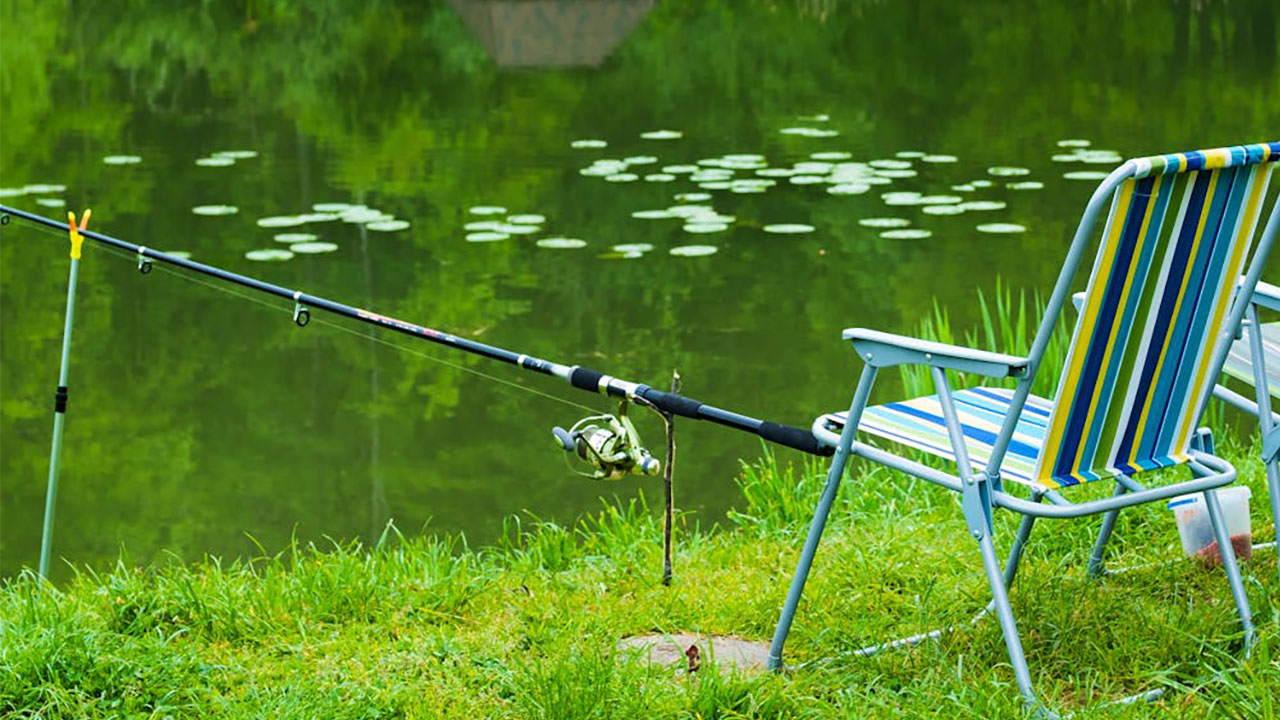
Photo credit: Саша Алалыкин/Pexels.com
The fisherman did what a lot of people do when they see a neighborhood pond with fish in it.
He checked the sign.
That is the part that matters. He did not sneak through someone’s yard, hop a locked fence, or ignore a giant “no fishing” sign because he felt like casting anyway. According to the story, he looked at the posted rules and saw that the sign banned boating and swimming.
Fishing was not listed.
So he fished.
In a Reddit post, the angler said a woman called police on him for fishing at a pond where the posted sign prohibited boating and swimming, but did not say anything about fishing. That is the kind of access fight that feels small until you are the one standing there with a rod while someone acts like you are committing a crime.
Neighborhood ponds are weird places to fish because they often sit in that gray area between public-looking and privately controlled. Some are owned by an HOA. Some are city-maintained. Some are open to residents only. Some are stormwater retention ponds that happen to have bass and bluegill in them. And some have rules posted so vaguely that everyone reads them differently.
The fisherman read the sign plainly: no boating, no swimming. Nothing about fishing.
The woman apparently read the situation differently.
Instead of asking a simple question or pointing to a rule, she called police. That escalates the whole thing right away. One second, a person is standing by a pond with a rod. The next, he has to explain to law enforcement why he believes he is allowed to be there. Even if he is right, that is enough to ruin the outing.
There is something especially frustrating about being reported for doing something that appears to be allowed. If the sign had said “No Fishing,” there would not be much to argue about. Pack up and leave. But when the sign only says no boating and swimming, it is pretty reasonable for an angler to assume fishing is permitted unless some other rule says otherwise.
That is probably why the post got attention. A lot of fishermen have dealt with someone who decides they personally do not like fishing and then treats their opinion like law.
Maybe the woman thought all pond use was prohibited. Maybe she assumed fishing was included under general “don’t use the pond” rules. Maybe she worried about hooks, trash, or people keeping fish. Maybe she simply did not like seeing someone fish there. But calling police over it without a clear no-fishing rule is a heavy move.
For the fisherman, the whole situation likely felt ridiculous. He had a rod, not a boat. He was not swimming. He was not doing the two things the sign explicitly banned. He was fishing.
And fishing is one of those things that should be easy to settle with clear signage. If a pond owner, HOA, city, or property manager does not want people fishing, the sign needs to say that. If fishing is allowed, people need to stop inventing bans because they dislike it.
The police call also raises the bigger access issue. A lot of legal or allowed fishing spots get chilled by confrontation. A person can technically be allowed to fish somewhere and still stop going because they are tired of being yelled at, watched, or reported. After a while, the spot becomes off-limits in practice because nobody wants the headache.
That is how access shrinks without the rule ever changing.
The fisherman’s situation was not some dramatic dock fight or threat at a riverbank, but it had the same basic tension: one person believed he was following the posted rules, while another person decided he did not belong there. And once police are involved, the day is no longer about catching fish. It is about proving you are not doing something wrong.
That is a lousy way to spend time at a pond.
The clean answer in cases like this is usually simple but boring: know who owns or manages the pond, take a picture of the posted sign, stay respectful, do not litter, do not keep fish if rules prohibit it, and be ready to leave if actual law enforcement or property management confirms fishing is not allowed. But if the only sign says no boating and no swimming, it is easy to see why the fisherman thought he was fine.
The woman may have thought she was protecting the pond. The fisherman thought he was following the rules.
The problem is that vague signs leave too much room for people to turn personal annoyance into a police call.
Commenters mostly focused on the wording of the sign.
Several people said if the sign only banned boating and swimming, then fishing was not obviously prohibited. Their view was that rules need to be stated clearly. If whoever manages the pond does not want fishing, the sign should say “No Fishing.” Otherwise, people are going to assume they can fish.
Others were more cautious. They pointed out that a sign may not list every rule. An HOA, city, apartment complex, or private owner may have separate rules somewhere else. That means the fisherman could be in the right based on the sign and still run into a rule that is not posted well. Annoying, yes, but possible.
A lot of anglers in the comments understood the frustration of people calling authorities over fishing. Some said they had been questioned at ponds, parks, canals, and neighborhood lakes even when they were following posted rules. The common complaint was that some people see a rod and decide the angler must be doing something wrong.
Several commenters told him to take photos of the sign and keep his fishing license handy. That way, if anyone questions him, he can calmly show what the posted rules say and avoid turning it into a yelling match.
Others said the best approach is to be polite with police if they show up. Officers may not know the pond rules either, and getting defensive usually does not help. Explain the sign, show that fishing is not prohibited, and let them sort it out.
A few people warned that if the pond is private or HOA-controlled, arguing may not be worth it even if the sign is poorly worded. A legal right and a practical headache are not always the same thing. Sometimes the best move is to get clarification from whoever manages the pond before going back.
For the fisherman, though, the situation came down to a pretty basic point: the sign said no boating and no swimming. It did not say no fishing. And if people are going to call police over a man with a fishing rod, the rules need to be a whole lot clearer than that.