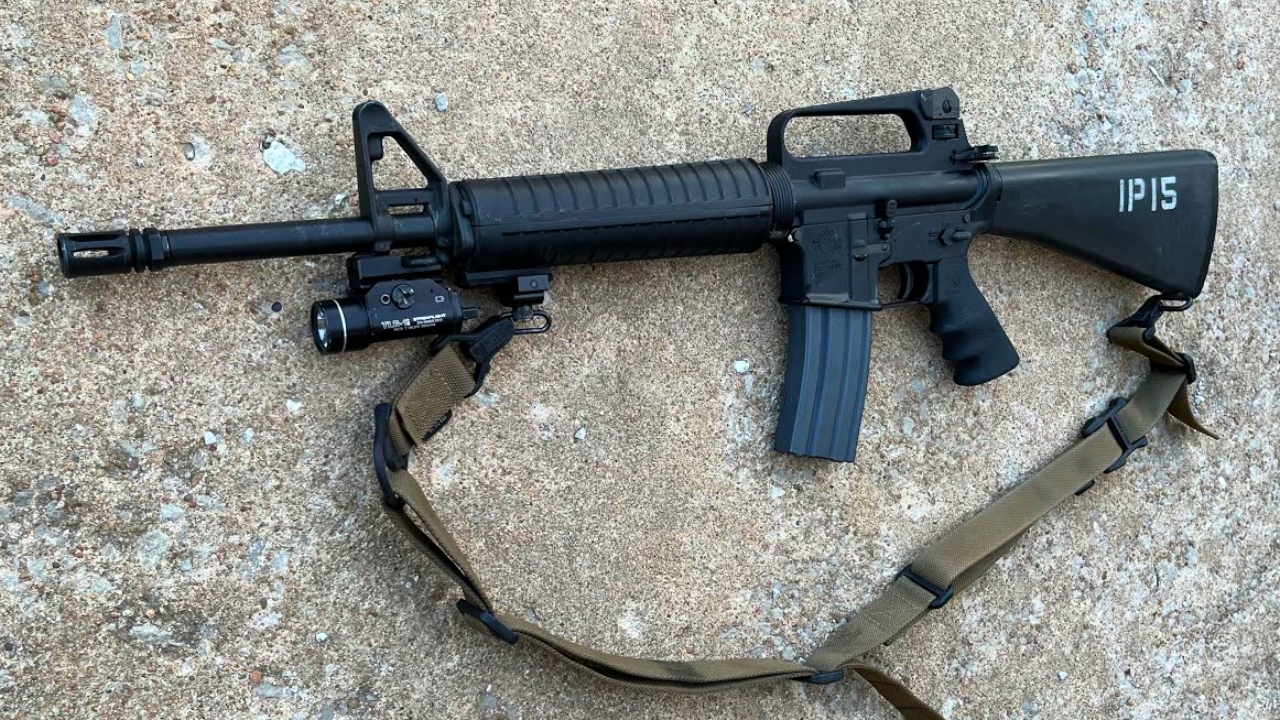
Photo credit: Red Barron Reviews/YouTube
By 2026, the line between a “part” and a legally regulated firearm component will be more scrutinized than ever, and you will not be able to rely on old shop habits to stay compliant. Federal rules on frames and receivers, new court decisions, and state level changes are converging in ways that put a premium on meticulous documentation for anyone who builds or finishes guns. If you want to keep building in 2026, you will need a paper trail that proves what you made, when you made it, and how it fits into the evolving definition of a firearm.
The confusion that surrounded unfinished receivers a few years ago is resurfacing in a more complex form, now that regulators and courts have clarified that some “almost there” parts count as firearms. Your best defense is to treat documentation as part of the build, not an afterthought, and to align your records with how regulators now describe frames, receivers, and privately made firearms.
From rule fights to a new normal in 2026
You are entering 2026 in a very different legal environment from the one that existed when “80 percent” kits first took off. The Department of Justice’s frame and receiver rule, which was written to keep guns from being sold to convicted felons and other prohibited purchasers, explicitly pushed retailers and gunsmiths to treat certain unfinished parts as firearms and to keep records while they are in business. That policy foundation, laid out when the rule went into effect, now shapes how inspectors expect you to classify and document the components on your bench, even if you still think of them as “just parts” until final machining.
The Supreme Court has since reinforced that trajectory. In Bondi v. VanDerStok, listed among the Approved and Enacted Federal Rules and Laws, the Court upheld the federal frame or receiver rule, confirming that the government can regulate at least some unfinished frames and receivers as firearms under the Gun Control Act. Another decision, described as using the same reasoning to conclude that the GCA reaches and permits ATF to regulate at least some unfinished frames and receivers, came in Mar in a case over “firearms,” unfinished receivers, and kits, which further entrenched the idea that your documentation must track not only completed guns but also certain in progress cores. That ruling, summarized as Using the same reasoning, means your build log now has constitutional backing as a compliance tool, not just a shop convenience.
What “frame or receiver” means after the rule fights
To document correctly, you first need to speak the same language as regulators about what counts as the core of a firearm. The ATF’s Questions and Answers on the Definition of “Frame or Receiver” explains that a Privately made firearm, or PMF, is a firearm, including a frame or receiver, that is completed, assembled, or otherwise produced by a person other than a licensed manufacturer and that does not fall into the National Firearms Act categories. That same guidance clarifies that a PMF is not required to have a serial number under federal law when it is made for personal use, and that the maker does not need to undergo a NICS background check, but it also makes clear that once a PMF enters a licensee’s inventory, it must be treated like any other firearm for recordkeeping.
The rule text, as summarized for state lawmakers, goes further and states that the frame or receiver includes a partially complete frame or receiver, including a parts kit, that is designed to or may readily be completed, assembled, restored, or otherwise converted to function as a frame or receiver. It also notes that the regulated part is the one that provides housing or a structure for the sear or equivalent, bolt or breechblock, or firing mechanism, or that holds the applicable fire control component. That language, captured in a Jan briefing on the Definition of Frame or Receiver and Identification of Firearms, means your documentation should not just say “AR lower blank” or “pistol chassis,” but should identify whether the part already provides the structure for the fire control components that trigger the initiation of the firing sequence. When you log a PMF or a kit, you should mirror the terminology used in the Questions and Answers and the Jan explanation so that an inspector can see at a glance why you treated a given item as a firearm or as a non regulated accessory.
How ATF now treats unfinished cores and kits
One of the biggest shifts you must internalize for 2026 is that the ATF no longer looks only at fully machined receivers when deciding what is a firearm. The agency’s own summary of its final rule states that it Identifies only one part of a firearm to be the frame or receiver that requires a serial number, and that this part is the one that provides housing or a structure for the primary fire control components. For new firearm designs, that identification is made prospectively, but for existing platforms like AR type rifles and Glock pattern pistols, the rule clarifies which specific component is the regulated core. Your documentation should reflect that single part focus by clearly tying each serial number, whether applied by you or by an upstream manufacturer, to the part that the rule Identifies as the frame or receiver.
The training materials that ATF circulated to industry, including a detailed training aid that runs through multiple examples, also emphasize that a partially complete billet or blank can be treated as a frame or receiver if it has reached a certain stage. In 27 CFR 478.12, Example 2 to paragraph (c) describes a partially complete billet or blank of a frame or receiver with one or more templates, jigs, or indexing marks that are designed to or may readily be used to finish the part so that it can house or hold the applicable fire control component, and treats that item as a frame or receiver. That example, paired with the training aid’s instruction that in this part and part 447, where no manufacturer name has been identified on a privately made firearm, the licensee must mark the firearm with their own name as the manufacturer, should push you to document when a blank crosses the line into a regulated core. If you are machining customer supplied billets, your work order and build notes should record when the part first met the Example 2 threshold and how you applied markings consistent with the Apr training aid.
Serial numbers, PMFs, and your bound book
Once you accept that some of what you used to call “blanks” are now treated as frames or receivers, the next step is to align your serialization and recordkeeping with the regulations. Under 27 CFR 478.92, licensed manufacturers and licensed importers must legibly identify each firearm they manufacture or import by engraving, casting, stamping, or otherwise conspicuously placing a serial number on the frame or receiver, along with the manufacturer’s name, city, and state, Except as otherwise provided in that section. When you take in a PMF from a customer for gunsmithing, or when you finish a frame or receiver that did not previously bear a serial number, you may be required to mark it with your own identifying information and to enter it into your acquisition and disposition record as if you had manufactured it.
The ATF’s industry guidance on the new frame or receiver rule, including the section labeled III, explains that the name of the actual private maker is not required to be entered into the licensee’s records. Instead, a licensee must record acquisition of the PMF from the private person and disposition back to that person, using the licensee’s own identifying markings on the firearm if required. The same guidance notes that the Final Rule amends A and D record requirements so that when a licensee marks a PMF, the A and D record must be updated to reflect the new identifying information. In practice, that means your bound book should show when a PMF entered your inventory, what markings you applied under 27 CFR 478.92, and when it left, with a clear note that you treated it as a firearm under the Except as otherwise provided standard and the III recordkeeping guidance.
Federal forms and how to prove you followed the rules
Good documentation in 2026 is not just about your own notes, it is also about using the right federal forms at the right time and keeping copies that show you did so. The ATF maintains a library of firearms forms that covers everything from Form 4473 for over the counter transfers to Form 1 for making an NFA firearm and Form 4 for transfers. If you are an FFL, you should have a clear internal checklist that ties each type of transaction involving a frame or receiver to the specific form you must complete, and you should retain those forms in a way that lets you quickly show an inspector how a particular serialized core moved through your business. That is especially important when you are dealing with PMFs that you mark and return, since the paperwork may be the only way to reconstruct the chain of custody.
On the NFA side, the landscape is shifting in a way that changes your cost calculus but not your paperwork burden. The NFA Tax Repeal in H.R. 1, described as the “One Big Beautiful Bill,” was signed into law On July 4, 2025 by President Trump and eliminated the tax on certain NFA items, but it did not eliminate the registration and approval process. Guidance for 2026 explains that All NFA items in the affected categories now cost $0 to register, yet you still must File a Form 4 for transfers or a Form 1 for making an item, and you must wait for an official NFA registration document before you transfer or possess the regulated configuration. Your documentation should therefore pair each serialized NFA capable frame or receiver with the corresponding firearms forms and, where applicable, with the zero tax but still mandatory All NFA registration steps.
State twists: California’s 2026 parts and accessory rules
Even if you are comfortable with the federal definition of a frame or receiver, state law can add another layer of complexity that you must capture in your records. California’s new 2026 laws on AR 15 style rifles, for example, tighten controls on what the state treats as regulated accessories and precursor parts. The law signed on October 11, 2025, described in a Nov analysis for AR owners, sweeps in common AR 15 components such as pistol grips, thumbhole stocks, folding or telescoping stocks, and flash suppressors, and ties them to new rules on how you can configure and transfer rifles. If you build for California customers, your documentation should not only show the serialized lower receiver, but also list the specific accessory configuration at the time of sale so you can prove that the rifle left your shop in a compliant state.
California also has existing precursor parts regulations that overlap with, but are distinct from, the new 2026 accessory rules. A common point of confusion, highlighted in another Nov breakdown, is the difference between those precursor parts rules, which focus on items that can be used to produce firearms or accessories, and the new laws that more directly regulate installed components on completed rifles. To protect yourself, you should maintain a separate log for California bound builds that notes whether any part in the order qualifies as a precursor part under state law, whether the customer provided the part or you did, and how you verified that the final build complies with state law. That log should cross reference your federal bound book entries so that if California regulators ever question a configuration, you can show both the serialized core and the accessory mix described in the Nov accessory law and the common point of confusion discussion.
What the Supreme Court’s ghost gun decisions mean for your notes
The Supreme Court’s treatment of unfinished receivers has direct implications for how you document your builds, even if you never sell a kit. In Bondi v. VanDerStok, the Court effectively endorsed ATF’s view that the Gun Control Act allows regulation of at least some partially complete frames and receivers, which means that your decision to treat a given blank as a non firearm is now more likely to be second guessed. The Mar decision on unfinished receivers and kits, which described the GCA as reaching and permitting ATF to regulate at least some unfinished frames and receivers, reinforces that you cannot rely on marketing labels like “80 percent” to decide what goes in your bound book. Instead, you should document the physical state of the part at each step, including whether it has holes or cavities for the sear or equivalent, bolt or breechblock, or firing mechanism.
That level of detail may feel excessive, but it is your best way to show that you made a good faith classification under the standards the Court has now blessed. If an inspector or investigator later argues that a particular kit should have been logged as a firearm earlier in the process, your build notes can show exactly when the part first met the criteria described in the ATF’s rule and in the Supreme Court’s reasoning. You should also keep copies of any correspondence or internal memos that interpret how your shop applies the GCA to unfinished parts, so that you can demonstrate a consistent policy aligned with the Bondi decision and the Mar ruling.
ATF inspections, training aids, and how to align your shop
ATF has not left industry to guess how it will apply the new definitions, and you should treat its training materials as a roadmap for your documentation. The training aid for the definition of frame or receiver and identification of firearms, dated Apr and running through multiple scenarios, explains that in this part and part 447, where no manufacturer name has been identified on a privately made firearm, the licensee who marks the gun must add their own name as the manufacturer. It also notes that the Final Rule amends A and D record requirements so that when a licensee marks a PMF, the A and D record must be updated. If you mirror those examples in your internal procedures, including using similar language in your bound book and work orders, you will make it easier for an inspector to see that you followed the same logic as the agency’s own Page by Page guidance.
Industry facing commentary on the frame and receiver rule also stresses that ATF has broadened its interpretation of what counts as a firearm, particularly in the context of kits and modular designs. One analysis notes that the Bureau of Alcohol, Tobacco, Firearms and Explosives Recently expanded its view of “firearm” to include some parts kits that can be readily converted into working guns, and that this change has drawn legal challenges from groups like FPC, GOA, and ASA. Even as those fights continue, you should assume that inspectors will use the broader interpretation when they review your records. That means your documentation should not only track serialized receivers, but also note when you sell or transfer kits that include partially complete cores, and should reference how you classified those items under the Recently broadened standard and the Apr training aid.
Practical documentation habits for 2026 builders
With all of these moving parts, the most practical step you can take is to build a documentation system that treats every frame or receiver, including partially complete ones that meet the regulatory definition, as the spine of a file. For each serialized core, you should maintain a packet that includes acquisition details, any machining or marking work you performed, the federal and state forms associated with transfers, and notes on how you classified the part at each stage. That packet can be physical or digital, but it should be organized in a way that lets you quickly show how the item moved from blank to finished firearm, and how you complied with both the ATF’s Identifies only one part rule and any state specific requirements like California’s accessory laws.
You should also train your staff to recognize when a part crosses the line into a regulated frame or receiver, using the examples in 27 CFR 478.12 and the ATF’s Questions and Answers as teaching tools. Regular internal audits, where you pick a few recent builds and walk through the documentation from start to finish, can help you catch gaps before an inspector does. Finally, you should keep a current reference folder that includes key documents such as the ATF’s summary of the frame or receiver rule, the 27 CFR 478.92 marking requirements, the NFA Tax Repeal guidance in the One Big Beautiful Bill, and state specific summaries like the Nov California AR 15 accessory analysis. By anchoring your daily habits to those sources, and by treating your notes as seriously as your machining, you can navigate the renewed frame or receiver confusion in 2026 with confidence grounded in the Identifies only one part standard and the NFA Tax Repeal framework.
Supporting sources: Frame and Receiver Rule Goes into Effect – Department of Justice, Definition of Frame or Receiver and Identification of Firearms.
Like The Avid Outdoorsman’s content? Be sure to follow us.
Here’s more from us: