Photo credit: AI-generated image created using ChatGPT. Illustrative only
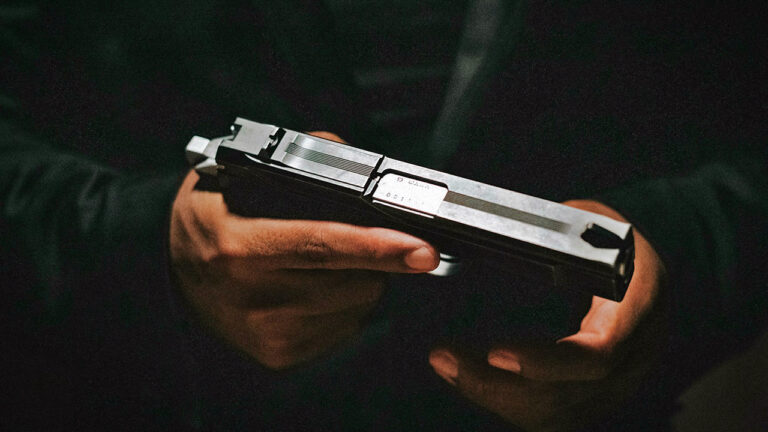
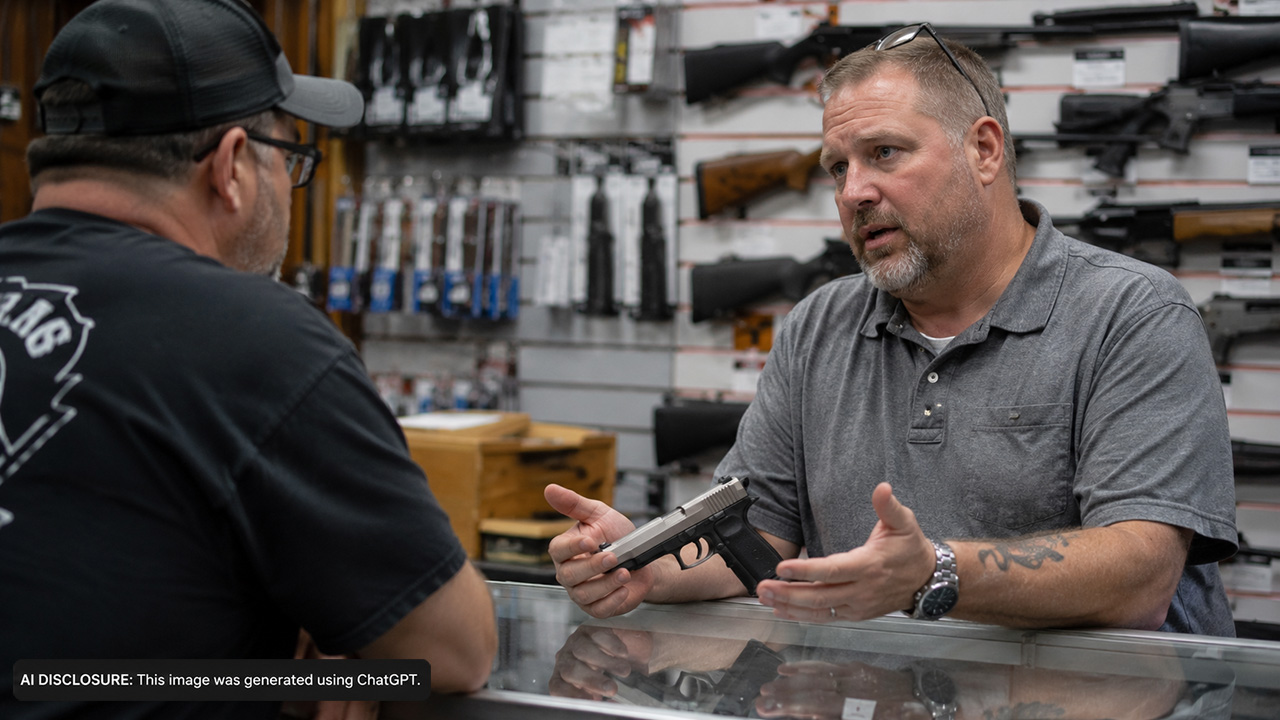
Buying a pistol should be pretty straightforward: inspect it, do the paperwork, take it home, and get on with your day. But one gun buyer says his purchase turned into a mess when he believed the handgun he received was damaged and the dealer wouldn’t help him make it right.
After trying to get the shop to resolve the issue, the buyer says he filed a credit-card chargeback. That’s when the situation got more serious. In an email the buyer shared, the dealer warned that if the dispute wasn’t dropped within 24 hours, they would move forward with a “stolen firearm” report and contact local law enforcement.
A damaged pistol and a dealer that wouldn’t budge
The buyer’s claim is simple: he says Firearms Depot sold him a damaged firearm and “would not offer assistance.” He says he tried to let the company resolve it, but he felt they were unwilling to work with him.
Anyone who’s spent time around gun counters knows why this matters. A defective or damaged pistol isn’t just disappointing—it’s a safety concern and a reliability concern. Whether the issue is cosmetic or mechanical, most folks want a clear path: return, exchange, or manufacturer repair without getting jerked around.
The chargeback that lit the fuse
When the buyer felt like he’d hit a dead end, he says he filed a chargeback with his card issuer. For most consumer purchases, a chargeback is a way to force a dispute process when a retailer won’t cooperate. But firearms sales aren’t “most purchases,” especially after federal transfer paperwork is involved.
Once a gun is transferred, it’s not like sending back a pair of boots. Federal rules, store policy, shipping restrictions, and the reality that a firearm is now in a private individual’s possession all add friction—and that’s before you even get into what the credit-card company thinks about the transaction.
The dealer’s email: 4473 possession and a threat of a stolen-gun report
The dealer’s response, as shared by the buyer, came in an email from “Joseph L.” identified as a Customer Service Manager. The message stated: “Accounting just received your chargeback notice. We are preparing the required 3310.11 Stolen firearm report for the ATF and have contacted our local sheriff’s office as well.”
The email continued with a warning tied directly to the federal paperwork: “I’m sure you were not aware you are not able to charge back a firearm that has been transferred via a 4473 (proof you took possession). We will give you 24 hours to undo what you did or we will proceed.” The buyer asked whether the company has legal standing for that threat or whether it’s strictly a civil dispute.
You don’t have to be a lawyer to understand why that would make a gun owner’s stomach drop. Being associated with any “stolen firearm” report—right or wrong—can turn a customer-service headache into phone calls, paperwork, and a long week of explaining yourself.
Why this kind of dispute hits gun owners harder than most customers
Firearms are one of the few retail items where the transaction trail is built to be permanent. A transferred handgun is tied to forms, serial numbers, logs, and dealer records. That’s good when you’re buying from a reputable shop and everything is above board. It’s not so fun when you’re in a disagreement.
Even when a buyer honestly believes he was sold a problem gun, the options can feel narrow after the 4473 is completed. Many dealers stick to strict “all sales final” policies once the firearm leaves the counter, pushing customers toward the manufacturer for warranty work. That doesn’t automatically make it fair, but it’s common in the industry.
This is also where documentation becomes your best friend. If you ever find yourself in a similar spot, the practical move is to keep everything: photos of the issue, the receipt, the exact time and date of pickup, and every email. If the dispute is going to be decided by a bank, a shop owner, or a third party, clear records matter more than frustration.
What other gun folks zero in on: paperwork, possession, and keeping the temperature down
In discussions around situations like this, the focus usually goes to a few places fast: what the buyer can prove, what the dealer can prove, and whether anybody is making threats to pressure the other side. The email’s mention of a specific ATF form and contacting a local sheriff’s office is the kind of detail that gets attention because it raises the stakes immediately.
It also puts the buyer in a spot where emotions can take over. That’s the worst time to fire off angry replies, make public accusations you can’t back up, or try to “win” in the moment. In the gun world, calm and tidy communication is more than manners—it’s self-preservation.
If you want to read the buyer’s description and the exact wording he posted, you can find it in the original post.
What a practical path forward can look like
From a common-sense outdoorsman’s standpoint, there are two different tracks here: the customer-service track and the legal/financial track. The cleanest outcome is still the boring one—dealer takes the gun back through proper channels (or helps facilitate a warranty repair), buyer drops the chargeback, and everybody walks away.
But once a chargeback is filed and the dealer responds with a threat of a stolen-gun report, it’s no longer just “send it back and we’re good.” The buyer needs to think carefully about protecting himself while also not doing anything that looks like he’s trying to keep a gun without paying for it. If the firearm is in his possession, he should store it safely, avoid unnecessary handling, and keep it available if his bank, the dealer, or law enforcement requests proof of possession.
This is also a reminder to inspect hard before you accept a transfer. At the counter, take your time. Check the finish, sights, rails, frame, slide, and overall function as allowed. If something looks off, don’t let the moment rush you. Once you’ve done the paperwork and walked out, your leverage usually shrinks.
The buyer’s situation shows how fast a simple “this gun isn’t right” complaint can turn into a high-stress dispute when money is pulled back through a chargeback and the seller responds by bringing up theft reports and law enforcement. For gun owners, the best protection is slow, careful buying—and when things go sideways, keeping your actions as clean and well-documented as the paperwork that came with the gun.
Like The Avid Outdoorsman’s content? Subscribe to our newsletter so you never miss an article.
Here’s more from us: