Photo credit: AI-generated image created using ChatGPT. Illustrative only
Anybody who’s spent time at a gun counter knows the dance: you point, you handle the pistol for fit, you talk price, and then the paperwork starts. In one recent account shared in the original post, that normal routine hit a hard stop when a big-box store employee refused the sale over what he believed looked like a straw purchase.
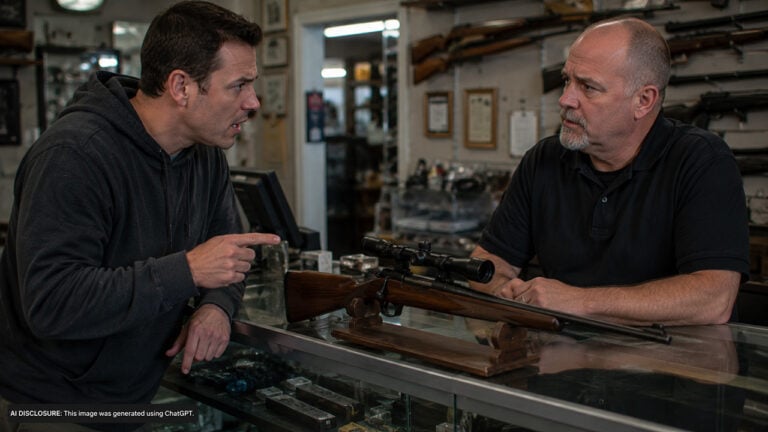
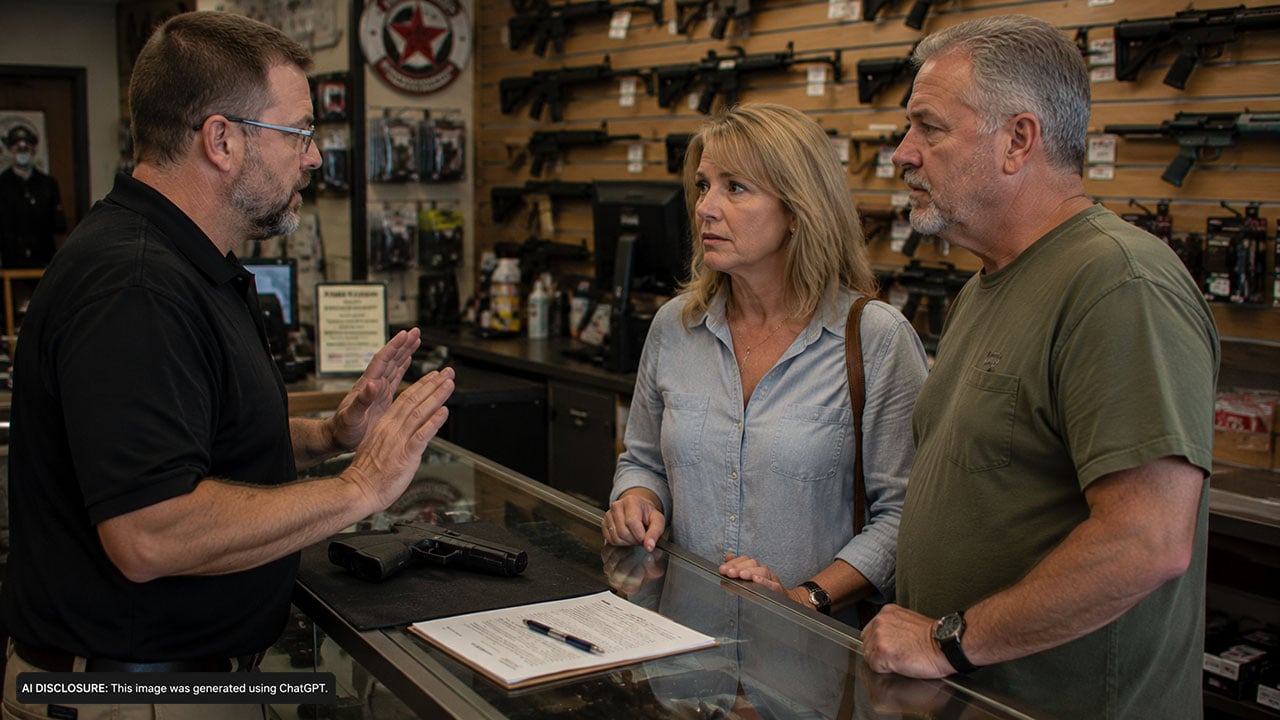
The shopper explained that his parents were at Fleet Farm looking at a pistol. Dad was the one test-fitting it in his hand and working the slide. Then they tried to use a store deal—10% off if you sign up for a card—so mom planned to sign up and “do the paperwork.” That’s when the counter guy shut it down, warning that he and the dad could be looking at felonies for a straw purchase.
The moment that triggered the refusal at the counter
From the way it was described, the employee’s red flag wasn’t that the parents couldn’t own guns. The shopper said both parents can legally own firearms. The issue, in the clerk’s eyes, was the mismatch between who was handling the gun and who was going to complete the purchase steps tied to the discount and paperwork.
It’s easy to see how this happens in real life. In a lot of families, one spouse is the “gun person” who checks the sights, runs the slide, and talks through features. The other spouse might be the one who keeps track of the budget, runs the card, or fills out forms. At a firearm counter, though, that division of labor can look like “Person A picked it, Person B bought it.”
Why “straw purchase” isn’t just about prohibited buyers
The shopper’s gut reaction was a common one: straw purchases only matter when someone is buying a gun for a person who can’t legally own one. That’s the scenario everybody hears about, and it’s often the reason stores train employees to be extra cautious.
But the practical, everyday definition that matters at the counter is simpler: the buyer on the paperwork needs to be the actual buyer—the person who is purchasing the firearm for themselves. If the store employee believes the person filling out the forms is really acting on behalf of someone else, they’re going to treat it like a straw purchase problem even if both people are otherwise lawful gun owners.
Discounts, store cards, and “who’s buying” confusion
This is where big-box retail wrinkles can make an already sensitive process worse. The parents weren’t just buying a pistol; they were trying to apply a 10% discount by signing up for a store card. Mom was going to sign up for the card to get the deal, and she was going to handle the paperwork.
From a customer’s standpoint, that can feel like normal shopping. From an employee’s standpoint—especially one trained to look for patterns—it can read like a classic setup: one person chooses the gun and handles it, the other tries to be the “buyer” at the last second because of a discount, points, cash, a card, or because they have “better ID.” Even when nobody’s doing anything shady, that pattern is exactly what stores are trained to stop.
The dealer’s role: refusing a sale is part of the job
A lot of folks don’t like hearing it, but a gun dealer doesn’t owe anybody a sale. If the employee feels something is off, the safest move for the business is to refuse the transaction. That’s true whether it’s a small-town gun shop or a chain store with a sporting goods counter.
In this case, the employee reportedly told them that he and the dad would be charged with felonies if it turned out to be a straw purchase. Whether or not that specific warning was perfectly stated, you can understand why a counter person would rather lose a sale than gamble on intent. If the clerk believes the “real buyer” is the dad, but mom is doing the official buying steps, that’s enough for many stores to hit the brakes.
How gun-counter misunderstandings usually get solved
The cleanest way to keep things simple is to make sure the person who is actually buying the firearm is the one who does the purchasing process—especially the part that matters: the federal form and background check at the point of sale. If dad is picking the pistol for himself, then dad should be the one completing the purchase.
If mom wants to help with the discount, that’s where you have to be careful. Some stores can apply discounts without changing who the buyer is, and some can’t or won’t. Sometimes it’s as simple as: dad buys the gun; mom signs up for the store card for future purchases. Other times, the store’s system or policy forces the “discount holder” to be the purchaser, and that’s where trouble starts.
And if the real plan truly was “buy it as a gift,” that’s another area where people get tangled up. Gifting firearms can be lawful in many places, but the rules depend on state law and the exact details of the transaction. The safest, most drama-free route in many cases is using a gift card, store credit, or letting the recipient be the one to complete the purchase at an FFL—because it removes the question of who the actual buyer is.
What people tend to focus on in these situations
Even without a pile of back-and-forth included in the source material, you can predict the two camps that form anytime this happens. One side says the clerk overreacted because both parents are legal gun owners and it’s normal for a couple to shop together. The other side says the clerk did exactly what he’s supposed to do: stop anything that looks like a purchase being made on behalf of someone else.
The truth out in the real world is that intent and appearance matter at the counter. Gun shops and sporting goods stores see enough attempted nonsense that they start treating “it just looks odd” as a reason to stop the transaction. That can be frustrating for honest buyers, but it’s also why a lot of illegal purchases never make it out the door.
For hunters and gun owners, the lesson is pretty straightforward: when you’re buying a firearm, avoid mixing in discounts, cards, and “someone else will do the forms” moments. Keep it clean, keep it obvious, and keep the buyer and the paperwork lined up. It saves time, saves embarrassment, and keeps an already serious purchase from turning into a hard no at the counter.
Like The Avid Outdoorsman’s content? Subscribe to our newsletter so you never miss an article.
Here’s more from us: