Photo credit: The Avid Outdoorsman
A Reddit user in r/CCW shared a story that started as a complaint about a bad carry habit and ended with exactly the kind of outcome people warn about when they say shortcuts eventually catch up with you. He said he used to know a guy who carried without a holster, the kind of person who treated a loaded gun like it could just ride loose because that was easier than setting up a real carry system. According to the comment, that finally stopped when the man left the gun somewhere children could have found it. He told the story in this Reddit thread: https://www.reddit.com/r/CCW/comments/4o2sv1/have_you_ever_left_your_gun_behind/
What gives the story its weight is how familiar the setup sounds. A lot of sloppy carry habits survive because nothing bad happens right away. The gun gets stuffed into a waistband, jacket pocket, bag, or some other “good enough” spot and, for a while, the carrier mistakes luck for a system. That seems to be exactly what this commenter was talking about. The man he knew apparently carried without a holster long enough to get comfortable doing it, which is usually how these stories build. Nobody changes because the habit feels wrong. They only change when the habit finally produces a moment they cannot explain away anymore.
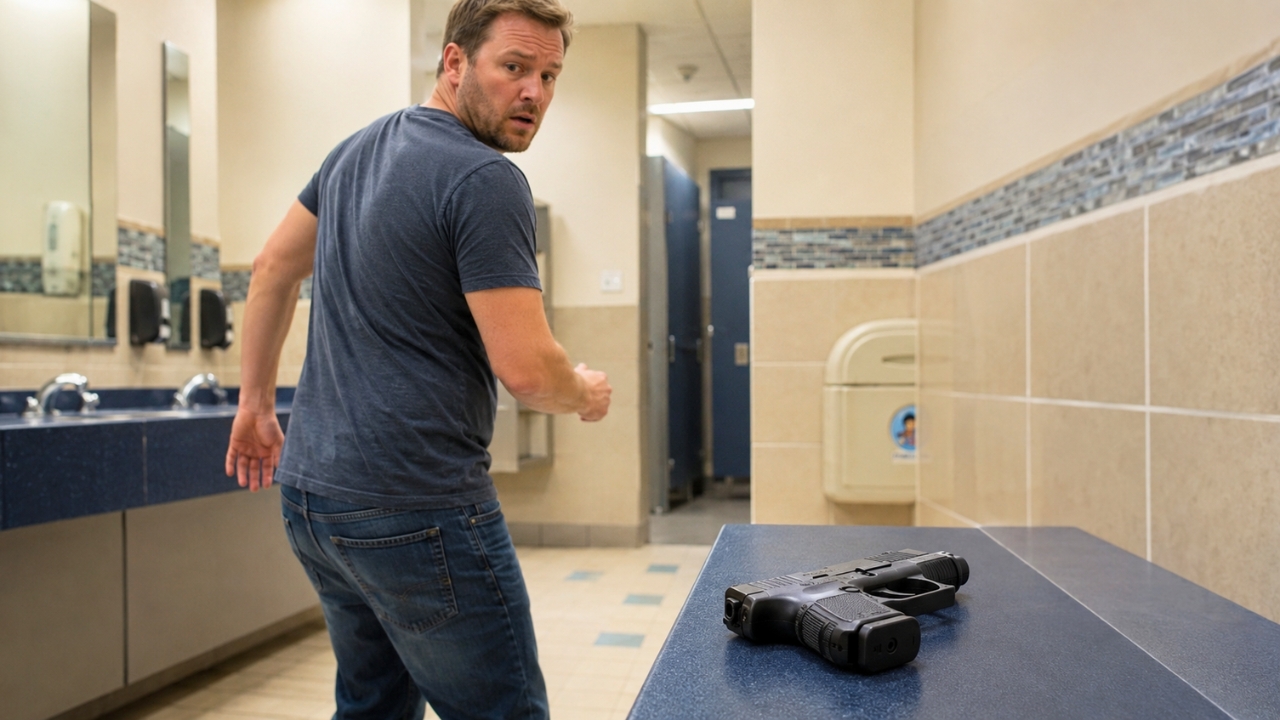
That moment, in this version, was leaving the gun somewhere kids could have found it. The commenter did not build the story into some dramatic long scene, but he did not need to. The phrase alone says enough. A firearm was no longer on the body, no longer under control, and had been left in a place where children were part of the risk window. Once that happens, the whole conversation about convenience dies pretty quickly. There is no “I just carry this way because it’s easier” defense that sounds acceptable after that.
The most uncomfortable part of stories like this is how predictable they feel in hindsight. A holster does more than keep the gun from printing or make the draw cleaner. It creates a controlled place for the firearm to live while you move through normal life. Once the gun is loose, memory and friction become part of the retention system, and neither of those should be trusted that much. If the man in the story was used to carrying without a holster, then the mistake was never just that he forgot the gun one time. The mistake was building his whole routine around a method that made forgetting far easier than it should ever be.
That is why the story lands differently than a lot of the other public-bathroom or restaurant-jacket examples. This one is not really about one absent-minded second. It is about a long-running bad habit finally producing the exact kind of risk everyone around it should have seen coming. The children in the story matter because they instantly strip away any illusion that the mistake was private. The moment a kid could have been the one to find the gun, the owner’s carry decision stopped being only about him.
The thread where the comment appeared was already centered on leaving guns behind, which gave the whole thing a very specific tone. People were not discussing whether forgetting a firearm is ideal in theory. They were sharing the kinds of mistakes and near-misses that haunt carriers afterward. Inside that context, the “guy who carried without a holster” anecdote worked like a blunt warning. It was not framed as a cool story, a clever trick, or a macho confession. It was framed like the obvious end point of a stupid practice.
The responses around that thread tended to circle back to one simple idea: a gun that is not in a holster is a gun much easier to misplace, drop, expose, or leave behind. A lot of commenters treated holsters less like optional accessories and more like the bare minimum for maintaining control in public. Some talked about public-bathroom habits, others about jackets, counters, and off-body carry, but the common point stayed the same. Once the gun is not secured in a dedicated place on the body, the chances of a bad memory lapse rise fast.
That is what makes the story so direct. A man carried without a holster until the day he left the gun somewhere kids could have found it. There is no need to dress that up. The outcome itself is the lesson. He did not stop because someone won an argument with him. He stopped because the carry method finally created a situation bad enough that even he could not ignore what he had been gambling with.
Like The Avid Outdoorsman’s content? Subscribe to our newsletter so you never miss an article.
Here’s more from us: