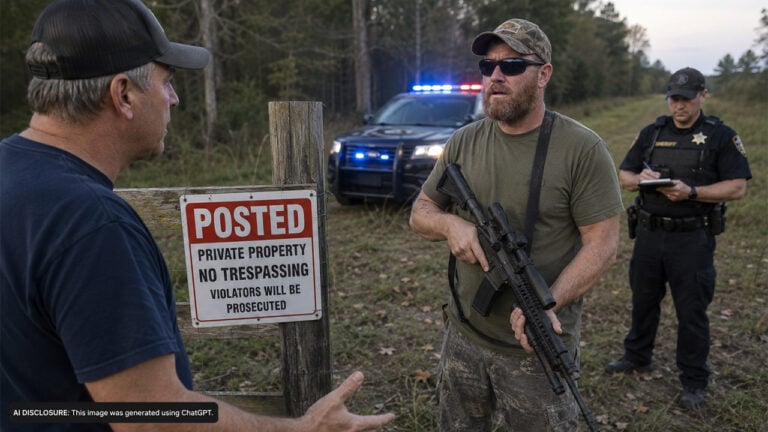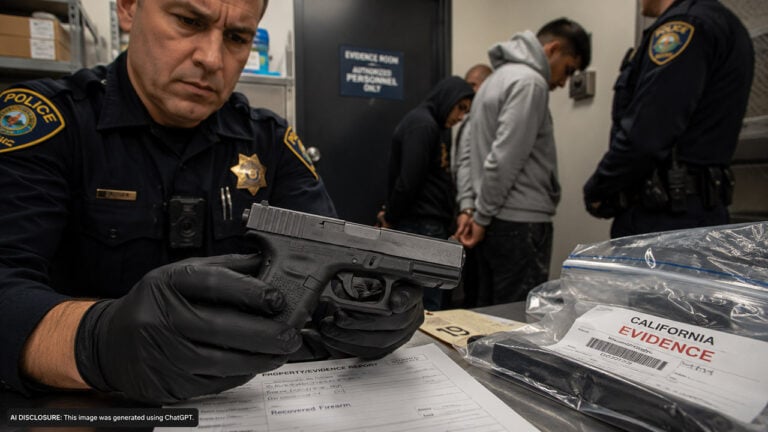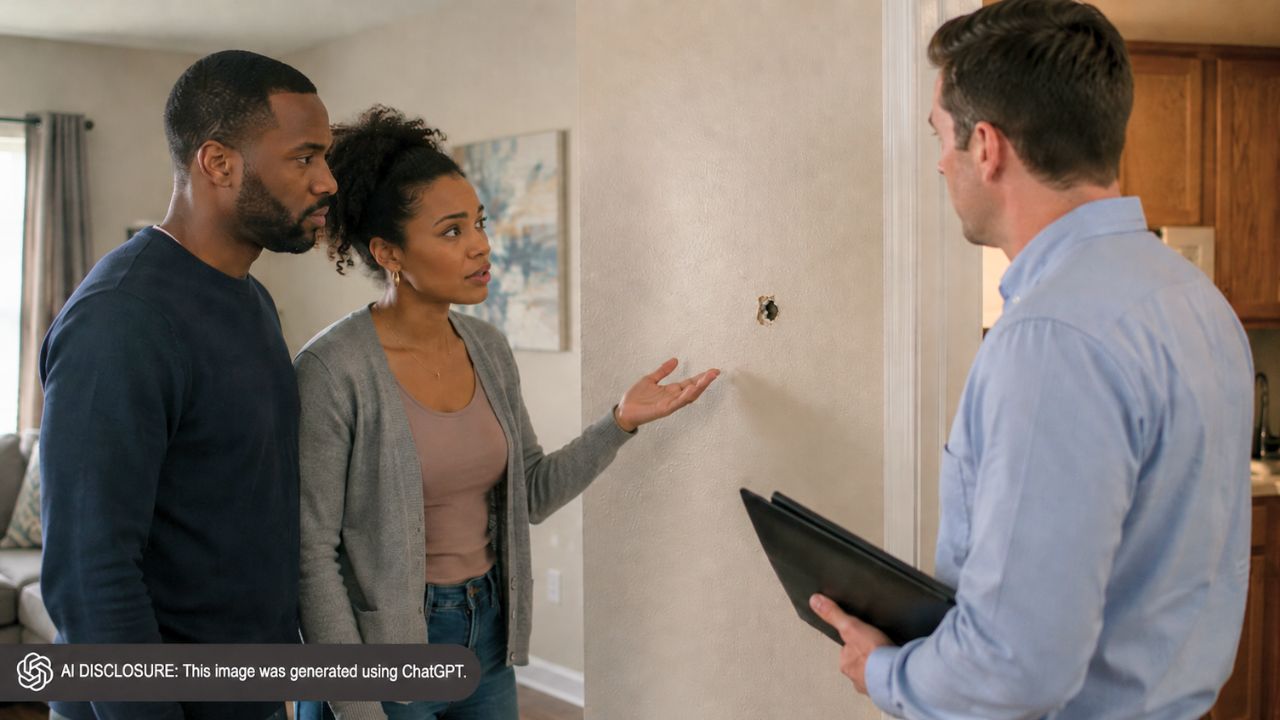
Photo credit: AI-generated image created using ChatGPT. Illustrative only.
If you’ve ever lived in a townhouse or duplex, you know how thin “home” can feel when you share walls. One Virginia tenant found that out the hard way when a loud pop cut through an otherwise normal night of watching TV—and a bullet ended up in the drywall of their shared wall.
The resident described the moment in the original post: a sharp report, their cats scattering, and then their next-door neighbor showing up about 30 seconds later to apologize. The neighbor said he’d been cleaning a gun when it “accidentally went off.” The round sent drywall flying but didn’t fully pass through into the tenant’s living space.
A negligent discharge in close quarters is a whole different kind of wake-up call
Folks who hunt, shoot, or keep a home-defense gun already know the rule—treat every firearm like it’s loaded. But the part that hits you in the gut here is the setting. In a townhouse, there isn’t a safe direction inside the structure. There’s your wall, then your neighbor’s wall, then somebody’s couch, bed, or kid’s room.
The tenant’s reaction was simple and honest: they were shaken, and they didn’t feel safe anymore. They also weren’t focused on property damage as much as what could have happened if the bullet traveled a little farther—especially with pets in the home.
The neighbor offered to patch the hole, but that doesn’t solve the safety problem
According to the tenant, the neighbor cleaned up the debris and offered to fix the hole. On the surface, that’s the kind of neighborly response some people might accept just to keep the peace. But there’s a big difference between “I’ll replace the drywall” and “this isn’t going to happen again.”
A hole in sheetrock can be repaired in an afternoon. The bigger issue is the careless gun handling that put a round into a shared wall in the first place. In a hunting camp or on a range, a negligent discharge is serious. In connected housing, it’s the kind of mistake that turns into a tragedy fast.
The tenant wrestled with whether to call police—then decided they had to
The tenant’s main question was whether to call law enforcement or “just let it go” because the neighbor claimed it was an accident. That’s a common hang-up for responsible gun owners, too. Nobody wants to overreact, and most folks don’t want to bring the full weight of the system down on a neighbor if there’s another way.
But an “accident” with a firearm is still a bullet going somewhere it shouldn’t. And when that bullet is in a shared wall, it’s no longer just a private misunderstanding between two households—it’s a public safety issue inside a multi-family building.
In an update, the tenant said they called the non-emergency line and an officer came out immediately. Police took the firearm from the neighbor and also collected the bullet from the tenant’s home. The tenant also noted the officer said they didn’t yet know whether they could obtain a warrant, but that it was “pretty serious,” and that “things like this don’t happen often.”
Why management often tries to treat it as “between residents” until charges are filed
In a lot of rental situations, property managers move fast on busted doors, broken windows, and noise complaints—things they can document and fix. But when the issue involves alleged criminal behavior, many management companies clamp up and act like they can’t touch it unless there’s an official case number, charges filed, or an eviction process already rolling.
That can feel like a brush-off to the tenant, but it’s also how some companies try to reduce their own exposure. They don’t want to be accused of wrongful action based on a “he said, she said,” and they don’t want to insert themselves into something that could become a criminal investigation.
Still, from a common-sense standpoint, a round sent into a shared wall isn’t the same as two neighbors arguing over parking. Even if management insists the dispute is “between residents” at first, documenting the event and getting law enforcement involved creates a paper trail that changes what management can do next—especially if the tenant later asks to move units, break a lease, or request a safety-related accommodation.
Practical takeaways gun owners and tenants shouldn’t ignore
This situation is a hard reminder that “I was cleaning it” is one of the oldest lines in the book—and it’s exactly why safe handling rules don’t get set aside for maintenance. A negligent discharge inside a dwelling means multiple layers of safety failed: the gun wasn’t confirmed clear, the muzzle wasn’t in a safe direction, and there wasn’t a backstop that could actually stop a projectile.
For tenants, the best move is what this resident ultimately did: call it in. Not to be vindictive, but because you need an official response when a firearm discharges in shared housing. If there’s damage, take photos. If you’re able, write down times and what was said while it’s fresh. And if you’re talking to management, keep it in writing as much as you can—requests, responses, and any promises to repair.
There’s also the personal side. Even when nobody is hurt, it’s hard to relax in your own home after a bullet hits the wall you share with the guy next door. The tenant’s relief after calling—saying they felt much better once officers showed up—makes sense. Sometimes the only way to get your footing back is to know the incident is documented and taken seriously.
Townhouses can be great places to live, but they’re unforgiving when it comes to gun handling. One negligent discharge doesn’t just put holes in drywall—it puts holes in trust. And once that’s gone, the safest path is the one that involves clear documentation, professional response, and a firm line that this can’t be treated like a simple neighbor-to-neighbor issue.
Like The Avid Outdoorsman’s content? Be sure to follow us.
Here’s more from us: