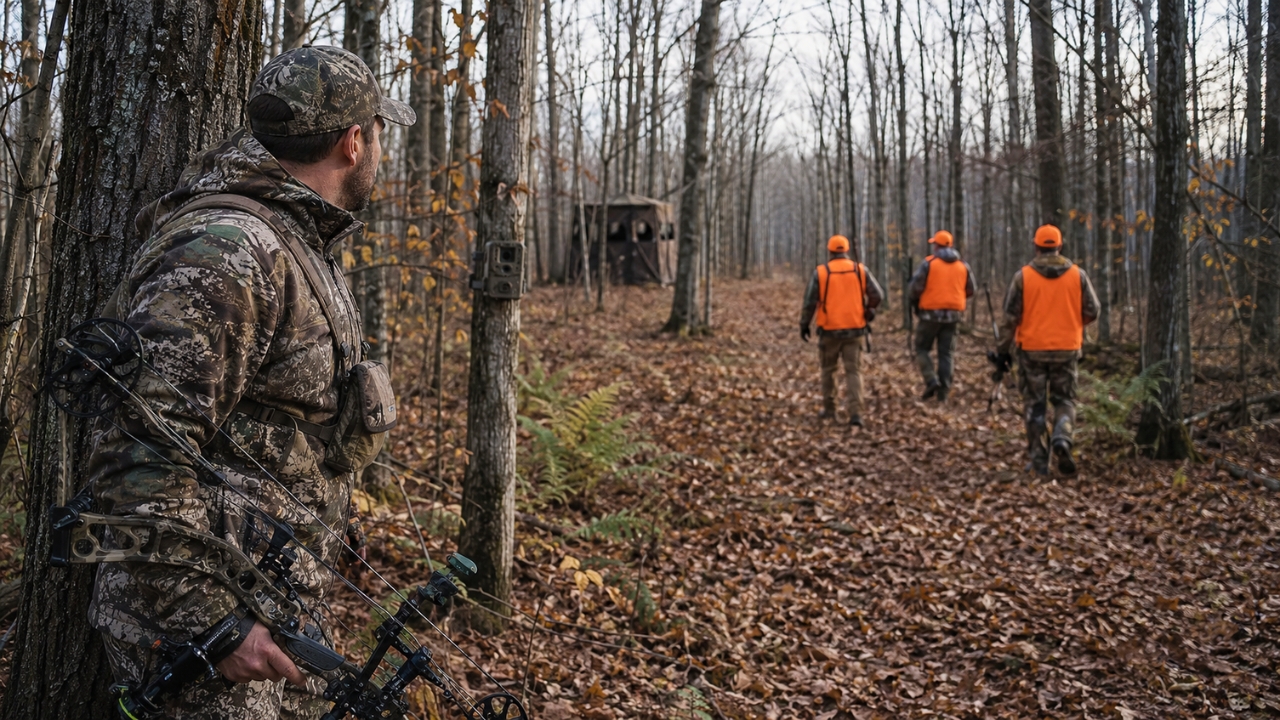
Photo credit: The Avid Outdoorsman
A newer bowhunter said the last day of gun season turned into another discouraging property-line problem after his trail camera caught people walking through private land without permission.
The hunter shared the situation in a post on r/bowhunting titled “Gun season brings out the trespassers”. The original post centered on photos from a trail camera, but the comments filled in the bigger frustration. The hunter said he was tired of dealing with it and wished people would simply come to the door and ask.
That was the part that seemed to bother him most. He said they were “pretty understanding,” but when people simply took advantage of the situation, the patience they would have gotten was already worn thin.
The trespassers appeared during gun season, when hunting pressure often rises and some people get more willing to push boundaries. The hunter said they walked right through his scrape and likely followed the game trail. As a newer hunter, that made the whole thing discouraging. He had put time into managing the spot, watching deer movement, and trying to learn the area, only to have people wander straight through it.
He called the DNR, but said it was one of those situations where authorities needed to catch people in the act. So he switched his Spypoint camera to send every capture, hoping that if the trespassers came back, he would know right away.
He did not want a fight. He said he just wanted people to respect the property lines.
The Camera Caught the Problem, But Not a Clean Ending
The hunter already had one of the most important tools in place: a cellular camera.
That helped him know people had crossed the property, but it did not instantly solve the problem. Trail camera photos can show what happened, but unless the photos clearly identify people, vehicles, license plates, or repeated behavior, a game warden may still have limited options.
The hunter said that was the frustrating part after calling that morning. It needed to be caught in the act. So he changed the camera settings to send every capture because it was the last day of gun season and he did not want to miss another visit.
That is the rough reality for a lot of small-property owners and permissioned hunters. They may know someone crossed the line. They may even have photos. But turning that into enforcement is another step entirely.
Still, cameras matter. They create a record. They show direction of travel. They show whether it was one person or a group. They show if the same people return. And if the land is clearly posted, the photos become harder for trespassers to explain away.
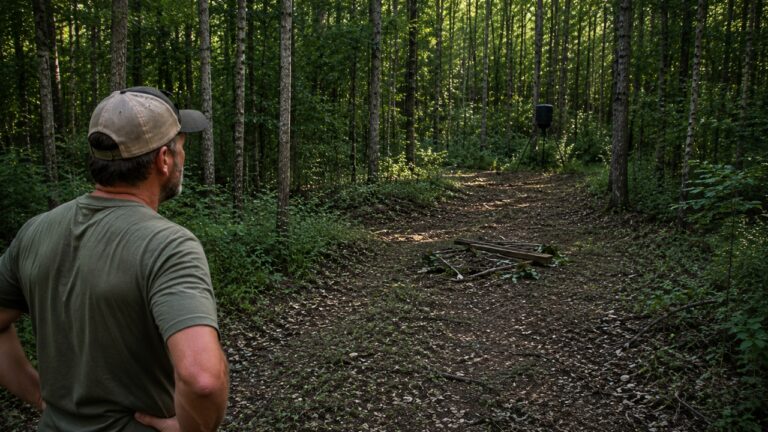
The hunter said his family kept the property line clearly marked and posted. He described it as only 3.5 acres and said some areas were not easy to access, but he routinely checked the line for his father and made sure signs were up. In his view, the people knew they were trespassing.
The OnX Argument Came Up Fast
The comment section quickly turned toward one of the messiest modern property-line problems: map apps.
One commenter said he had dealt with a trespasser who claimed he was not on private land because OnX showed the boundary somewhere else. The commenter said OnX was wrong in his case, showing them with 10 acres when they actually had 72.
That sparked a useful side discussion. Another user, speaking as a public-land hunter who relies on apps and does not want to trespass, urged landowners to contact the app company and correct errors. Someone else said OnX had been responsive when they reported bugs or property-line issues.
That matters because a lot of hunters rely heavily on digital maps now. OnX, HuntStand, GIS sites, and parcel apps can be very useful, especially around public land and broken-up private parcels. But they are not perfect. Boundaries can be off. Ownership data can lag. A hunter standing in thick woods may trust the phone more than the landowner standing in front of him.
That creates tension.
The original poster’s point was still clear: it is the hunter’s responsibility to know where he is. If land is posted and marked, an app disagreement does not give someone permission to cross it. But the OnX discussion showed how quickly a trespassing argument can turn into a technology argument.
A wrong line on a screen can become a real fight in the woods.
The Scrape Made It Feel More Personal
The trespassers did not only cross a random corner of the property. According to the poster, they walked through his scrape and likely followed a game trail.
For a bowhunter, that matters.
A scrape can be part of a deer’s communication pattern, and hunters pay attention to those spots for a reason. A game trail is not only a path through the woods. It is often the route deer use regularly, and hunters set stands, cameras, and entry plans around it.
When strangers walk through that area during season, they may leave scent, disturb the setup, and push deer off their routine. Some commenters reassured him that deer may come back sooner than he feared. One said deer can be strange and sometimes do not spook as badly as hunters think. Another said they had seen deer return after trucks or people had moved through.
That encouragement was probably needed. The hunter sounded discouraged, especially because he was newer and trying to do things right. Having trespassers walk through a carefully watched spot can make a person feel like all the effort was wasted.
But the bigger frustration was not only deer movement. It was disrespect. Someone did not knock. Someone did not ask. Someone did not treat the property line like it mattered.
That is what made the scrape feel personal. It showed the trespassers were not just near the property. They were right in the middle of the setup.
Commenters Warned That Gun Season Can Bring Out the Worst
Several commenters said they had seen the same thing when gun season opened.
One user said the “orange brigade” can bring out the worst in hunters. Another said during controlled muzzleloader or shotgun seasons in their area, groups sometimes sweep across properties where they do not have permission. Others shared stories about neighbors assuming an absentee owner would not be around during gun season and treating private ground like free access.
That pattern is why many bowhunters get frustrated when gun season starts. The woods can change overnight. More hunters show up. More people drive roads. More pressure moves deer. And some people who would not put in months of scouting suddenly decide to push wherever they think deer might be hiding.
That does not mean gun hunters are the problem as a group. Plenty of firearm hunters are careful, ethical, and respectful. But the spike in pressure can expose the people who are not.
The poster’s situation fit that pattern. He said it was a yearly occurrence and that this was the second time he had caught it on camera. That is what made him so tired of it. This was not one confused person making a single mistake. To him, it felt like a recurring problem that came back with the season.
“Just Ask” Was the Part He Kept Coming Back To
The most telling detail was how close the house was.
The hunter said the house was maybe 100 yards to the trespassers’ left. He did not suggest they should walk through the yard either, but his point was that it would have been easy for them to stop by and have a conversation.
That is what made the trespass feel so unnecessary.
He said they had the same goal. They were all hunters. He was a newer hunter, and he liked talking with other hunters and learning. He saw the broader hunting community as helpful. That made it harder for him to understand why someone would disregard another person’s property instead of simply asking.
That detail kept the story from sounding like a landowner who hates other hunters. He sounded like someone who would have at least heard them out if they had approached him respectfully.
But people who sneak through do not give the landowner that chance. They take the shortcut, follow the deer sign, and hope nobody is watching. Then when they get caught, they often act like the owner is the one being unreasonable.
The hunter’s message was simple: ask first. Permission may be possible. Trespassing wears out the patience that would have existed.
What Commenters Said
Commenters were largely on the hunter’s side and treated the trespassing as a real problem, not a harmless walk-through.
Many suggested cell cameras, especially cameras set to send alerts immediately. The poster had already switched his camera to send every capture, which commenters agreed was smart. If people came back, he would have a better chance of responding quickly or gathering proof.
Others told him to research trespass laws in his state and make sure the property was posted according to legal requirements. Some states require signs or markings at certain intervals before a criminal trespass case is easier to enforce. The poster said the property was clearly posted and that he routinely checked the boundary.
Several commenters encouraged him not to get discouraged about the deer. Some said deer often return sooner than hunters expect after people walk through. Others shared stories of seeing deer not long after vehicles, kids, or other disturbances passed through an area.
The OnX discussion became its own lesson. Commenters said map apps are useful, but errors happen. Public-land hunters should verify boundaries, and landowners should report bad parcel lines when they find them. Either way, the responsibility to know where you are still falls on the person walking through the woods.
For the bowhunter, the issue was not that other people wanted to hunt. It was that they treated marked private land like a shortcut during gun season. His answer was not a screaming match. It was cameras, a DNR call, clearer proof, and the hope that next time, someone would do the decent thing and knock before walking through another hunter’s setup.