Photo credit: AI-generated image created using ChatGPT. Illustrative only
Any hunter who’s flown with a checked firearm knows the routine: hard-sided case, non-TSA locks, declare it at the counter, sign the card, and go catch your flight. Do it clean, do it calm, and you usually never think about that case again until baggage claim.
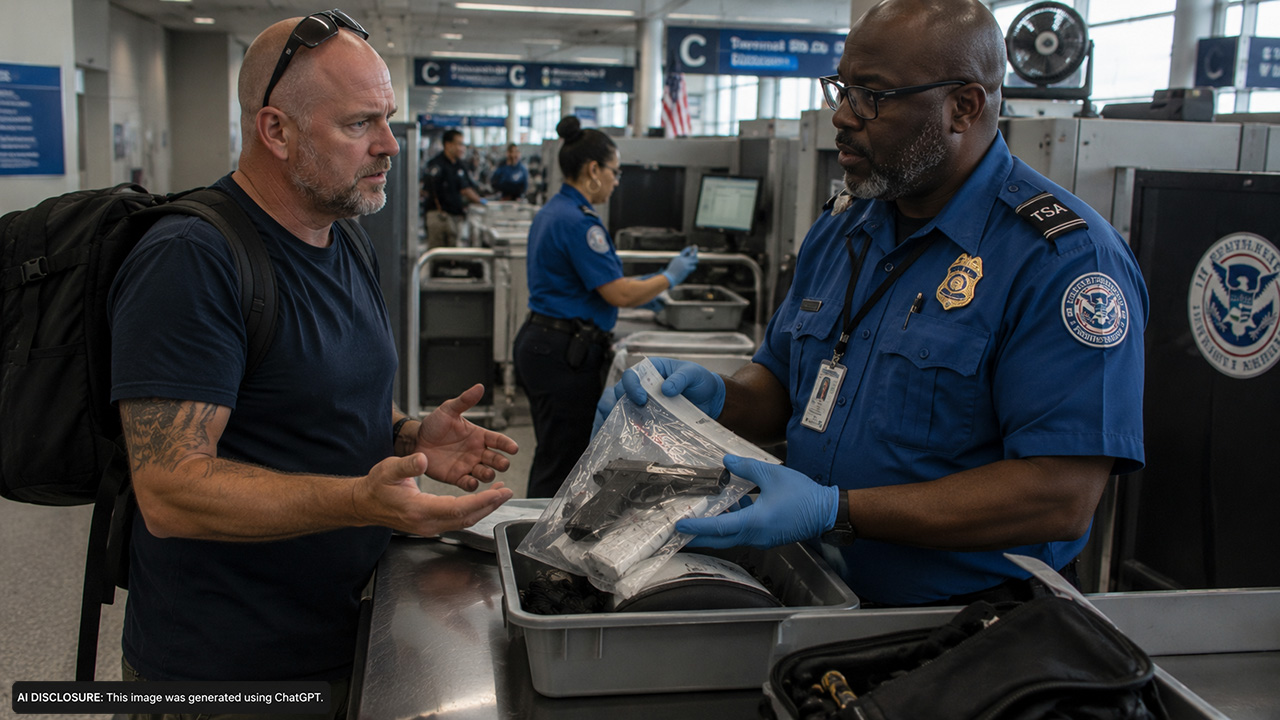
But one traveler says his trip took a turn even after he did everything by the book. In the original post, he described checking a firearm on Southwest, getting paged back to the ticketing desk, and later discovering his locked case had been pried into and inspected without him present—then learning the case had been flagged after it “tested positive for something.”
He set it up the way TSA tells gun owners to do it
According to his account, he followed TSA’s firearm-transport rules “to a T.” He used a hard-sided Pelican case and two Abloy 330 locks—exactly the type of setup most experienced travelers use because it’s sturdy and because TSA guidance says the passenger should keep the key or combo.
He even quoted the language he was relying on: “Only the passenger should retain the key or combination to the lock unless TSA personnel request the key to open the firearm container to ensure compliance with TSA regulations.” That line is a big deal to gun owners, because it’s the difference between “they can inspect it” and “they can get into it anytime they feel like it.”
The first warning sign was a page back to the ticket counter
Before boarding, he says he was paged at the gate and told to return to the ticketing desk. He got up immediately and walked back, where a Southwest employee called TSA. After about 20 minutes, TSA reportedly called back and said everything was fine and he could go.
What stands out is what didn’t happen: he says he never saw his firearm case, never opened it, and was never told why he’d been paged in the first place. He went back through security and caught his flight, thinking the issue had been resolved.
After landing, he found evidence the case had been forced open
The next day, when he inspected his case, he says there were visible scratches and marks where the pins had been pulled out of the Pelican case. Inside, he found a pamphlet indicating the case had been inspected.
That’s the moment a lot of outdoorsmen would feel their stomach drop. It’s one thing to have TSA ask you to open a case while you’re standing there. It’s another to see physical damage and paperwork that suggests someone accessed firearms without you present. In his words, “Someone had access to my guns and pulled them out of my case.”
TSA told him they opened it after a short wait, tied to a test result
When he called to complain, he says TSA told him the package had been flagged because it tested positive for “something.” He was told they paged him, and after 15 minutes they began opening the case without him.
He pushed back on the idea that he’d ignored the page or wasn’t reachable. He said his cell number was on the case—carved into it—with a label as well. And he pointed out a practical reality anyone who’s run through an airport understands: if you’re at the far end of a terminal, 15 minutes can disappear fast even if you hustle.
Where the real-world friction shows up for gun owners
This story hits a nerve for traveling hunters because it lives right at the intersection of “policy on paper” and “what happens when an employee, a test, or a procedure flags your bag.” The traveler believed the rules meant the case stays inaccessible unless he’s present to open it on request. What he describes is the opposite—opening the case without him after a short window.
It also highlights something folks don’t talk about enough: a locked firearm case isn’t just about theft prevention. It’s about controlled handling. When strangers access your guns, you don’t know how they were handled, whether they were resecured properly, or whether parts got swapped, lost, or damaged. Even if everything ends up “fine,” you’re left doing your own inspection at home wondering what you’ll find.
And while the headline angle floating around this type of incident often centers on police involvement after landing, the traveler’s actual description focuses on the inspection, the timing, and the case damage—plus the confusion about who had authority to do what once the bag was flagged.
What other experienced travelers tend to focus on in situations like this
In the nuts-and-bolts world of flying with firearms, most seasoned folks look for a few specifics right away: documentation, timelines, and chain of custody. If you discover forced entry or inspection you weren’t present for, the first practical questions are “When did this happen?” and “Who touched it?”
That’s why travelers in similar situations typically start with records: keep photos of the case and locks before travel, take close-up pictures of any damage immediately, and save every piece of paper found inside the case. If you end up in a complaint process, you want the simplest possible story supported by the simplest possible evidence—especially when you’re dealing with multiple parties (airline staff, TSA screening, baggage handling).
It also reinforces an old tip that’s boring until you need it: build time into your check-in when you’re declaring a firearm. The traveler says he responded immediately to the page and still ended up on the wrong side of a 15-minute clock. Leaving extra cushion doesn’t guarantee anything, but it gives you a fighting chance if you get called back and the clock starts ticking.
Flying with firearms can be straightforward, but it isn’t always predictable—especially when a bag gets flagged and procedures start moving without much explanation. This traveler’s experience is a reminder to travel with the toughest case you can, use quality non-TSA locks, document the condition of your gear, and be ready for the possibility that “everything is good” at the counter doesn’t always mean your case won’t be handled again behind the scenes.
Like The Avid Outdoorsman’s content? Subscribe to our newsletter so you never miss an article.
Here’s more from us: