Photo credit: Texas Gun Vault/YouTube
An emergency changes what matters. A gun that is entertaining at the range, impressive in a collection, or highly effective in one narrow role may become dead weight when ammunition, transportation, storage space, and repair options are limited.
The best emergency firearm is usually common, durable, easy to feed, and useful across more than one situation. Specialized cartridges, oversized frames, fragile magazines, and complicated operating systems quickly become liabilities. These 20 guns may be interesting or capable under normal conditions, but they would not be my first choice when every pound and every round of ammunition mattered.
FN Five-seveN

The Five-seveN is light, accurate, and easy to control. Its 20-round magazines and low recoil make it unusually fast to shoot, while the 5.7x28mm cartridge gives it a flatter trajectory than most defensive handguns.
The problem is ammunition support. In an emergency, 9mm, .40 S&W, and .45 ACP are far more likely to appear in stores, police inventories, private collections, and supply caches. The Five-seveN also depends on proprietary magazines that are not interchangeable with anything else. It is a capable pistol, but the cartridge makes it a poor choice when resupply is uncertain.
Ruger-57

The Ruger-57 offers many of the same advantages as the Five-seveN at a lower price. It has excellent capacity, soft recoil, and a full-size grip that makes accurate shooting easy.
It carries the same logistical weakness. The 5.7x28mm cartridge is more expensive and less common than mainstream handgun ammunition. The pistol is also large for its power level and relies on long proprietary magazines. In a normal home-defense setup, those compromises may be acceptable. In a prolonged emergency, I would rather carry a common 9mm pistol that can be fed and repaired almost anywhere.
Coonan Classic .357 Magnum
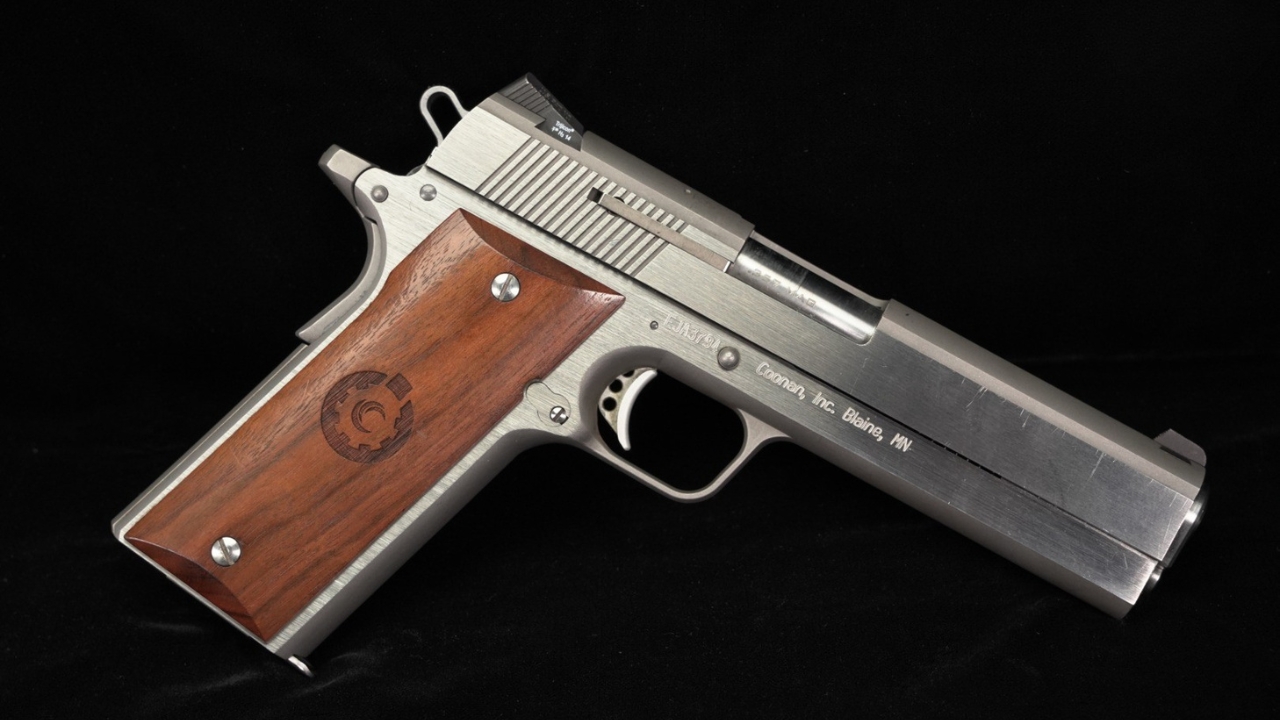
The Coonan Classic combines the shape and trigger of a 1911 with the power of the .357 Magnum cartridge. It is mechanically interesting and far more dramatic than a conventional defensive pistol.
It is also heavy, expensive, and dependent on specialized magazines and parts. Rimmed revolver cartridges require a carefully designed magazine, and replacements are not something a person will find in an ordinary gun shop during a crisis. The pistol’s discontinued status makes repairs even more difficult. A basic .357 revolver would handle the same ammunition with far fewer logistical problems.
Wildey Survivor

The Wildey Survivor is a massive gas-operated pistol chambered for powerful cartridges such as .475 Wildey Magnum. Its adjustable gas system and imposing appearance made it famous far beyond its actual sales numbers.
Almost everything about it becomes a liability in an emergency. The gun is extremely heavy, ammunition is rare, magazines are specialized, and the operating system requires knowledge most shooters do not have. Losing one small part could turn it into an expensive club. It belongs in a collection or hunting setup, not in a bag built around mobility and common supplies.
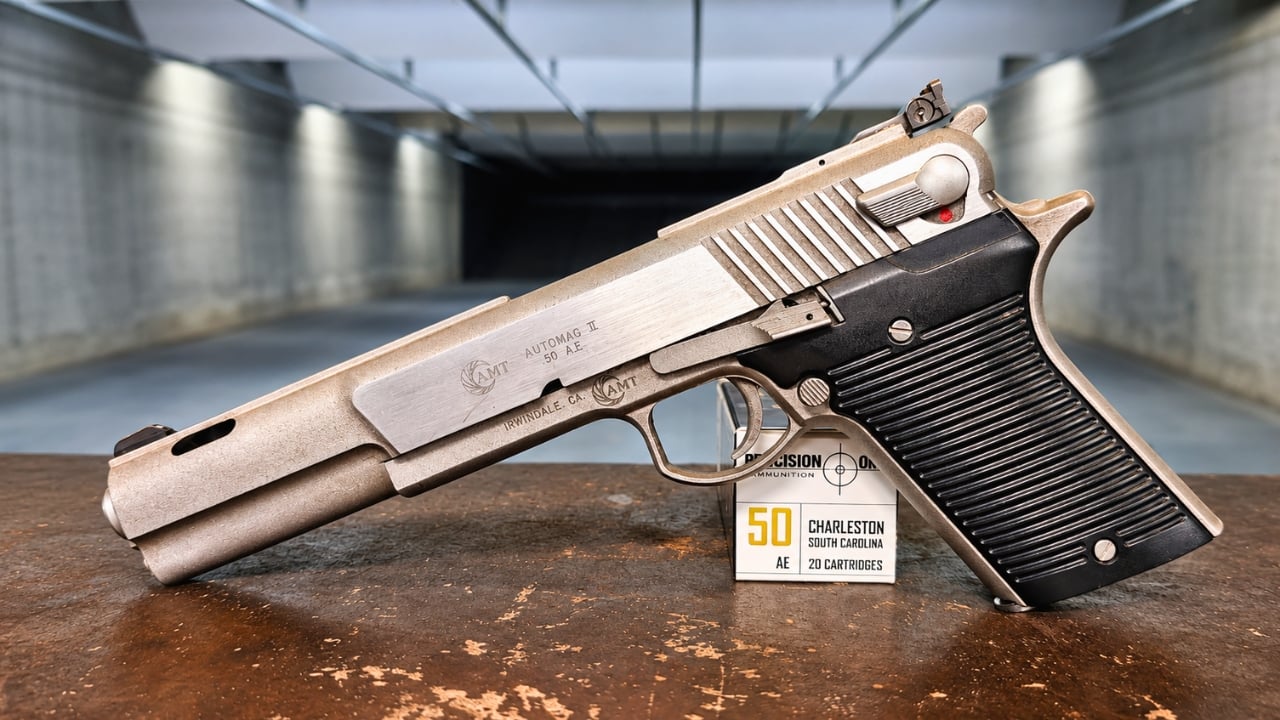
AMT Automag V
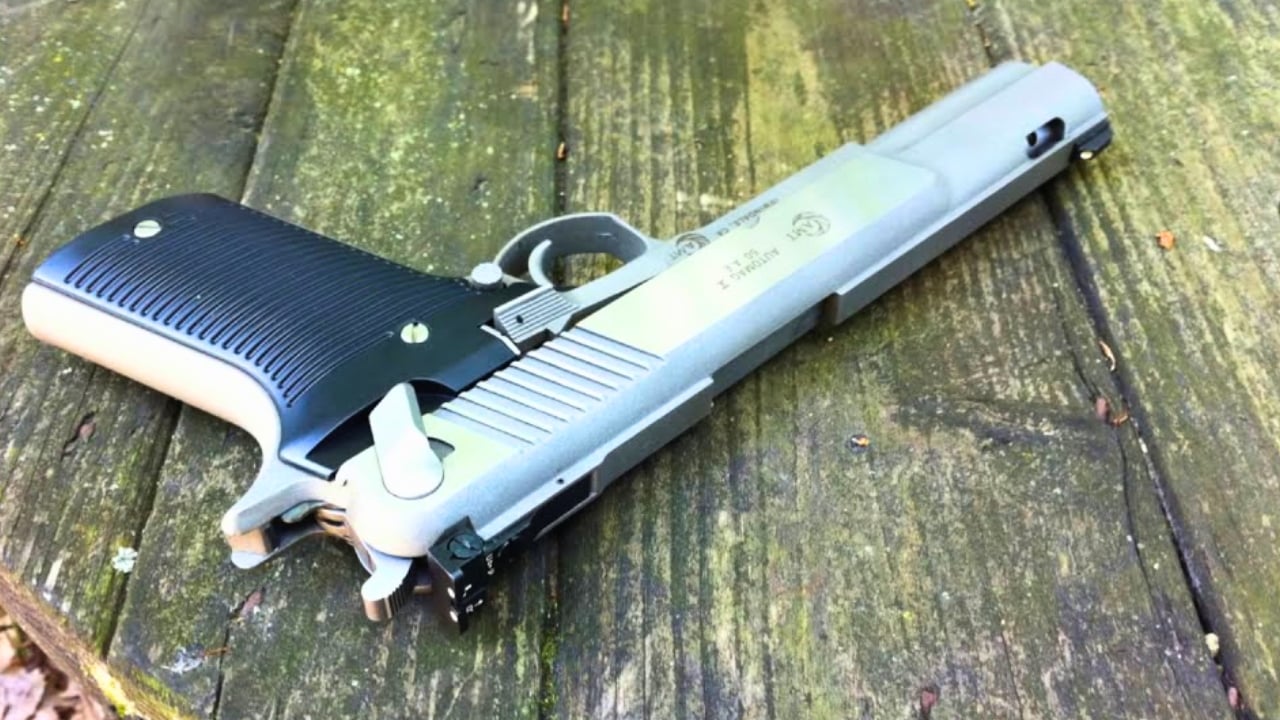
The Automag V chambered in .50 Action Express was built around power rather than practicality. It gives shooters magnum-level handgun performance in a semiautomatic package that looks unlike an ordinary service pistol.
It is heavy, difficult to maintain, and supported by a tiny parts market. Ammunition is expensive and bulky, while magazines are scarce enough that losing one could end the gun’s usefulness. An emergency firearm should simplify problems. The Automag V creates too many of them.
Mateba Model 6 Unica
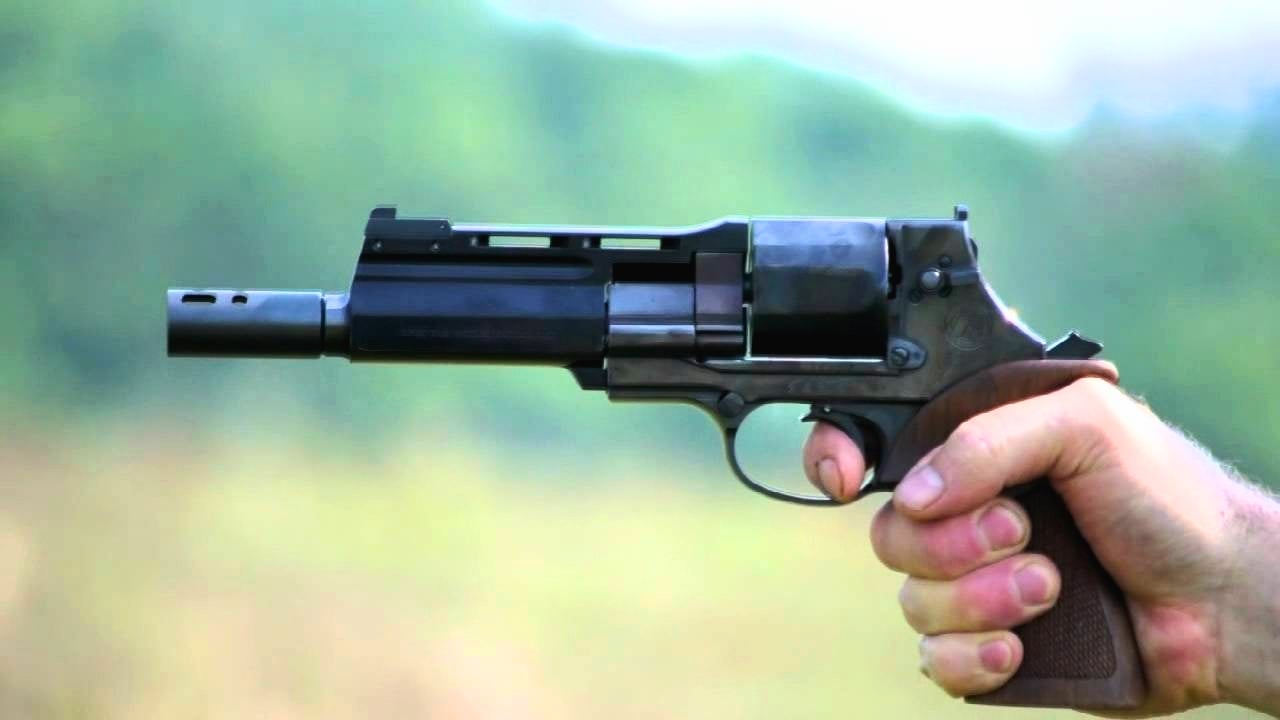
The Mateba Model 6 Unica is a recoil-operated revolver that fires from the bottom chamber of the cylinder. Its low bore axis and cycling upper assembly make it one of the most unusual production handguns ever sold.
That uniqueness is exactly why I would leave it behind. The mechanism is complicated, replacement parts are scarce, and very few gunsmiths have meaningful experience with the design. It is also heavy for its capacity. A conventional revolver may be less interesting, but it is easier to diagnose, maintain, and keep running.
Chiappa Rhino 60DS
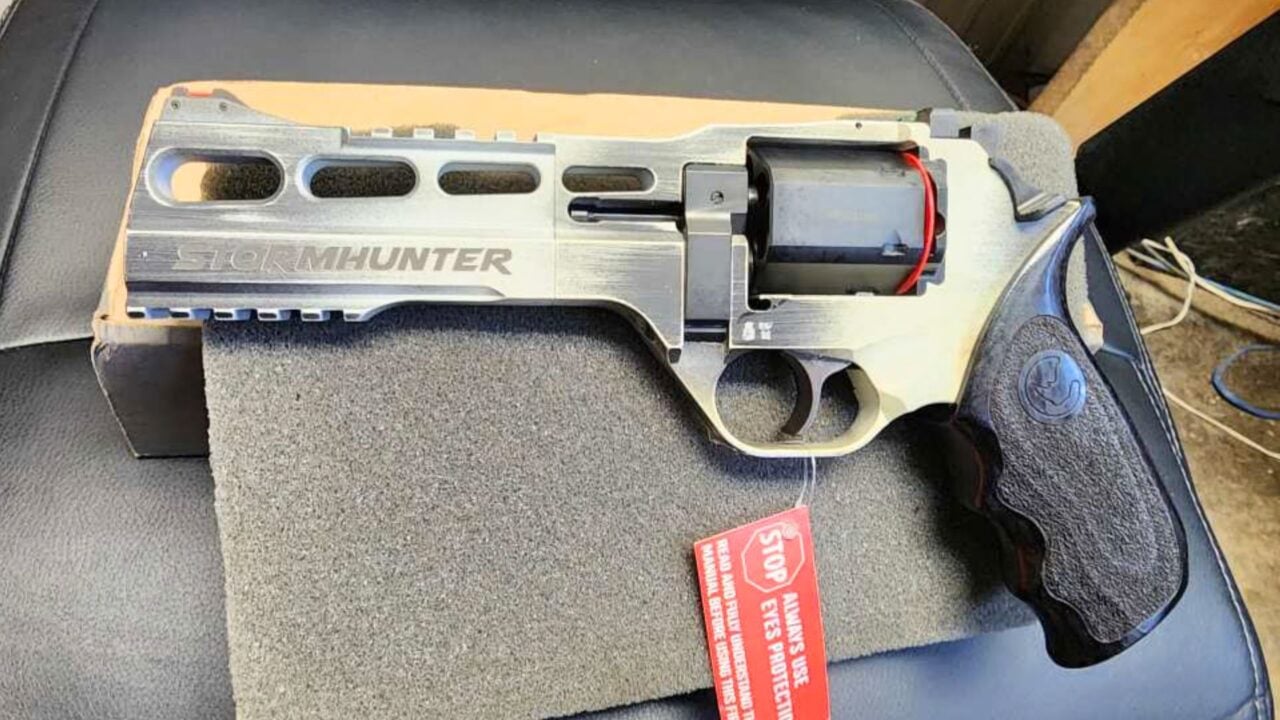
The Rhino’s low-mounted barrel reduces muzzle rise and makes .357 Magnum easier to control than it is through many conventional revolvers. The 6-inch model can also deliver excellent accuracy.
The unusual internal hammer system, proprietary grips, specialized holsters, and uncommon replacement parts make it a questionable emergency choice. The long barrel and bulky frame also reduce its usefulness for concealed carry. A standard Ruger or Smith & Wesson revolver would be easier to repair and support without giving up the cartridge.
S&W Model 460XVR
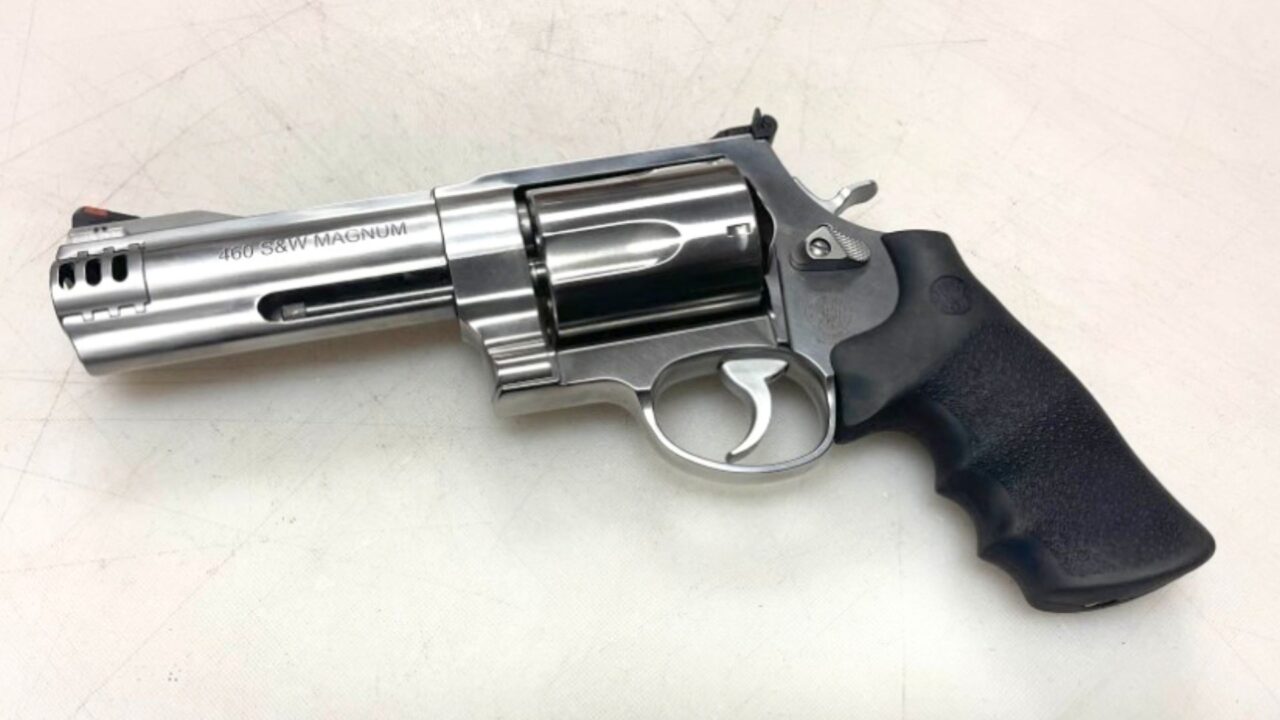
The Model 460XVR is capable of taking large game at distances most handguns cannot approach. It can also fire .454 Casull and .45 Colt ammunition, giving it more cartridge flexibility than many oversized revolvers.
The gun itself is enormous. It is heavy to carry, difficult to conceal, expensive to feed, and punishing to fire with full-power ammunition. The cartridges and speedloaders take up considerable space, and the revolver fills almost no ordinary defensive role efficiently. Unless the emergency specifically involved large dangerous animals, the weight would be better spent elsewhere.
Magnum Research BFR .45-70

The BFR in .45-70 Government offers rifle-cartridge power from a long-barreled single-action revolver. It can be used for handgun hunting and is built strongly enough to handle serious ammunition.
It is a terrible emergency sidearm. The revolver is long, heavy, slow to reload, and difficult to carry without a specialized holster. Ammunition is bulky, recoil is severe, and a short rifle chambered in the same cartridge would be easier to use accurately. The BFR is impressive, but emergencies reward efficiency rather than spectacle.
KelTec CP33
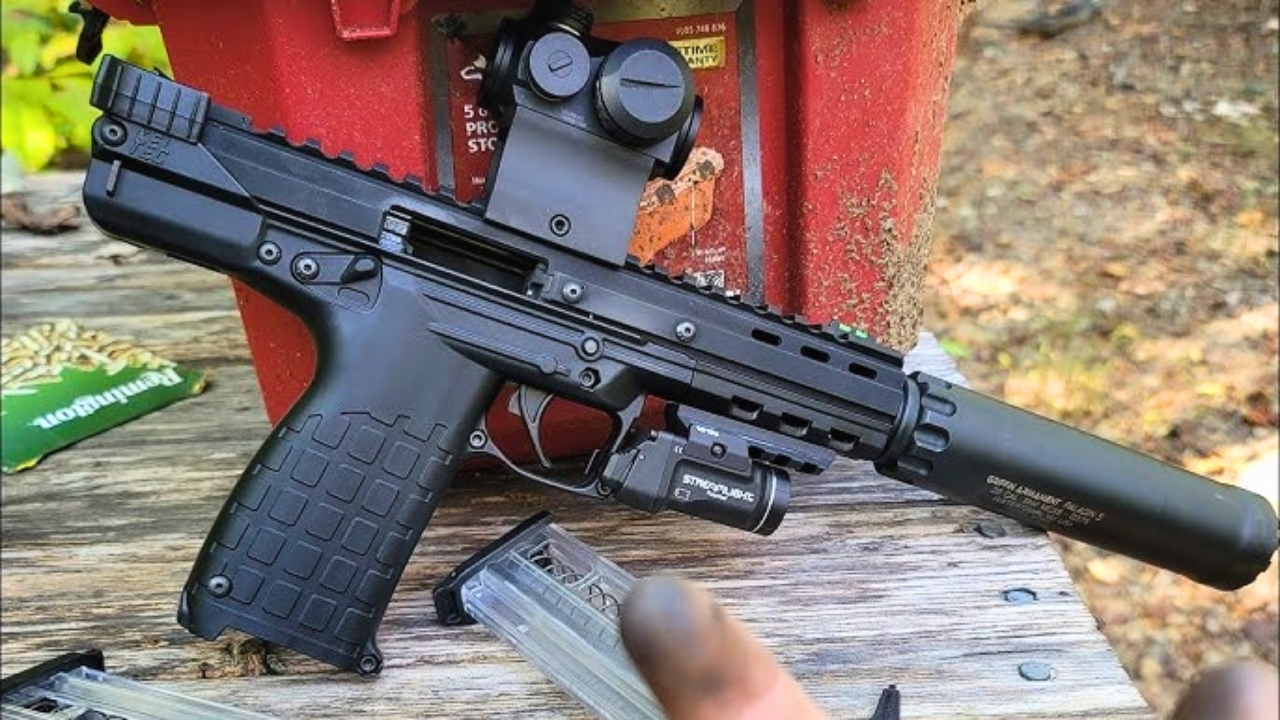
The CP33 holds 33 rounds of .22 LR and offers an excellent trigger, optics rail, and threaded barrel. It is entertaining, accurate, and highly configurable.
Its magazines require careful loading, and rimmed cartridges can create feeding problems when stacked incorrectly. The pistol is also highly dependent on clean ammunition and proprietary magazines. A basic .22 rifle would provide better practical accuracy and easier handling, while a conventional centerfire handgun would be more dependable for defensive use. The CP33 is clever but too specialized.
Calico M100

The Calico M100 uses a top-mounted helical magazine that can hold 100 rounds of .22 LR. That capacity sounds appealing when ammunition supplies are uncertain.
The magazine is large, complicated, and vulnerable to dirt or damage. Loading and winding it correctly takes time, and a single damaged magazine can remove the gun’s main advantage. The rifle is also awkward to carry and poorly supported compared with a Ruger 10/22. Capacity does not help much when the feeding system becomes the weakest part of the firearm.
American-180
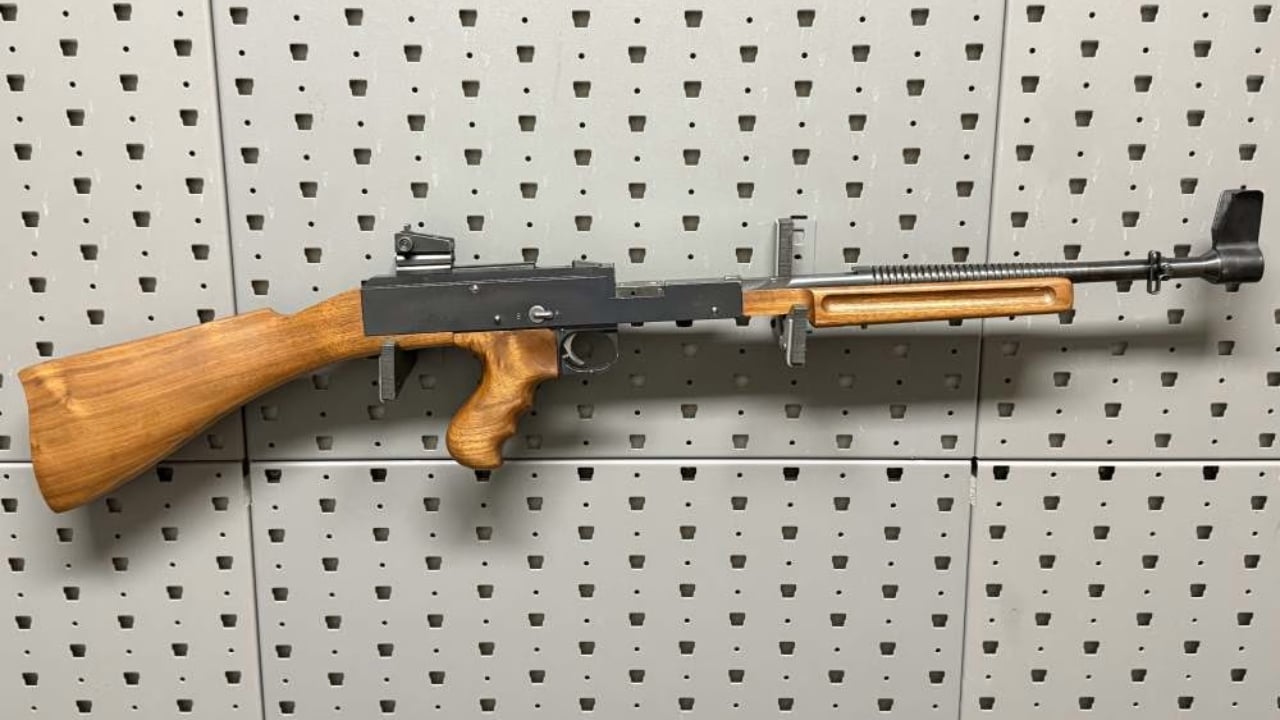
The American-180 uses a large pan magazine and an extremely high cyclic rate in automatic versions. Even semiautomatic examples are unusual and attract attention immediately.
The magazines are bulky, delicate, and slow to load. The gun depends on a specialized system that offers almost no parts or magazine commonality with ordinary rimfire rifles. Carrying several loaded drums would consume far more space than carrying simple box magazines. It is historically fascinating, but an emergency is not the time to depend on a rare mechanical curiosity.
FN PS90
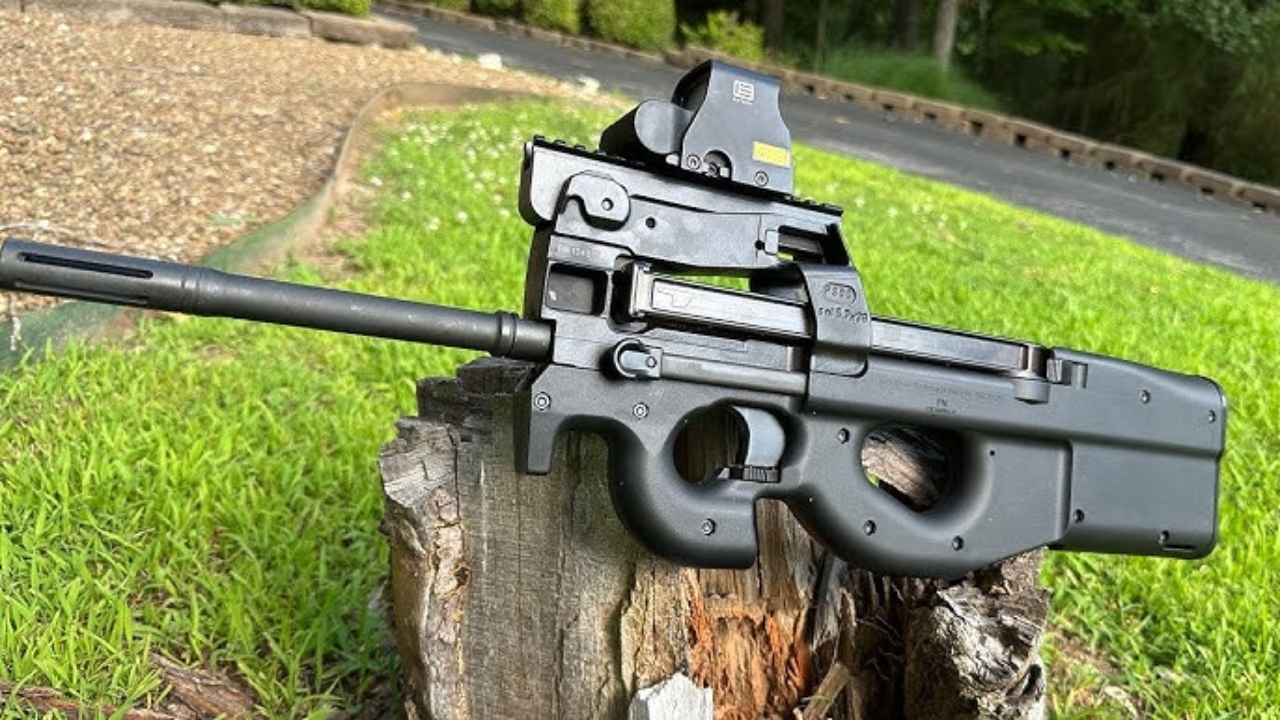
The PS90 is compact, easy to control, and capable of holding 50 rounds in its top-mounted magazine. Its bullpup layout gives it a full-length barrel without the overall length of a conventional rifle.
It is tied to 5.7x28mm ammunition and proprietary magazines. The controls, loading system, and internal layout are unfamiliar to many shooters, which matters if the gun must be shared. The PS90 can make sense for home defense, but a 5.56 AR-15 offers much broader ammunition, magazine, parts, and accessory support.
Steyr AUG A3 M1
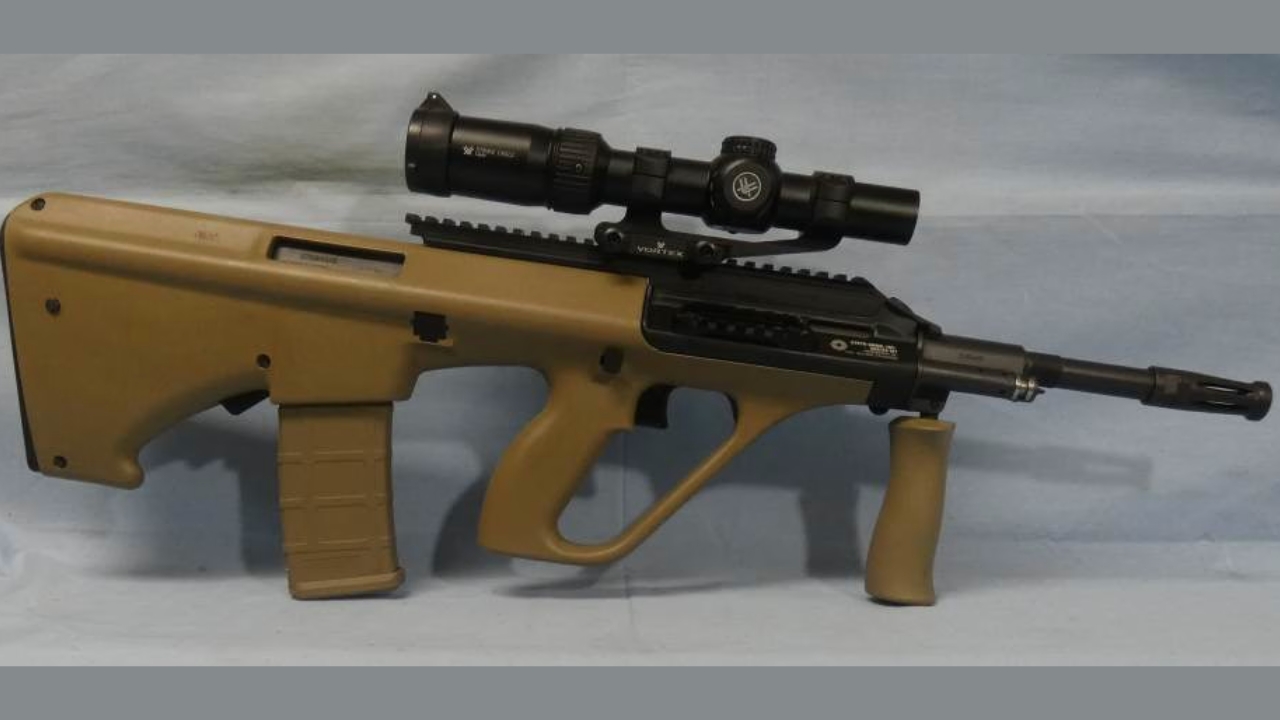
The AUG is durable, compact, and built around a military-proven piston system. It handles well once the shooter becomes familiar with the bullpup layout.
In an emergency, I would still choose a common AR-15 over it. AUG parts, magazines, trigger components, and barrels are not nearly as easy to replace. Its controls are less intuitive to people trained on conventional rifles, and specialized repair knowledge is limited. The AUG is not fragile. It is simply too proprietary for a situation where commonality matters.
IWI Tavor 7

The Tavor 7 places .308 Winchester power into a compact bullpup rifle. It uses common SR-25-pattern magazines and offers more authority than smaller 5.56 rifles.
Its weight and balance make it tiring to carry over distance. The rifle is also mechanically more complicated to service than a conventional AR-10, and spare parts are less common. The .308 ammunition itself is heavy, reducing how much can be carried. In a vehicle or fixed defensive position it can be excellent. On foot, the weight adds up quickly.
Springfield Armory M1A SOCOM 16
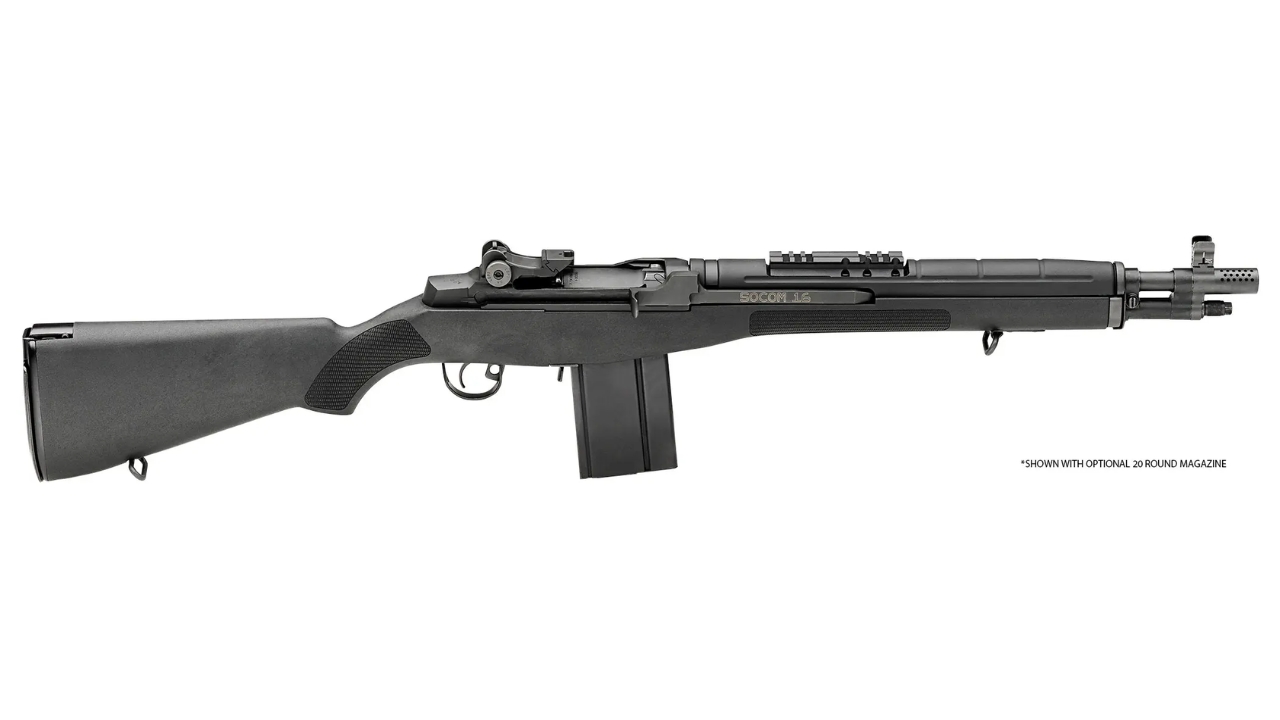
The SOCOM 16 shortens the M1A into a compact .308 rifle with a large muzzle brake and aggressive styling. It is powerful, durable, and visually impressive.
It is also heavy, loud, expensive, and harder to maintain than a modern semiautomatic rifle. Magazines are bulky and costly, optics mounting is awkward, and the traditional action requires specific knowledge to keep accurate. An AR-10 or lightweight bolt rifle would provide similar cartridge performance with easier parts support.
PTR 91
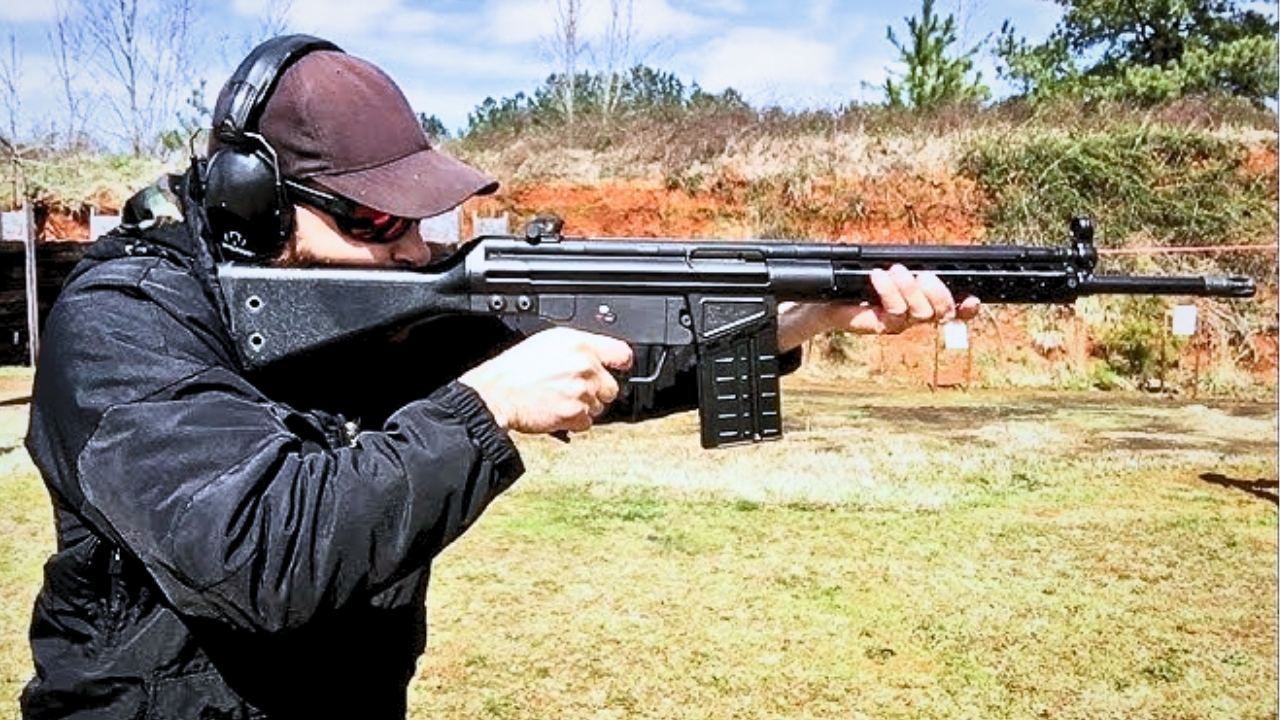
The PTR 91 is a robust roller-delayed .308 rifle based on the G3 pattern. It can function under harsh conditions and uses magazines that have historically been inexpensive.
The rifle is heavy, the charging handle is awkward, and its recoil impulse is more abrupt than that of many gas-operated .308 rifles. It also throws brass violently and can be difficult to mount optics on cleanly. Its durability is real, but carrying the rifle and enough ammunition for it would be exhausting during a mobile emergency.
Saiga-12
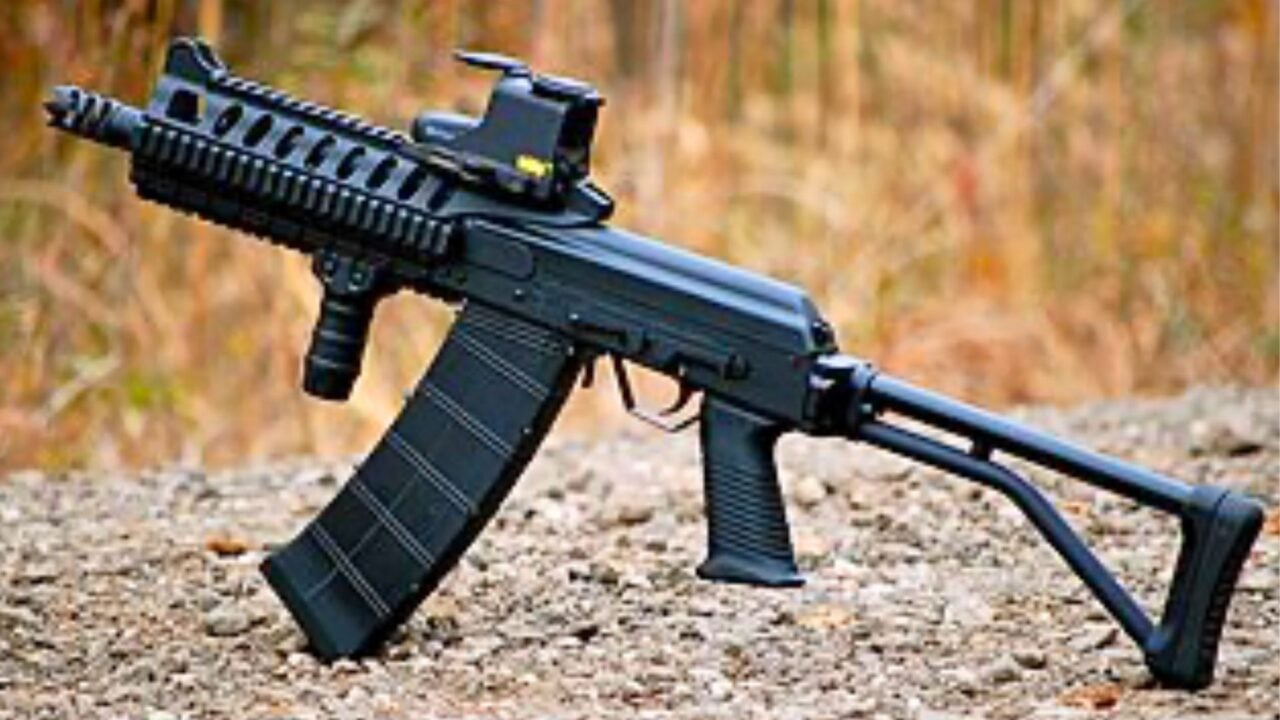
The Saiga-12 gives shooters semiautomatic 12-gauge fire from detachable box magazines. It can deliver tremendous close-range firepower when properly tuned.
The magazines are large, awkward to carry, and difficult to insert when fully loaded against a closed bolt. The shotgun can also be sensitive to gas settings, ammunition power, and aftermarket modifications. Twelve-gauge shells already consume considerable space, and box magazines make the problem worse. A conventional pump shotgun is slower but much easier to feed from loose shells.
UTAS UTS-15
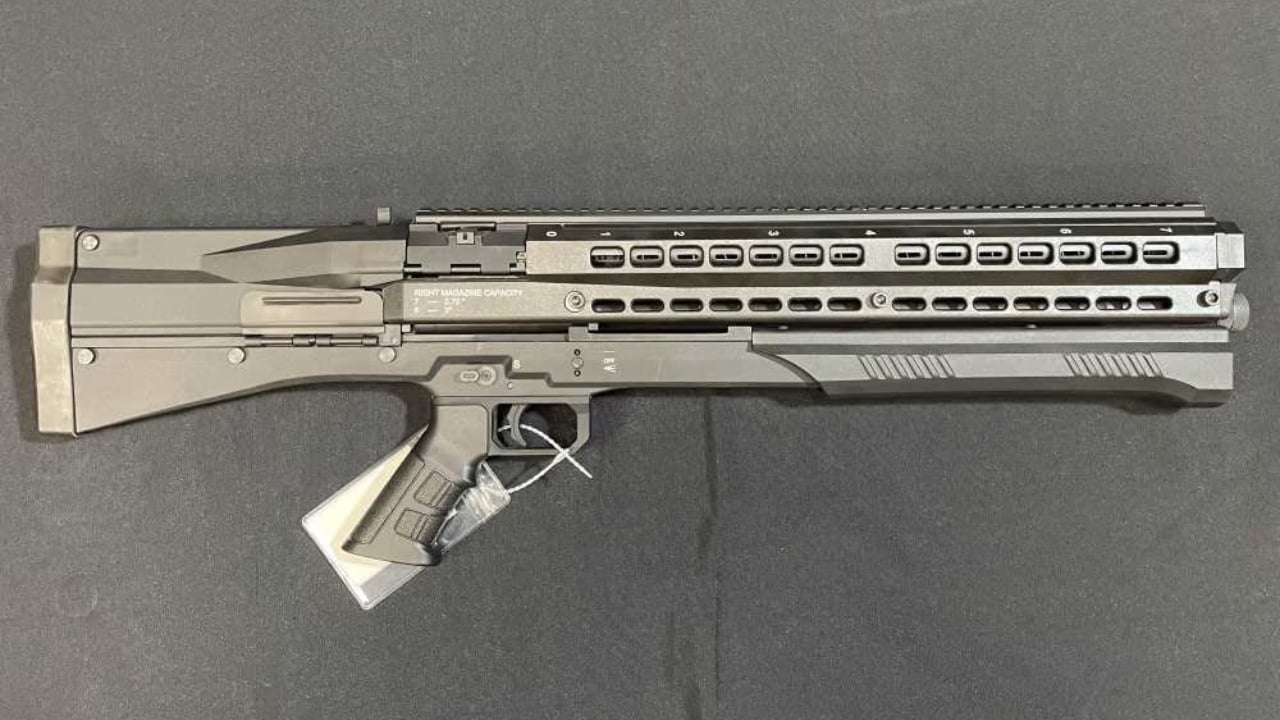
The UTS-15 combines two magazine tubes above the barrel and allows the shooter to select between different loads. Its compact bullpup layout provides substantial capacity without an extended tube protruding beyond the muzzle.
The feeding system is complicated, the controls are unconventional, and early production earned a poor reputation for reliability. Even a functioning example is difficult to clear and repair compared with a Mossberg 500. In an emergency, I would choose the shotgun with fewer moving parts and a much larger supply of replacement components.
Serbu Super-Shorty
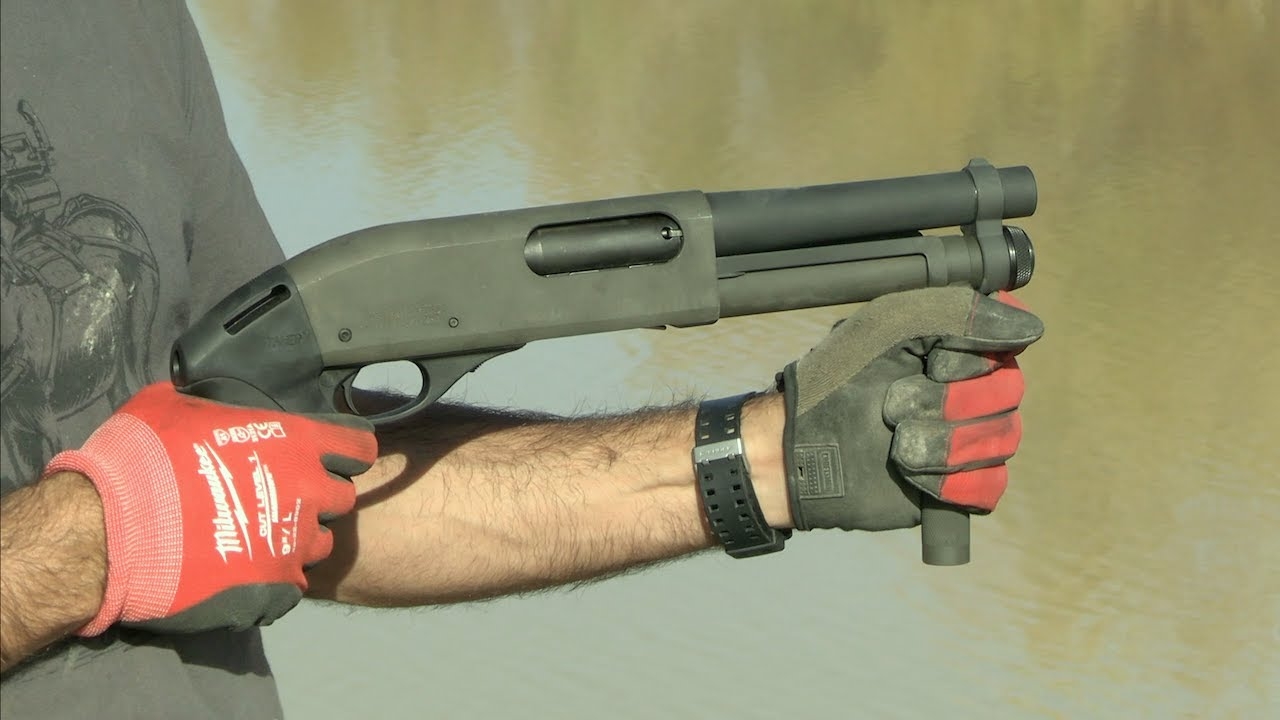
The Super-Shorty is compact enough to fit into spaces where an ordinary shotgun cannot. It uses a shortened pump-action platform with a small front grip and no shoulder stock.
That compactness destroys much of the shotgun’s usefulness. Recoil control is poor, aiming is awkward, capacity is low, and follow-up shots require controlling the gun while operating the pump. It is specialized equipment designed around minimum size. A standard stocked shotgun would be far easier to use under stress.
Like The Avid Outdoorsman’s content? Subscribe to our newsletter so you never miss an article.
Here’s more from us: