Photo credit: Freeograph/Shutterstock.com
Some guns don’t belong anywhere near a guided hunt. You’re paying for the experience, the land access, the guide’s expertise—and you’re often hunting hard-to-draw or once-in-a-lifetime tags. That’s not the time to show up with questionable gear. Your guide won’t say it, but they’re judging what you unpack. If you walk in with a range toy or some internet-famous oddity, they know they’re in for a long week. Whether it’s a rifle that won’t hold zero, a mag-fed “deer blaster” built like a truck bumper, or a finicky wildcat that can’t cycle in cold weather, it all adds stress to a hunt that’s supposed to be locked in. These are the guns to leave home.
Remington 770

You might think the 770 is an affordable entry point, and for a lot of folks, that’s how they end up with one. But this rifle’s action feels like it’s dragging sand, the bolt’s rough, and the polymer stock flexes enough to shift your zero. Pair that with a bottom-end factory scope and you’re gambling your whole hunt on something built to compete on price, not performance.
Guides have seen enough of these to wince when they spot one. It’s not about snobbery—it’s about reliability. When you’re shooting at a trophy bull or buck across a draw, you don’t want to second-guess your rifle’s mechanics. This one’s earned its reputation the hard way.
Hi-Point Carbine

In the right setting, the Hi-Point carbine is a functional, affordable tool. But it’s built for plinking, truck duty, or maybe hogs at close range. Not for elk or mule deer at 200 yards. Accuracy falls off quick beyond 50–75 yards, and the ergonomics aren’t exactly confidence-inspiring when you’re trying to steady up for a real shot.
And let’s be honest, showing up to a guided hunt with a pistol-caliber carbine isn’t going to instill much confidence in your guide. Even if you’re shooting 10mm or .45 ACP, that round loses steam fast. A wounded animal on a big piece of private land creates a headache for everyone involved.
Century Arms C308

The idea of taking a battle rifle on a hunt might sound fun in theory—tough, semi-auto, and heavy-hitting. But the C308 is notoriously inconsistent when it comes to accuracy. Between trigger slap, a gritty pull, and the imprecise scope mounting options, it’s more likely to frustrate you than land a clean shot.
It’s also heavy, awkward to carry over long distances, and loud enough to wake the next valley. A guide doesn’t want to see an entire canyon blown out because someone touched off a sloppy shot from a G3 clone. There’s nothing wrong with surplus rifles—but this one belongs back on the range.
Rossi Circuit Judge

The Circuit Judge looks cool and definitely turns heads, but its utility on a serious hunt is questionable at best. It’s a revolving rifle based on the Judge revolver, chambered in .410 or .45 Colt, which means you’re severely limited in both range and energy. Neither of those rounds carries enough punch for anything larger than varmints or small hogs.
Accuracy is another issue. With a longer barrel and iron sights, it can feel promising, but real-world performance often doesn’t match expectations. Most guides want clean kills and minimal suffering. The Circuit Judge just doesn’t deliver that kind of consistency when a shot matters most.
Chiappa M1-9

The Chiappa M1-9 is a 9mm carbine made to resemble the classic M1 Carbine. It’s a fun little plinker, and it scratches that nostalgic itch, but you don’t bring this to a guided hunt unless you’re hunting rabbits with a bayonet. It’s chambered in a pistol round, built around blowback operation, and rarely shoots groups you’d call “acceptable” past 50 yards.
Some folks try to squeeze performance out of it with optics and upgraded ammo, but the platform limits you from the start. It’s not meant for fieldwork on big game. You’ll be undergunned, out of range, and making your guide rethink their life choices.
Savage Axis XP Compact .243

The .243 is a capable caliber when matched with the right rifle and shooter, but the compact Axis XP setup often shows up with a shaky factory scope and a plastic stock that loves to shift in rough weather. Add in a new or younger hunter who’s still figuring out trigger control, and the results can be inconsistent at best.
It’s not that the Axis can’t work—it sometimes does. But it doesn’t inspire trust when conditions get rough or shots stretch out. On a paid hunt, where every tag matters, it’s better to bring something with a better track record and stronger out-of-the-box reliability.
AR-10 with Budget Parts

The idea of using a .308 AR-10 for big game isn’t wrong. It’s the parts build that causes trouble. Some hunters show up with homebrew rifles pieced together from budget kits, cheap barrels, and questionable gas systems. When those rifles fail to feed, double eject, or shoot 4-inch groups, the guide ends up babysitting gear instead of guiding.
Weight’s another concern. Many AR-10 builds are heavy and awkward to carry all day, especially in steep country. If you’re going to run a semi-auto .308 in the field, it better be squared away. Most aren’t. And when it isn’t, everyone ends up chasing wounded animals.
Thompson/Center Compass

The Compass tried to offer a lot for a little—threaded barrel, decent trigger, and various calibers—but execution was hit or miss. Accuracy out of the box can be fine, but inconsistency across rifles, rough bolt operation, and questionable bedding all make this a hard rifle to fully trust on a guided hunt.
Pair it with a budget scope, and you’ve got a setup that might lose zero mid-hunt without you noticing until it’s too late. Guides want dependable rifles, not ones that require extra range time between every shot. You don’t want your confidence shaken by hardware when it’s time to shoot.
Marlin 336 with See-Through Rings

A Marlin 336 in .30-30 is a classic, but when folks mount scopes in see-through rings and rely on the iron sights as backup, things usually go sideways. Those rings shift, the comb height’s all wrong, and cheek weld turns into chin float. It’s a recipe for erratic shots, especially under pressure.
The .30-30 can absolutely anchor deer at brush range, but you’ve got to set the rifle up right. Guides don’t want to spend their morning adjusting scope mounts or figuring out which zero you’re trying to use. If you’re going lever-action, go with a clean setup that stays dialed.
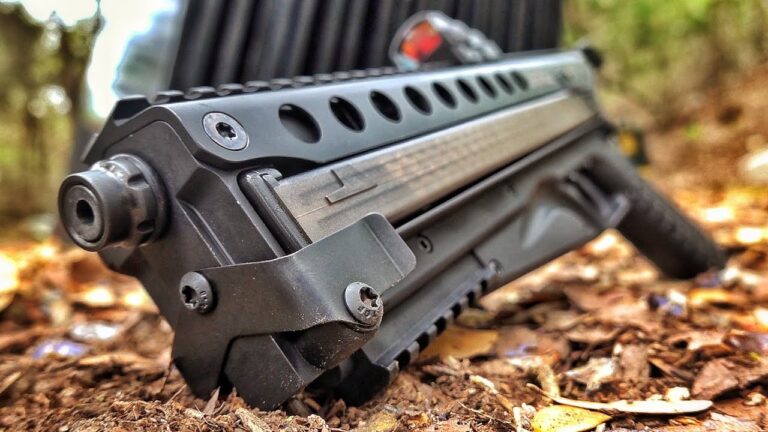
KelTec SU-16

The KelTec SU-16 folds up neatly and packs light, which appeals to backpack hunters. But it’s not built for the rigors of a real guided hunt. Accuracy is marginal, and the plastic receiver and handguard don’t inspire much confidence when you’re bracing on a fencepost or rock.
Reliability can also be an issue. Light primers, weak cycling, and magazine quirks all tend to surface when you’re miles into unfamiliar terrain. Even though it shoots .223, which can work for smaller game with the right bullet, the platform itself is better suited to survival kits or truck storage than a paid hunt.
Ruger American Ranch 7.62×39

On paper, this seems like a smart pairing—cheap ammo, mild recoil, and a handy rifle. But 7.62×39 isn’t known for precision, especially when paired with steel-cased ammo and a short barrel. Groups often open up fast past 100 yards, and the Ruger’s magazine fitment and feed issues don’t help matters.
This combo might be fine for a quick shot on pigs or whitetail in tight woods, but most guided hunts require more reach, better shot placement, and ammo that doesn’t wobble its way downrange. It’s a fun rifle to own, but probably not the one you want when the stakes are high.
Like The Avid Outdoorsman’s content? Be sure to follow us.
Here’s more from us:
The worst deer rifles money can buy
Sidearms That Belong in the Safe — Not Your Belt
*This article was developed with AI-powered tools and has been carefully reviewed by our editors.