Photo credit: The Avid Outdoorsman
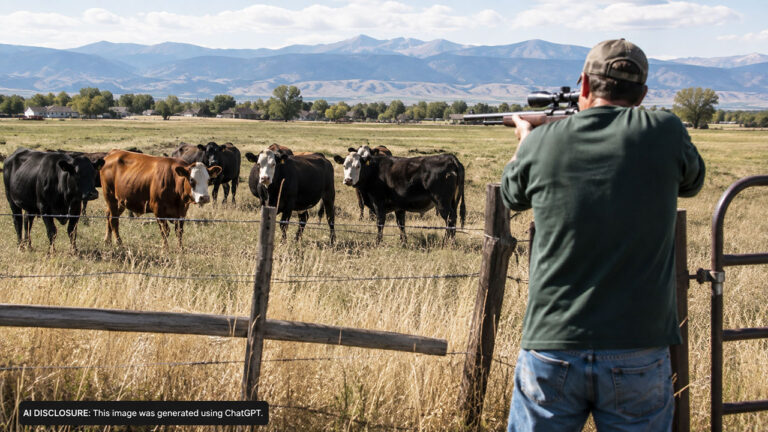
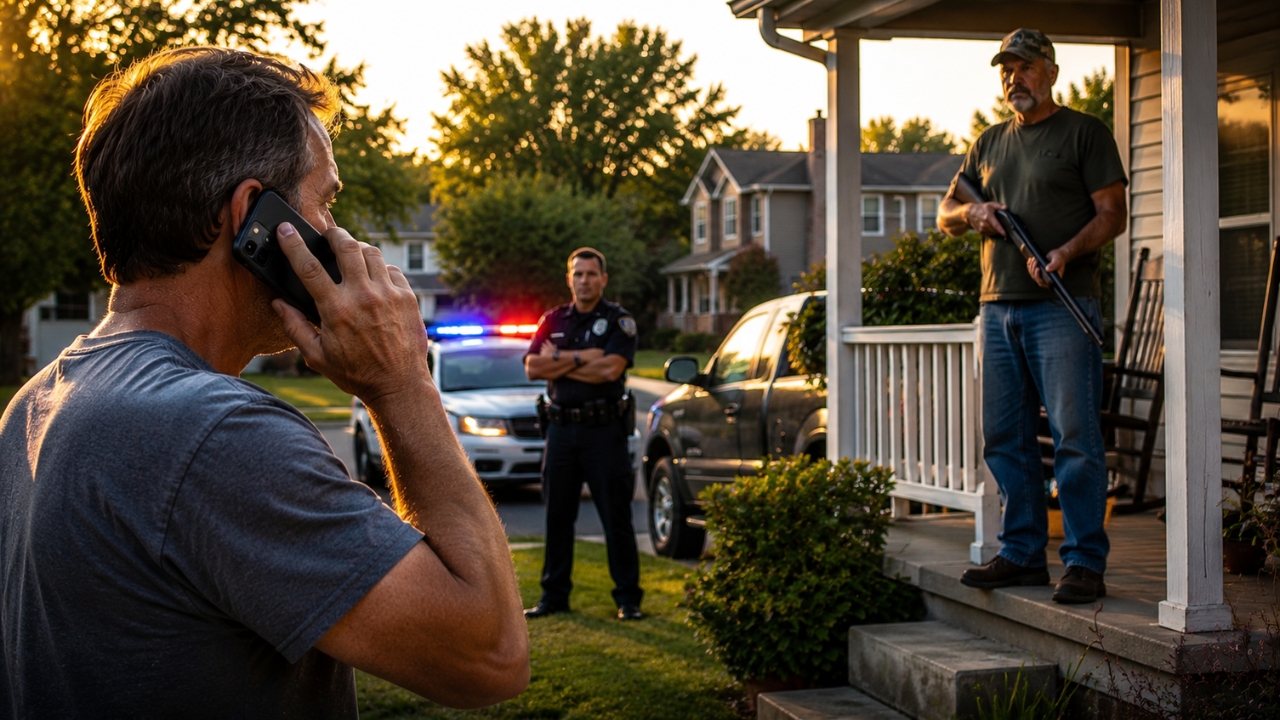
Out in the county, a shotgun leaning in the crook of an arm doesn’t automatically mean trouble. But when it shows up along a fence line three different times, and the guy holding it isn’t supposed to be there, it’ll get a homeowner’s attention in a hurry.
That’s what played out in a quiet rural neighborhood when one property owner called law enforcement—once, then again, and then a third time—about a neighbor walking near the edge of his land with a scattergun. The first couple of responses were the usual: officers drove through, asked a few questions, didn’t find an active threat, and told the caller to keep an eye on things. By the third call, though, the officer’s answer changed the whole direction of the situation: it sounded less like a criminal complaint and more like a neighbor dispute that needed to be handled as a civil matter.
The first call was about fear, not paperwork
The homeowner’s concern wasn’t hard to understand. He’d seen the neighbor with a shotgun near the back of the properties where the lots widened into brush, a drainage, and a thin strip of timber. It wasn’t a range. It wasn’t a marked hunting tract. It was the kind of no-man’s-land where people “think” the line is, but don’t really know.
In rural America, folks carry guns for all kinds of reasons—checking on coyotes, running predators off the chickens, putting down a sick animal, or walking to a stand during small game season. The problem is that “normal” doesn’t always feel normal when it’s happening on the wrong side of a fence.
The second call turned into a property-line argument
When officers came back out the second time, the story had shifted. Now it wasn’t just a person with a firearm. It was about where that person was standing, what direction the muzzle was pointed, and whether there had been any shots fired.
The neighbor reportedly claimed he was on his own property, or on an access strip he’d always used. The homeowner said the opposite, insisting the neighbor was crossing onto his side and using the edge as a travel lane. That’s where a lot of these cases get messy: trespass is real, but it’s also something that often hinges on precise boundaries, posted signage, and documentation.
An officer can’t just take one person’s word over the other and start writing citations if the line isn’t clearly established. And when no one sees the act of trespass in the moment, it’s even harder to turn into an immediate enforcement action.
The shotgun became the focus, but the real issue was behavior
By the time the third call went in, frustration had set in. The homeowner felt like he’d done what he was supposed to do—call instead of confronting. He wasn’t looking for a fight in the driveway or a shouting match at the fence. He wanted someone in a uniform to tell the neighbor to stay off his land and stop walking around armed where it made his family uneasy.
The problem is that simply possessing a shotgun on or near your own property is generally lawful, and in most places it’s not illegal to walk with a long gun as long as you’re not threatening people, brandishing, or violating some other statute. If nobody is reporting shots over homes, pellets hitting buildings, or a clear “I’m going to hurt you” type threat, the legal hook law enforcement needs may not be there.
That’s likely why the third responding officer drew a line between “this scares me” and “this is a chargeable offense.” Fear matters, and officers should take it seriously. But fear alone doesn’t automatically convert a neighbor dispute into a criminal case.
Why an officer might call it civil instead of criminal
When an officer says “civil matter,” it usually means the fix isn’t going to come from an arrest on the spot. Property lines, easements, shared driveways, informal trails, and long-standing “handshake agreements” can sit in a gray area until someone forces it into black and white.
If the neighbor truly believes he has the right to be there—because the prior owner allowed it, because an old fence line is wrong, or because the deed shows a different boundary—then you’re dealing with something that may require surveys, title work, and possibly a judge’s order. Law enforcement can keep the peace, but they can’t adjudicate a boundary dispute on the tailgate of a patrol truck.
On the flip side, if the neighbor is knowingly crossing a posted line, that can be trespass. The catch is that it’s often on the landowner to clearly post, document, and be ready to show exactly where the line is. A “pretty sure” boundary doesn’t hold up well when everyone is standing in a ditch arguing about whose brush pile is whose.
What folks latched onto: cameras, signage, and the game warden angle
In these situations, outdoorsmen tend to focus on the practical stuff that holds up when tempers cool. Most of the talk usually circles around three things: documentation, deterrence, and who you call.
Trail cameras come up fast, and for good reason. A time-stamped photo of someone crossing a clearly posted line is a different animal than a verbal claim. The same goes for “No Trespassing” signs placed legally and consistently, plus painted trees or posts where that’s allowed. It’s not about turning your place into a billboard; it’s about removing excuses.
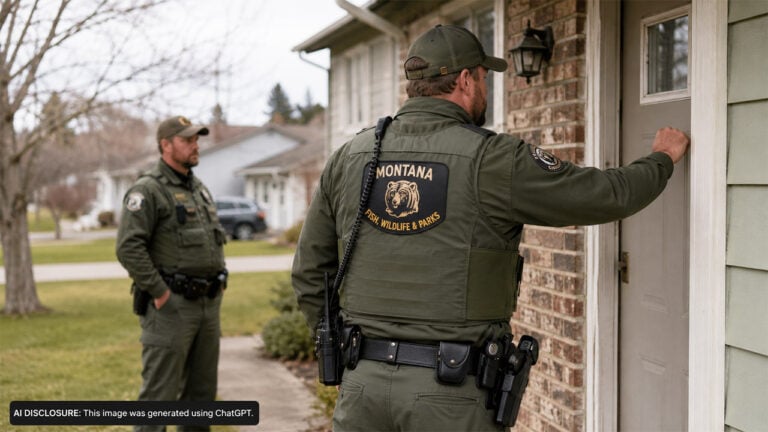
Depending on the state and season, some folks also point out that a conservation officer or game warden may be the right call if there’s suspected hunting near homes, spotlighting, or shots fired in unsafe directions. Wardens live in the world of field access, permission, and hunting conduct. They can’t solve every neighbor issue, but if the “shotgun walks” are tied to hunting activity, they may have more specific enforcement tools.
Then there’s the backstop and safe-shooting conversation. Even when someone is legally hunting, shooting toward occupied structures, across roads, or into unknown backdrops can cross the line quickly. If pellets are found, property is damaged, or shots are heard too close for comfort, that’s no longer just a boundary debate.
The homeowner’s best options were the boring ones
The hardest part is that the next steps aren’t exciting. They’re the slow, unglamorous moves that keep people safe and keep you right in the eyes of the law.
First is getting the boundary nailed down. A current survey, marked corners, and a clear map take the air out of most arguments. Second is tightening up posting and access control—gates, locks, and signs placed where they’re supposed to be, not tossed up randomly. Third is building a clean paper trail: dates, times, where the person was, what was observed, and whether shots were fired. No drama, just facts.
And here’s the part many people don’t like: avoiding direct confrontation is still the smart play when guns are involved. If you think a neighbor is escalating, you don’t match that energy at the fence line. You keep distance, keep your family inside, and let the right process work.
If it truly is civil, that doesn’t mean you have to live with it. It means the remedy may be a surveyor, a certified letter, a property attorney, or a court order—tools that don’t feel as satisfying as a quick police response, but tend to end the argument for good.
At the end of the day, a shotgun is just a tool. The real danger in these neighbor situations is pride, assumptions about boundaries, and letting frustration do the driving. If you’ve got a line dispute and firearms in the mix, the best outcome is the one that gets settled on paper—before somebody makes a decision they can’t take back.