Photo credit: The Avid Outdoorsman
Most gun owners know the sick feeling of opening a safe or a truck console and realizing something isn’t where you left it. A hunting rifle isn’t just a tool—it’s a season’s worth of planning, range time, and memories. And when it disappears, it’s more than a property loss. It’s a safety problem.
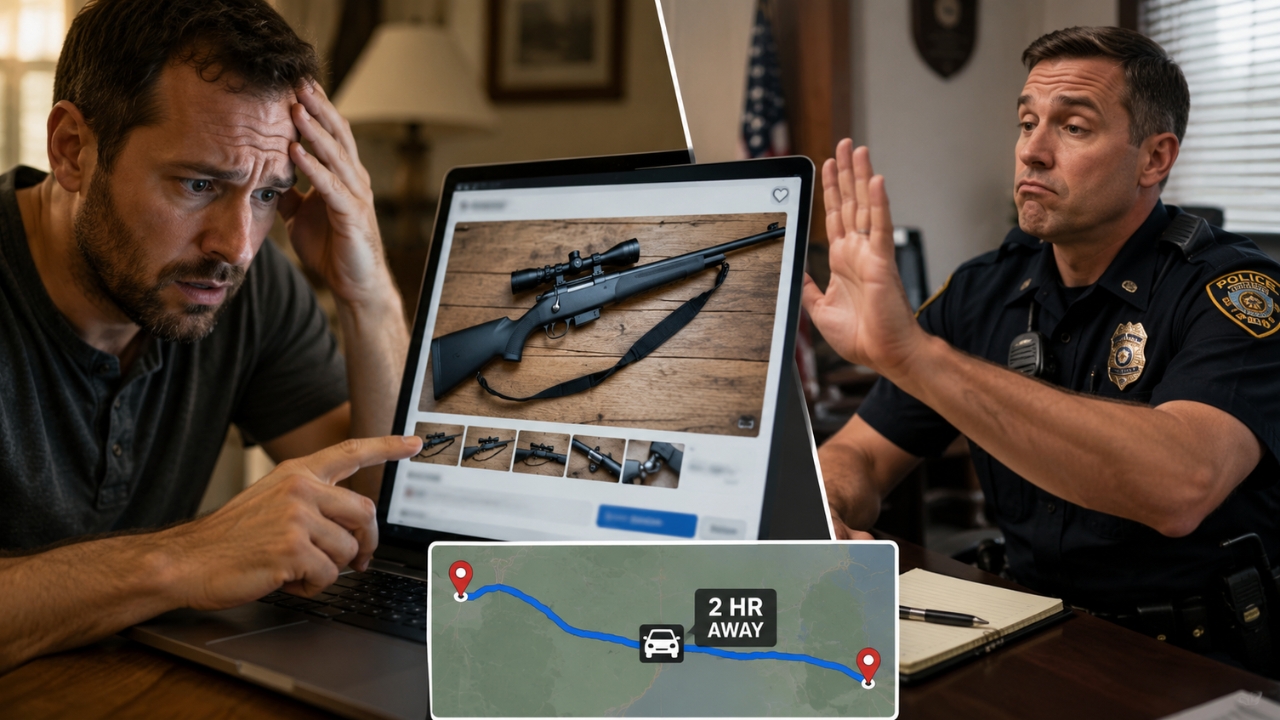
In this case, the owner did what a lot of folks end up doing these days: kept an eye on online marketplaces. A few weeks after reporting the theft, he was scrolling listings late one evening and froze. The pictures looked too familiar—same stock scuffs, same sling studs, and a small, odd wear mark near the fore-end that he remembered from leaning it against a rough cedar post at camp.
The theft wasn’t just about money—it was about a gun in the wrong hands
The rifle had been taken during a quick-hit burglary. No broken safe, no Mission Impossible stuff—just the kind of smash-and-grab that happens when someone knows you’re gone and the house is quiet. The owner had filed a report right away and provided serial numbers, make, model, and photos. That’s the homework part a lot of people skip until it’s too late.
For hunters, the timing makes it worse. You lose the rifle you’ve got dope for, the one you trust, the one you know prints an inch high at 100 with your preferred load. Replacing it isn’t just buying another gun. It’s rebuilding confidence before you sit in a stand or hike into the timber.
Then the rifle showed up online, listed like it was just another used gun
The listing was casual: a couple photos on a kitchen table, a short description, and a price that was just low enough to move fast but not so low it screamed “stolen.” The seller had a new account and vague location info—common red flags, especially when the post says things like “need gone today” or “no trades.”
The owner did what most people would do first: he compared details. He zoomed in on the photos, matching nicks and small imperfections. He checked his own pictures and looked at the listing again. It wasn’t 100 percent proof on looks alone, but the combination of markings plus the exact model and setup made it hard to ignore.
Instead of messaging the seller with accusations, he contacted law enforcement and provided everything he had: the listing screenshots, the username, the posted price, and the photo details. He also had the serial number from his original paperwork, which matters because “looks like mine” doesn’t go far without something solid behind it.
The response he got was the part that surprised him
Here’s where things went sideways. The owner expected an officer to at least make a call, request a meet, or tell him what steps could be taken to recover it. What he heard instead was closer to: the seller was outside their area and it wasn’t something they could jump on right now.
The kicker was distance. The seller, based on the listing location and what could be gleaned from the account, appeared to be about two hours away. That might not sound like much to folks used to driving for a good public-land spot, but it can become a wall when jurisdiction lines and manpower get involved.
Local agencies often can’t—or won’t—run proactive operations outside their county or coverage area without coordination. And coordination takes time, paperwork, and someone willing to own the case. When departments are slammed with calls, a stolen rifle that’s “maybe” located on a classifieds site can get shoved down the priority list, even though to the victim it’s the only thing that matters.
Why “just go get it” is a bad idea in the real world
Every time a story like this comes up, you’ll hear the same advice from someone: set up a meet and take it back. That’s not just risky—it can turn a victim into the guy in handcuffs. Showing up to confront a stranger over a firearm is one of the quickest ways for a situation to go sideways.
There are too many unknowns. The seller may not be the thief. The rifle might have been traded twice since it was stolen. Or the person meeting you might show up with backup, or not show at all. And if you bring your own gun “just in case,” now you’ve got the ingredients for a tragedy in a parking lot.
The better play is documentation and patience, even though patience doesn’t feel good when your rifle is sitting in someone else’s photos. Save the listing, record the URL, take clear screenshots, and note the time and date. Online posts get deleted fast once someone senses heat.
Commenters zeroed in on serial numbers, paper trails, and who should take the lead
When outdoorsmen talk about cases like this, the conversation always circles back to the same points: did the owner have the serial number, did he report it immediately, and did he have photos that clearly tied the gun to him? The guys who’ve been through it will tell you that “I can identify it” doesn’t carry the same weight as “here is the serial number tied to a theft report.”
Others focus on the jurisdiction problem. A lot of people don’t realize how quickly a case can stall when the potential recovery is across county lines. The practical suggestion you hear is to contact the agency where the seller is located and provide them the original report number and all documentation. Sometimes a different office has the time or interest to act.
Another common theme is records. Not everybody keeps purchase receipts, and not every rifle has an easy paper trail if it changed hands through private sales long ago. But a simple habit—snap a photo of the serial number, keep it with your insurance info, and store it somewhere off-site—can make the difference between “we can’t prove it” and “we can act.”
The options that actually tend to work when a stolen gun pops up online
The most effective path usually looks boring. It’s follow-up calls, calm emails, and working the right channels. If local police won’t act because the listing is outside their reach, the owner can ask for the report to be forwarded to the agency in the seller’s area or contact them directly and provide the report number, serial number, and proof of ownership.
Another step is notifying the marketplace platform. Some sites are slow, but many will respond to a theft report number and documentation. Getting the listing preserved—at least long enough for investigators to pull account info—can matter more than people think.
It also helps to keep expectations realistic. Even when the owner is right, recovery can take time. And if the seller bought it unknowingly, law enforcement may treat them as a witness or as someone in possession who needs to surrender it, not as the original thief. That can still get the rifle home, but it won’t always come with the satisfying ending people picture.
The hard truth is this: a stolen firearm in circulation is a public safety issue, and it should be treated like one. But the system isn’t built around how personal these tools are to hunters and gun owners. The best protection is upstream—secure storage, careful transport habits, and having your serial numbers recorded before you ever need them.
If your rifle ever turns up in an online listing, the goal is simple: don’t escalate it yourself, don’t jeopardize your freedom, and don’t stop after one phone call. Be the squeaky wheel, bring receipts, and keep it professional. That’s usually what gets results when the distance and the paperwork start getting in the way.