Photo credit: The Avid Outdoorsman
It started the way a lot of rural neighbor problems start: a property line everyone “knows,” a long gravel drive, and one guy who thinks the whole block is his shooting lane.
The homeowner had lived there long enough to learn the rhythms—kids cutting through the trees, coyotes yipping behind the back pasture, and the occasional weekend target practice from somewhere nearby. But over a handful of months, the gunfire got closer, the posture got harder, and the conversations over the fence turned into the kind of exchanges that leave your stomach tight for the rest of the day.
The neighbor dispute wasn’t really about noise
According to the homeowner’s account, the friction began with a simple boundary disagreement. A section of brush and a low spot in the fence line had been used for years as an informal pass-through—easy for walking a dog, easy for dragging a deer if you’re the kind of person who thinks permission is optional.
When the homeowner finally posted fresh signs and reinforced the fence, the neighbor took it personal. Not “I’m annoyed” personal. “I’m going to show you I’m the one in charge out here” personal.
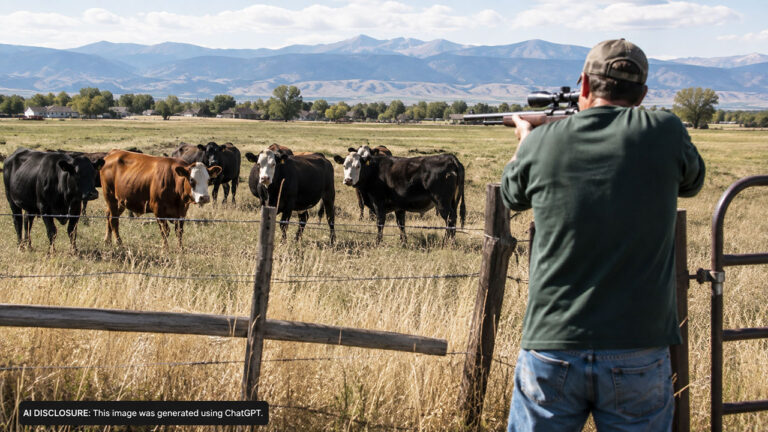
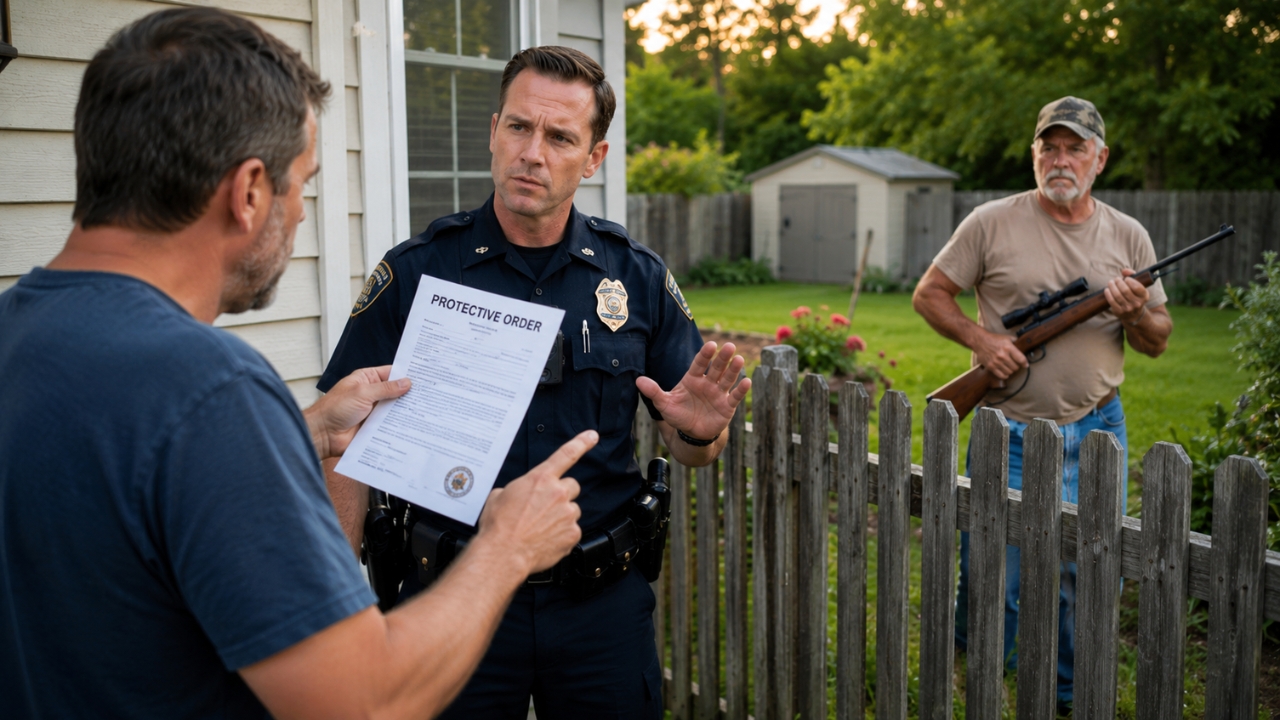
The homeowner said the neighbor started appearing outside whenever he was in the yard—sometimes with a handgun visible on his hip, sometimes leaning on a long gun like it was a prop. No shots were fired at him, but the message felt loud enough.
Getting a protective order felt like the responsible move
Plenty of folks reading this know the first rule: don’t escalate with a hothead who’s already halfway up the ladder. The homeowner tried the normal steps—documenting dates, calling to report suspicious behavior, and avoiding direct contact.
Eventually, he went to court and obtained a protective order meant to stop harassment and keep the neighbor from coming around him. On paper, it was the kind of tool people are told to use when a situation turns from “annoying” to “unsafe.”
He figured that meant the neighbor had to keep his distance anywhere on the property. House, driveway, barn, yard—if it’s your place, it’s your place. That’s the common-sense view most people have, especially those who live where “the yard” isn’t a patch of grass, it’s an acre or five you actually use.
The shock came when police explained how they would enforce it
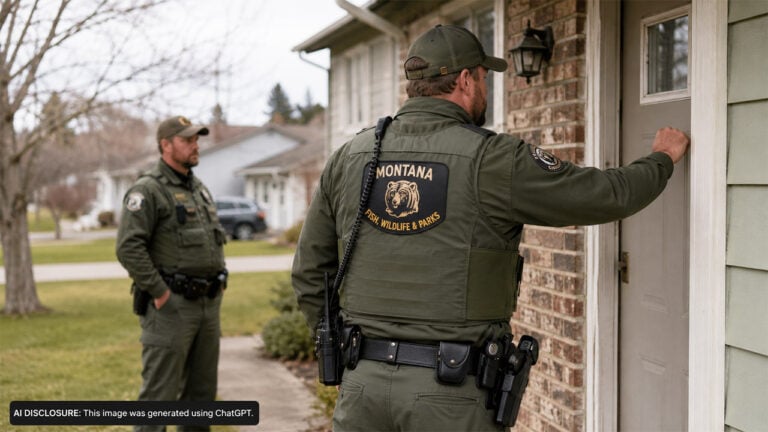
The homeowner’s relief didn’t last long. The first time he called after the protective order was issued, he said officers responded and acknowledged the paperwork—but also told him their understanding was that the order applied to the residence itself, not the surrounding yard.
That’s the kind of sentence that makes a person stare at their own back porch like it suddenly isn’t theirs. If a neighbor can stand on the property line, armed and angry, and it’s considered “outside the protected area,” then what exactly did the order accomplish for a landowner who works outside?
This wasn’t described as an officer being dismissive. It sounded more like a systems problem—how the order was written, how the boundaries were defined, and what officers felt they could confidently enforce without creating a bigger legal mess.
In the real world, “inside the home” doesn’t match how outdoorsmen live
Most of us don’t spend our evenings pinned to the couch. We’re splitting wood, feeding animals, cleaning a boat, checking trail cameras, and letting the dog run. When tensions run high, the yard is usually where you’re most exposed.
If the protective order is effectively a “go inside and lock the door” document, it doesn’t solve the real problem. It just changes the homeowner’s behavior while the aggressor keeps doing what he was doing—hovering, posturing, and turning normal chores into a risk assessment.
And when firearms are part of the intimidation, the stakes go up fast. A holstered pistol is one thing. A rifle brought out as a statement is another. Either way, no one should have to wonder if mowing the lawn is going to turn into a confrontation.
Commenters zeroed in on documentation, property lines, and better wording
People who’ve dealt with boundary disputes tend to focus on the same three things: paper trails, cameras, and hard lines on a map. The advice in situations like this is usually less about winning an argument and more about building a record that holds up when someone else has to make a decision.
Trail cameras aimed at gates and fence corners, security cameras covering the driveway and back porch, and a written log of incidents can matter more than a heated phone call. Not because you’re trying to “get” someone, but because memory and adrenaline are unreliable, and a clean timeline changes how seriously a complaint gets treated.
Folks also tend to bring up surveys. Not the “my granddad told me” version of a property line, but stakes in the ground and a map you can hand to someone. When a dispute turns legal, ambiguity is gasoline.
Another common point: protective orders can be very literal. If the order is written around the “residence,” some agencies interpret that as the structure, not the whole curtilage—yards, porches, outbuildings, and the places you actually live your life. When it’s vague, enforcement gets cautious.
The practical options looked more like prevention than enforcement
With the homeowner feeling boxed in, the next moves were about controlling what he could control. That often means tightening up the property: better locks on gates, clearer signage, and lighting that makes the back corner less of a stage.
It also means avoiding the trap of “handling it yourself.” Rural pride is real, and so is the urge to walk down there and settle it. But when the other party is already using a firearm as a pressure tactic, the last thing you want is a face-to-face moment that turns into a life-changing decision in under two seconds.
On the legal side, people in similar situations often go back to court to clarify the order—spelling out distance requirements, defining the protected area to include the yard and outbuildings, and making the language something a responding officer can enforce without guessing. Sometimes that’s the difference between “we can’t do anything” and “we can act right now.”
There’s also the plain reality that certain behaviors may fall under separate violations—trespass, brandishing-type conduct depending on the jurisdiction and facts, harassment, or discharging firearms in an unsafe direction. The homeowner’s best leverage is usually not one magic document, but a stack of clear, specific complaints supported by evidence.
Out in the country, you want to believe a piece of paper fixes a dangerous neighbor problem. Sometimes it helps. But if the order is drawn too narrowly, it can leave a landowner feeling like he’s protected only when he’s hiding indoors. The smarter play is tightening the language, tightening the documentation, and keeping the situation from turning into the kind of confrontation nobody gets to take back.