

Photo credit: Mr. Wilk/YouTube
It’s easy to get swept up in the hype of a popular gun. You see the glossy ads, hear the praises from gun stores, and notice the long waiting lists, which can make you believe that a particular firearm is a must-have. But, sometimes, the true test of a firearm’s reliability and functionality doesn’t come until you actually use it under pressure. Guns that stay popular often remain untested by the people who own them. Maybe they’ve only been to the range a handful of times or used sparingly for home defense. As a result, their true weaknesses, quirks, and shortcomings don’t come to light until they’re really needed.
Many of these guns continue to thrive not because of their superior performance but because buyers don’t push them to their limits. They remain in demand mostly because they have yet to be fully tested, leaving their potential flaws hidden. Here are a few examples of firearms that stay popular mainly because buyers never test them hard enough.
Glock 42

The Glock 42 remains a popular concealed-carry choice due to its compact size, reliability, and the fact that it carries the famous Glock name. The .380 ACP caliber is seen as an ideal balance between power and recoil for many, which makes it a tempting option for everyday carry. However, the 42’s popularity is often bolstered by its simplicity rather than its true performance under pressure. When fired in rapid succession or during intense self-defense training, the 42 tends to exhibit higher recoil than expected for a small pistol, causing many owners to struggle with follow-up shots.
That recoil can be a problem when you need quick, accurate follow-ups under stress, and the relatively limited capacity of the .380 means that having every shot count is crucial. While the 42 does what it’s designed to do for casual carry, many owners fail to realize its limitations in real-world situations, leading them to rely on it more than they should.
Smith & Wesson M&P Shield .40

The Smith & Wesson M&P Shield has built its reputation as a reliable concealed-carry handgun, especially in 9mm. However, the .40 S&W version of the M&P Shield doesn’t always get the same level of attention for its performance. While it is lightweight, accurate, and has a relatively small profile, the recoil and muzzle flip with the .40 caliber can be harsher than some shooters are prepared for. The result is that many buyers never truly test it under stress or practice with it enough to realize that its recoil may hinder rapid follow-up shots.
The Shield in .40 S&W might perform well in the hands of some shooters, but many fail to test its ability to consistently perform under duress. A heavier recoil than expected and limited capacity mean that while it’s a solid handgun for basic defense, it may fall short in high-pressure situations, especially for those who don’t shoot it frequently.
Ruger SR1911

Ruger’s SR1911 has gained popularity in the semi-auto 1911 world because it combines classic 1911 design with a modern stainless-steel construction. This combination of performance and aesthetics appeals to many gun owners who desire the traditional 1911 feel with modern durability. However, while it looks the part and is often treated as a go-to pistol for defense, many owners don’t test the SR1911 enough to fully understand its quirks. The 1911’s reputation for being finicky about ammo types and magazines is often overlooked by casual owners.
While the SR1911 is a solid pistol, it can struggle with certain types of ammunition, and the recoil spring needs to be maintained properly to avoid malfunctions. These issues rarely appear in casual shooting or basic self-defense situations, but when tested under more extreme conditions, these flaws can rear their ugly heads. That’s why so many owners don’t notice the need for greater attention to detail until it’s too late.
Sig Sauer P238

The Sig Sauer P238 is a small, lightweight pistol that’s perfect for pocket carry, and its reputation has been built on being a reliable and stylish concealed-carry option. However, many buyers never push the P238 to the level where its small frame and short barrel limitations become apparent. While it feels smooth to carry and offers sufficient stopping power for its size, the accuracy and recoil management are far from perfect when tested in rapid-fire scenarios.
A lightweight .380 like the P238 can feel good for a few shots at the range, but when the gun is truly put to the test—whether through self-defense drills or high-intensity training—it becomes evident that it can be harder to control for follow-up shots. The small grip and minimal sight radius can also make it more challenging to get accurate shots under stress.
Taurus Judge

The Taurus Judge is often heralded as a versatile revolver that can shoot both .45 Colt and .410 shotshells. It has gained popularity for its firepower and the novelty of shooting shotgun shells out of a revolver, but many buyers don’t test it in real-world situations to understand its drawbacks. The .45 Colt is manageable, but the .410 shotshell, while effective for certain purposes, can be underwhelming when it comes to actual stopping power, especially if the distance is beyond a few yards.
The Judge’s design, while unique, can also make it unwieldy in high-pressure situations. It’s bulkier than some other revolvers, which makes it more difficult to conceal, and its recoil is unpredictable with shotshells, especially for those who don’t regularly practice with the load. The hype around the Judge is often based on its concept, but once it’s used extensively under real-world conditions, many owners find that its limitations become more apparent.
Walther PPQ

The Walther PPQ is one of the most highly rated pistols on the market for its trigger and ergonomics. It’s often considered one of the best polymer-framed, striker-fired pistols in terms of out-of-the-box performance. However, many buyers don’t test it hard enough to see where its true weaknesses lie. The PPQ is incredibly comfortable for range shooting and fun to take to the range for extended sessions, but the ergonomics, while comfortable, aren’t universally praised when it comes to serious carry or self-defense drills under stress.
After prolonged shooting, some shooters find that the grip, while great for slow shooting, may cause some discomfort during longer sessions or in high-stress environments. The PPQ also has a slightly lower magazine capacity than other similar pistols, and while the gun performs reliably, it may fall short in rapid follow-up scenarios compared to a higher-capacity alternative.
Kel-Tec KSG

The Kel-Tec KSG is often marketed as a compact, high-capacity shotgun that can be ideal for home defense, offering up to 15 rounds in a pump-action, bullpup design. It’s a striking firearm with a futuristic look that draws attention, but many buyers fail to thoroughly test its functionality under stress. While the KSG’s compact size is advantageous in tight quarters, its heavy weight and unconventional design make it awkward to handle for many shooters, especially in fast-moving situations.
When you test it under the pressure of home defense scenarios—low light, quick reloads, high stress—it becomes clear that the KSG is not as user-friendly as it seems in the catalog. The controls, while innovative, can feel cumbersome when you need to make fast, decisive movements. And the capacity, while impressive, doesn’t necessarily make it easier to manage for quick shooting and reloading.
FN Five-SeveN

The FN Five-SeveN was once seen as a futuristic handgun with the promise of superior ballistics and armor-piercing capabilities. Many buyers were initially drawn to the hype surrounding the 5.7x28mm cartridge, thinking it offered something entirely new in the world of handgun calibers. However, when subjected to real-world testing, some buyers realize that the round doesn’t always deliver on the hype.
The 5.7x28mm cartridge does offer high velocity and low recoil, but its effectiveness against real-world threats is less clear when tested at common self-defense distances. The gun is also picky with ammunition, and its small magazine capacity leaves some users frustrated. While the FN Five-SeveN is still a great pistol for specific uses, it is often not as universally practical as its marketing suggests.
Taurus 856

The Taurus 856 is often touted as a great revolver for concealed carry and home defense due to its simplicity and reliability. While the 856 performs decently for many buyers who don’t push it too hard, it doesn’t always live up to expectations once it’s tested under more strenuous conditions. The recoil, although manageable for some shooters, can be jarring with full-power .38 Special and .357 Magnum rounds.
Additionally, the 856’s six-shot capacity may be seen as a disadvantage compared to the higher-capacity semi-automatics on the market today. While the revolver design is easy to use and has proven reliable over time, when tested during high-intensity defensive drills or under extreme stress, it can feel slow to operate and less versatile than more modern carry guns.
Walther P22
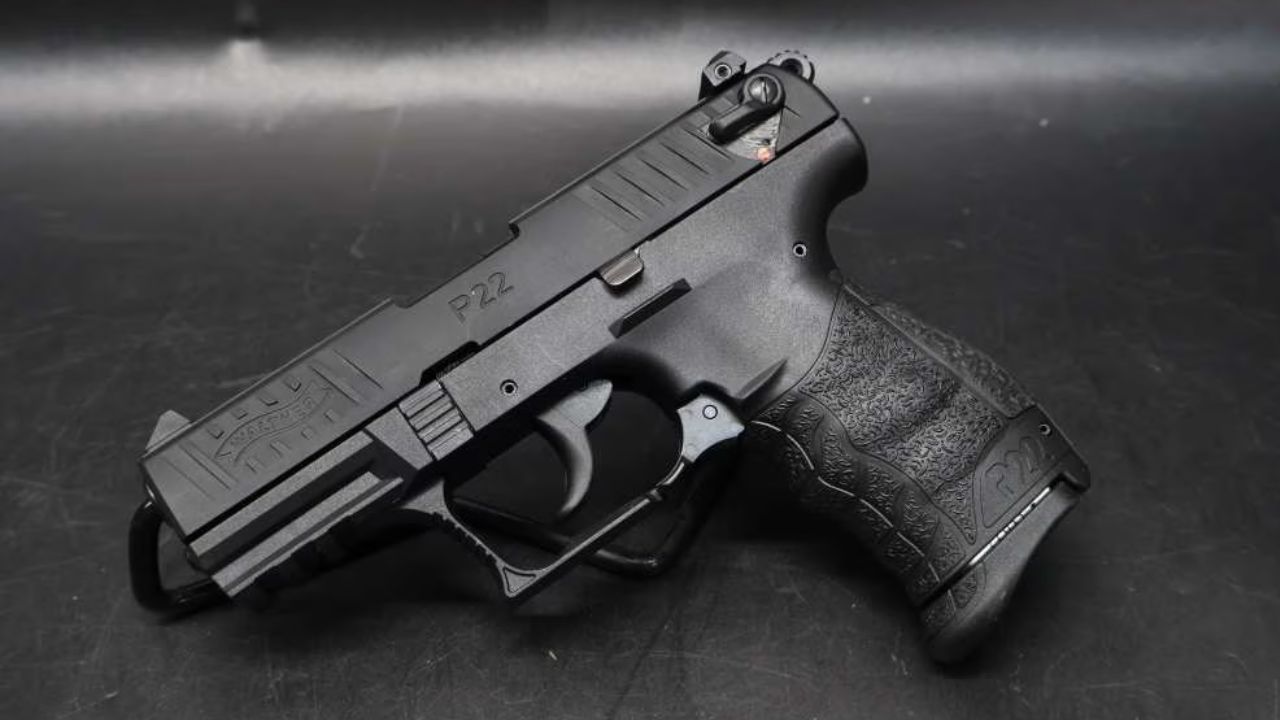
The Walther P22 has garnered attention as a practical, low-cost option for those looking for a fun and reliable .22 pistol for casual shooting. Its compact frame, soft recoil, and decent accuracy make it a go-to choice for new shooters. However, when the P22 is tested harder, some owners realize that it’s a bit more finicky than they initially thought.
The small frame and short barrel, combined with the relatively weak .22 LR ammunition, can make the P22 less effective in defensive situations. Additionally, issues with feeding, ejecting, and overall performance have been reported in certain models, especially when using a variety of ammunition. The P22 shines at the range, but for those who want a truly reliable and functional firearm for self-defense, it may not live up to the expectations set by its initial popularity.
Springfield XD-S

The Springfield XD-S is a popular choice for concealed carry due to its slim profile and impressive performance for its size. However, when tested under stress, many shooters find that the recoil on the XD-S, especially in .40 S&W and .45 ACP, can be uncomfortable and difficult to manage for fast follow-up shots. While it’s still a solid choice for personal protection, the perceived recoil and smaller grip make it a bit more challenging for shooters who are not used to carrying larger calibers.
When shooting under stress or in low-light conditions, the smaller grip can also make it harder to maintain a solid firing grip, especially when compared to larger firearms with more substantial grips. The XD-S may be popular for its form factor and dependability, but it requires more practice to truly become a reliable, easy-to-use carry option under all conditions.
Beretta PX4 Storm

The Beretta PX4 Storm offers a rotary barrel design that is unique among many handguns, and while it is praised for its smooth shooting, many shooters fail to truly test it under stress. Although it handles recoil decently well in slow, deliberate shooting, the rotary barrel system, which is designed for greater accuracy, may cause issues with rapid follow-up shots, especially for new shooters or those who have not properly trained with the platform.
Moreover, the PX4 Storm’s bulkier frame and larger size can make it a bit difficult to conceal for those looking for a carry weapon. While it is a reliable firearm, the untested assumptions that it’s as easy to carry or shoot under pressure as it seems in the shop can lead to disappointment when it counts most. If you want one for practical defense, it needs more serious practice than many casual owners assume.
Like The Avid Outdoorsman’s content? Subscribe to our newsletter so you never miss an article.
Here’s more from us:


