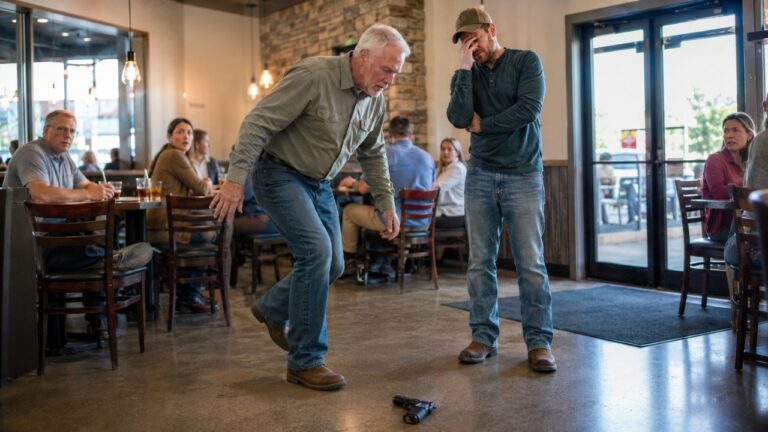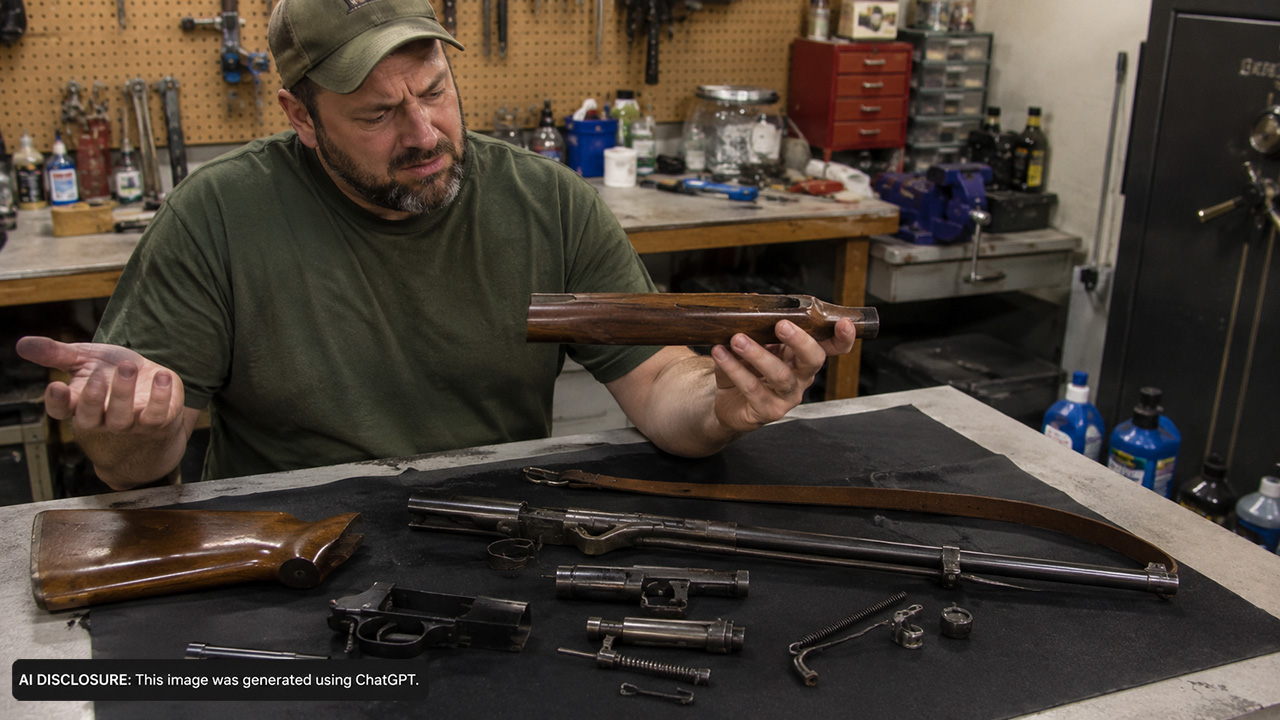
Photo credit: AI-generated image created using ChatGPT. Illustrative only
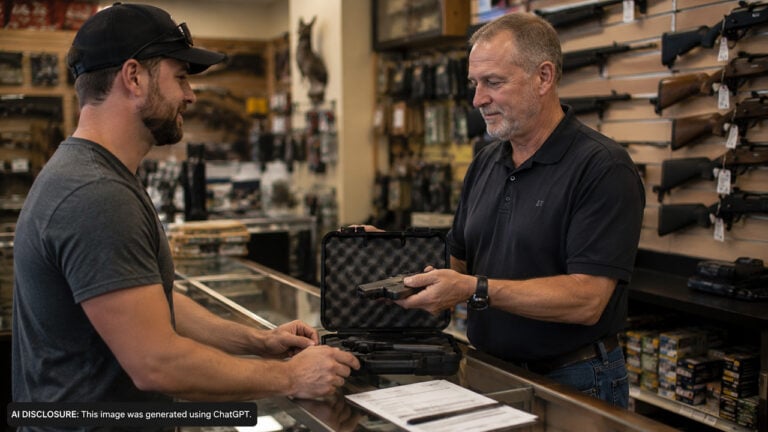
Dropping a classic firearm off at a gunsmith is usually the easy part. You hand over the case, explain what you want done, and expect to pick it up cleaned, checked, and ready to run. But one owner of a genuine, documented 1897 Trench gun said that simple transaction turned into a worst-case scenario when the gun came apart during a test fire and was effectively ruined.
In the original post, the owner described paying $120 for a basic service package: cleaning, a safety check, and a test fire. Instead of a clean bill of health, the test fire ended with what he called a catastrophic failure—receiver warped, internals damaged beyond repair, and “no hope” of getting the shotgun back to what it was.
A routine service turned into a blown-up heirloom
The firearm in question wasn’t a modern pump you can replace with a quick online order. The owner described it as a genuine and documented 1897 Trench gun, a piece of history with collector value that goes far beyond the dollar amount of the service ticket.
That matters because when a gunsmith job goes sideways on a common hunting rifle, the fix is usually straightforward: replace the part, settle up, move on. With an original trench gun, even “repairable” damage can permanently change what it is, and “total loss” is a gut-punch phrase for any collector.
The test fire is where everything went wrong
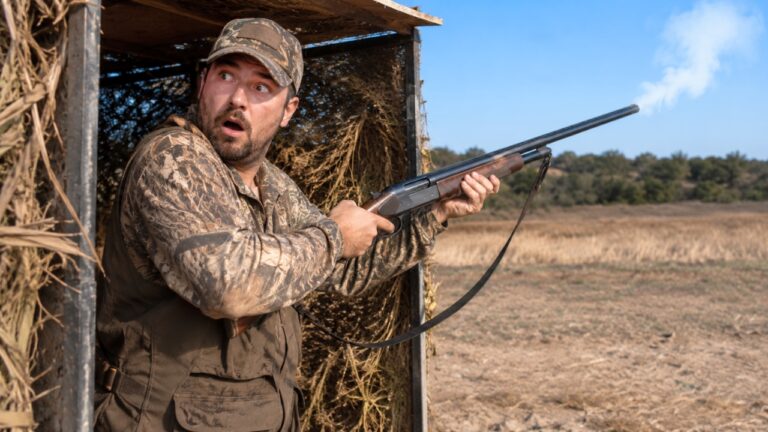
According to the owner’s account, the failure happened during the gunsmith’s test fire. The owner suspected the bolt may not have locked all the way, and floated the possibility that something was assembled incorrectly. He didn’t claim to know the exact cause—just that the result was immediate and severe.
There’s a practical lesson in that detail: a test fire is meant to be the last confidence check after cleaning and inspection. If a gun fails there, it’s not just a property loss issue—it’s a safety event. And in this case, it reportedly was.
The gunsmith was hurt, and that changed the immediate next steps
The owner said the gunsmith wasn’t in good shape after the incident, catching metal on his forehead and right arm, and that he went to the hospital. That’s the kind of detail that snaps the situation out of the “bad customer service” category and into the “everyone needs to slow down” category.
It also meant the owner couldn’t even have the first uncomfortable conversation right away. He had a receipt in hand, a destroyed gun, and no direct way to speak with the person who had been working on it.
The paperwork was thin, and the shop setup added another wrinkle
One of the harder parts of this situation is that the owner only mentioned having a receipt for services rendered. That’s normal for a quick cleaning and safety check, but it can feel pretty light when the item on the bench is irreplaceable.
He also said the gun store where the service was performed was a separate entity from the gunsmith—separate owners and separate FFLs. In plain language, the counter staff couldn’t speak for the gunsmith, couldn’t commit to anything on his behalf, and likely couldn’t solve the problem immediately even if they wanted to.
What the owner wanted: protection without turning it into a fight
The tone of the post wasn’t aggressive. The owner even called the gunsmith “a nice person,” and he didn’t sound eager to scorch the earth—he just wanted to make sure he was protected. That’s a spot a lot of gun owners can relate to, especially in small towns and tight shooting communities where you may know the people behind the counter.
At the same time, “nice” doesn’t fix a warped receiver. When a firearm is truly a total loss, the path forward usually comes down to documentation, communication, and figuring out who is responsible for making it right.
Practical moves that matter when a gun is damaged at a gunsmith
The post itself asked, “What now?” and “What should I ask of him?” While every case is different, the basics are pretty consistent when you’re dealing with damaged property and a potentially dangerous incident.
First, document everything you can while it’s fresh: photos of the gun’s condition as returned, the receipt, and any written description of the work ordered. If the gun is in pieces or parts are separated, keep everything together and don’t start swapping parts around—preserve the state it was returned in. Second, get clear on who took possession of the firearm for work and what business entity accepted it, because that’s often where insurance and responsibility questions land.
Finally, keep the conversation professional. It’s possible the gunsmith will step up quickly, especially if he’s reputable. It’s also possible he’ll dispute what happened. Either way, calm communication and solid records give you the best chance of a fair resolution without it turning into a shouting match.
For most outdoorsmen, the big takeaway isn’t to avoid gunsmiths—it’s to treat valuable firearms like valuable firearms. Get clear work orders, take “before” photos, and don’t be shy about asking how test firing is handled. When something goes wrong, those small habits can be the difference between a clean settlement and a long, frustrating mess.
Like The Avid Outdoorsman’s content? Subscribe to our newsletter so you never miss an article.
Here’s more from us: