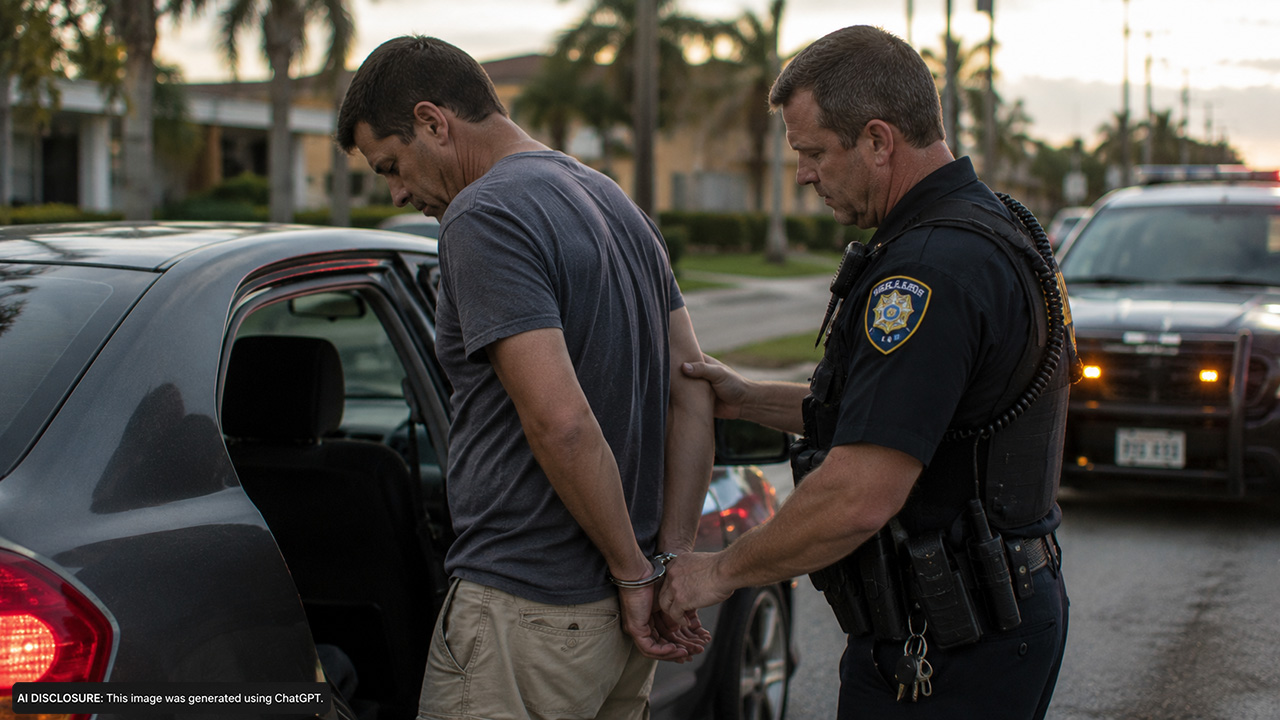
Photo credit: AI-generated image created using ChatGPT. Illustrative only
Most folks who keep a pistol in the truck aren’t trying to make a statement. They’re trying to get from point A to point B, maybe with a little peace of mind when they stop for gas on a late drive home. But one Florida driver found out in a hurry that “in the vehicle” isn’t one simple category under state law—and that where the gun sits can be the whole ballgame.
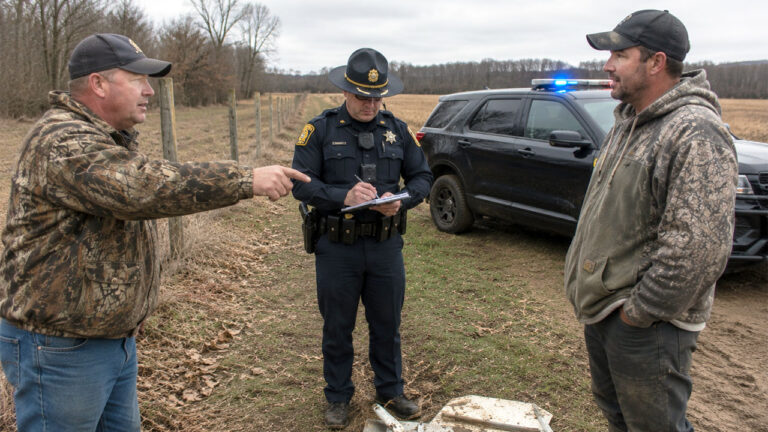
In the original post, the driver said he was stopped for speeding and told the officer there was a loaded firearm in the center console, close to where his registration was. He didn’t have a concealed carry permit, and he believed Florida law allowed him to keep the handgun in a closed console as long as it was “securely encased.” The stop didn’t end with a warning. He said he was arrested for carrying a concealed firearm.
A routine traffic stop turned into a gun charge
According to the driver, the gun was inside a closed center console and loaded, with a round in the chamber. When the officer asked for registration, the driver did what a lot of gun owners try to do: he gave a heads-up that a firearm was near the paperwork and asked how the officer wanted to proceed.
That’s when the question came—did he have a carry permit? The driver said no. He then pointed to his understanding of Florida law, saying he could have the firearm as long as it was securely encased in “a container or box that needed a lid to open.” Instead of settling it roadside, the officer arrested him under Florida’s concealed firearm definitions.
Florida’s “securely encased” language is more specific than people think
Plenty of outdoorsmen talk about “truck guns” like the inside of a vehicle is its own special zone. In Florida, the details matter. The driver referenced Florida Statute 790.25 and the idea that a firearm can be carried in a private conveyance when it’s “securely encased.”
That phrase gets thrown around a lot, and it’s easy to assume it covers any closed compartment. But the driver said the arrest was made under 790.001, which deals with definitions—meaning the officer apparently believed the situation met the threshold for “concealed firearm” the way Florida law defines it. When a statute hinges on terms like “securely encased,” “readily accessible,” and “concealed,” a couple inches of placement can be the difference between lawful transport and a serious charge.
Center console carry: the common practice that can go sideways
If you’ve spent any time around hunters and rural landowners, you’ve heard the routine: pistol goes in the console, registration’s in the glovebox, and everybody assumes that’s responsible enough. The driver in this case believed a closed center console counted as a lawful container because it had a lid that needed to be opened.
But traffic stops are where theory meets reality. The gun wasn’t in the trunk. It wasn’t in a locked case in the back. It was up front, in a spot many people consider “within easy reach,” and it was near documents the officer would need him to access. Even when someone is trying to be transparent, that combination can raise the temperature fast.
Loaded versus “how stored” wasn’t the only issue
The driver mentioned the gun was loaded with a round in the chamber. In the real world, plenty of defensive pistols ride that way. But in a legal context, “loaded” often isn’t the deciding factor—how the firearm is carried and whether it’s considered accessible or concealed tends to drive the charge.
That said, a loaded gun in a console can change how an officer perceives risk during the stop. It can also influence the decision to arrest rather than “sort it out later,” even if the driver believes he’s inside the rules. None of that makes an arrest right or wrong on its own, but it helps explain why a simple speeding stop can turn into a very expensive day.
The hard part: what a gun owner can do after the cuffs go on
The driver asked what he could do or should do next. In any situation like this, the practical reality is that the roadside debate is already over. Arguing statutes from the driver’s seat rarely improves the outcome, especially when the officer believes the elements of a charge are met.
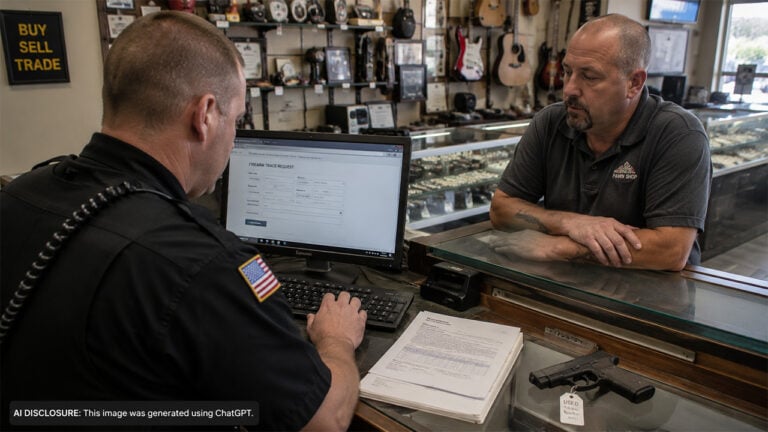
When a concealed firearm arrest happens, the next steps are usually about damage control—getting qualified legal help, gathering documentation, and letting the process play out in the right venue. It’s also where small details suddenly matter: exactly how the console closed, whether it latched, whether anything about the gun’s position made it arguably “readily accessible,” and what was said during the stop.
The lesson for hunters and “truck gun” Guys: don’t assume the compartment saves you
The biggest takeaway for outdoorsmen isn’t about one driver’s decision—it’s about how easy it is to assume you’re covered because you heard a rule once at deer camp. Florida does have specific language that many people interpret as allowing a firearm in a private vehicle without a permit if it’s securely encased. But if an officer or prosecutor reads the situation differently, you can still wind up in handcuffs and sorting it out the hard way.
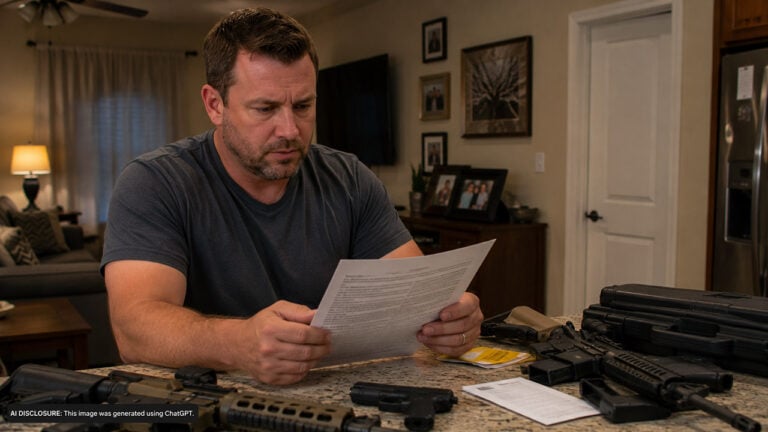
If you routinely carry in a vehicle—heading to the lease, running to town for feed, or driving across the state for a hunt—take the time to read your state’s definitions and the exceptions, not just the headline version. And think through the traffic-stop moment: where your registration sits, where your hands will go, and whether there’s a smarter, clearer way to store that firearm so there’s less ambiguity when the blue lights come on.
Like The Avid Outdoorsman’s content? Subscribe to our newsletter so you never miss an article.
Here’s more from us: