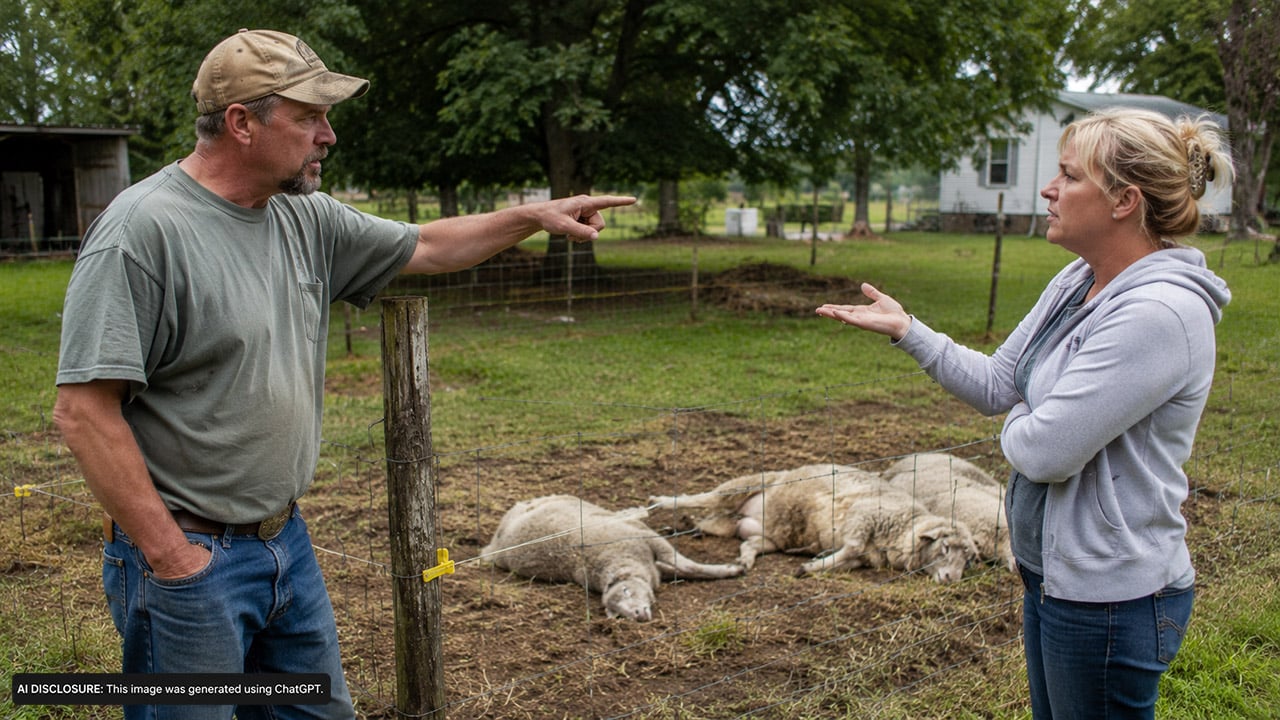
Photo credit: AI-generated image created using ChatGPT. Illustrative only
When a loose dog hits livestock, it isn’t a “dogs will be dogs” moment out in the country. It’s real money, real time, and a hard lesson in how fast peace between neighbors can turn into a mess.
That’s where one Oklahoma livestock owner found himself after a neighbor’s dog attacked his animals and they later died from the injuries. In the original post, he said he was devastated and trying to figure out whether he had any recourse—civil or otherwise—after losing stock he valued at roughly $1,700 to $3,500 per head. One of the animals was pregnant with twins, and he estimated that loss alone at nearly $10,000.
When “just a dog” turns into a serious livestock loss
Folks who don’t live around livestock sometimes picture a single chicken in the yard or a pet goat for the kids. But in a working setup, animals are inventory. They’re breeding plans, vet bills, feed costs, and years of selection tied up in a living creature that can’t defend itself well against a determined dog.
Based on the numbers the owner shared, this wasn’t pocket change. Even before you get into the pregnancy loss, he was looking at animals worth several thousand dollars each. Add in the pregnant animal with twins and the figure he put out—nearly $10,000 for that single loss—starts to explain why this isn’t something you shrug off and move on from.
In rural America, a lot of problems get handled the old-fashioned way: a conversation at the fence line and a handshake on what’s fair. But the headline angle here reflects something landowners run into more than they’d like—when the dog owner won’t make it right and tries to excuse it as natural behavior.
Here’s the blunt truth: a dog following instinct doesn’t pay a vet bill, doesn’t replace a breeding animal, and doesn’t give you back a season you planned around that pregnancy. Instinct may explain why it happened, but it doesn’t erase responsibility for the damage.
Why this hits landowners and hunters differently than town folks
Out in the country, you’re used to dealing with predators. Coyotes, bobcats, stray dogs—whatever is in your area—are part of protecting animals and property. But a neighbor’s dog is different because it comes with a relationship attached. You don’t just have a predator problem; you’ve got a people problem.
And it’s not only about dollars. A dog that has already attacked livestock can be a repeat offender. That changes the safety conversation fast, especially if you’ve got kids around the place or you’re moving animals through pens and alleys where things can go sideways in a hurry.
The poster’s estimate is a good reminder of how livestock losses stack up. Market value is one thing, but breeding value can be another. A pregnant animal isn’t only “one head.” It’s the future calves/lambs/kids (depending on the species) you were counting on, plus the time and feed already invested.
When you lose a breeding female, you may also lose a year in your program. If you keep your own replacements, you can’t just run to the store and grab another one that matches your genetics, temperament, and production history. Even if you buy a replacement, you’re buying someone else’s culls and unknowns unless you’re paying top dollar.
The livestock owner asked a practical question: Is there any recourse, civil or otherwise? In real terms, that usually means documenting what happened, assigning a fair value, and pursuing repayment through whatever legal channels fit the situation and local law.
In most rural disputes like this, the basics matter: date and time of the attack, photos of injuries and the scene, vet records if you have them, and any proof tying the dog to the damage. If there were witnesses, get their statements while it’s fresh. If you’ve got cameras on gates, barns, or pens, pull the footage and back it up.
The other part is being honest about valuation. The owner already provided estimated ranges—$1,700 to $3,500 per animal, and a near-$10,000 hit tied to the pregnant animal with twins. Whether you’re talking settlement with the neighbor or making a claim in a civil setting, being able to explain how you got to those numbers matters. Bills of sale, market comparisons, breeding records, and vet documentation go a long way toward making it concrete instead of emotional.
Keeping it from turning into an ongoing war at the fence line
Anybody who has lived in the sticks knows the worst outcome isn’t just the money—it’s years of bad blood. If a neighbor refuses to take responsibility, the temptation is to handle it with anger. That’s how things escalate into threats, property damage, or somebody making a decision they can’t undo.
The smarter play is to stay calm and keep everything above board. Don’t get drawn into a shouting match. Don’t trespass. Don’t make it personal. Focus on facts: the animals were attacked, they died from injuries, and there’s a dollar amount attached to that loss. If you do need to talk to the neighbor, do it with another adult present and keep it brief.
On the prevention side, it’s worth tightening up what you can control. Good fence doesn’t stop every dog, but it can slow one down. Motion lights, cameras, and keeping vulnerable animals closer to the house or barn at night can help. None of that makes the loss hurt less, but it can keep you from dealing with the same problem twice.
At the end of the day, the Oklahoma owner’s post reads like something a lot of livestock folks have either lived through or fear: you do everything right, and then somebody else’s dog blows up your operation in minutes. Instinct might explain the dog’s behavior, but it doesn’t settle the bill. If you’re raising animals, it’s worth thinking through your documentation and deterrence now—before you’re the one standing in the pen counting losses.
Like The Avid Outdoorsman’s content? Subscribe to our newsletter so you never miss an article.
Here’s more from us: