Photo credit: The Avid Outdoorsman
A fishing-license check turned into a constitutional question after one angler wondered whether a game warden could demand to see a license without first having probable cause that anything illegal had happened.
The poster’s question was not about whether someone should have a fishing license. It was about when an officer is allowed to ask for it.
In the Reddit thread, the poster asked whether a game warden could approach someone who was fishing and require them to show a license simply based on the fact that they were fishing: https://www.reddit.com/r/legaladvice/comments/v1bq3q/game_wardens_and_the_4th_amendment/
At first, it sounds like a simple civil-liberties question.
If police normally need some legal reason to stop or search someone, does a game warden need the same kind of reason before asking for a fishing license?
But once hunting and fishing laws enter the picture, the issue gets more complicated.
The question came down to regulated activity
Fishing is not usually treated like standing on a sidewalk or walking through a park.
It is a regulated activity. States require licenses. They set seasons, possession limits, size limits, species rules, gear rules, and location-specific restrictions. Game wardens exist largely to enforce those rules in real time, often in places where violations would be very hard to detect after the fact.
That is why license checks are so common.
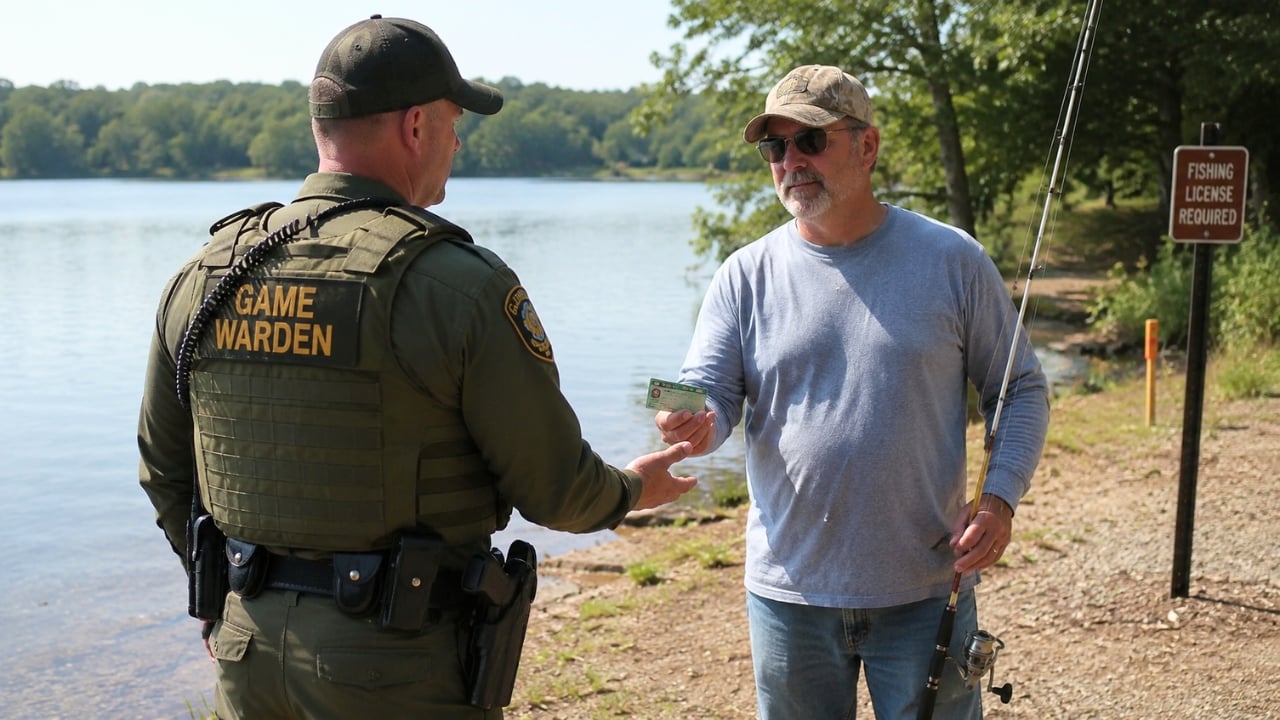
If a warden sees someone actively fishing, the officer does not necessarily need to first watch that person catch an illegal fish or break a visible rule before asking for a license. The act of fishing itself may be enough to justify checking whether the person is allowed to do it.
To the angler, that may feel like being stopped without suspicion.
To wildlife enforcement, it is closer to checking whether someone participating in a licensed activity has the license required for that activity.
That distinction is the heart of the whole debate.
Outdoorsmen often run into a different kind of policing
Part of what makes these situations uncomfortable is that game wardens often interact with people in places where there are fewer witnesses, fewer clear boundaries, and more uncertainty.
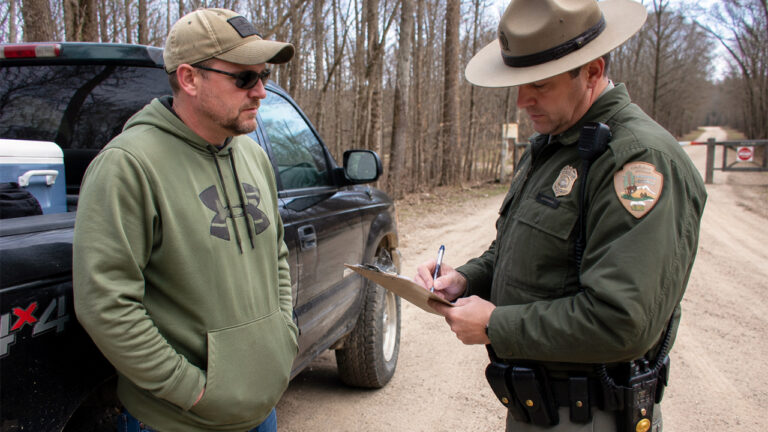
A warden may approach someone on a bank, in a boat, at a dock, beside a truck, or in the woods. The encounter can feel informal and official at the same time.
That can leave people unsure what they are required to do.
Can they ask why they are being checked? Can they refuse? Can the officer inspect their cooler or live well? Does showing a license open the door to more questions? What happens if the person does not have identification on them?
Those are real concerns, especially for people who care about their rights.
But there is also a practical reality: if someone is fishing, they are engaged in an activity that the state has chosen to license. Refusing a basic license check can quickly turn a routine contact into a bigger problem.
That does not mean a warden can do anything he wants. It does mean the ordinary “probable cause” framework may not work exactly the way a person expects in a fishing-license check.
Commenters pushed back on the idea that a warden needs to see a violation first
Commenters generally explained that if someone is actively fishing, a game warden can usually ask to see the required fishing license.
The point was not that constitutional rights disappear outdoors. The point was that license checks are built into the regulatory system. If the law requires a person to carry or produce a fishing license while fishing, then an officer enforcing that law can ask for it.
Several commenters compared it to other licensed activities. If a person is driving, an officer may have authority to check certain documents during a lawful stop. If someone is hunting or fishing, game wardens may have inspection authority connected to that activity.
Others noted that state law matters, and the exact limits can vary. But the general answer was not what the poster seemed to be hoping for.
A person fishing in public view should probably expect that a game warden can ask for a license.
The bigger lesson is to know the rules before testing them
This kind of question comes up because a lot of people are uneasy about government authority in the outdoors.
That is understandable.
Nobody wants to feel like a peaceful afternoon at the water can turn into an open-ended investigation. Nobody wants an officer rummaging through belongings without a real reason. And nobody wants to accidentally waive rights because they did not know how to handle the encounter.
But there is a difference between standing up for rights and misunderstanding the basic rules of a licensed activity.
If someone is going to fish, the simplest move is to have the license ready, know the local limits, and understand what a warden can ask to see. If an officer goes beyond a normal license or catch check, that may be a separate issue.
The worst plan is trying to argue constitutional law on the bank with a fishing pole in hand.
In the end, the poster’s question shows why game warden encounters can feel confusing. Fishing looks casual. The law behind it is not.
And when a licensed activity meets law enforcement, “I do not think you have probable cause” may not get a person nearly as far as they think.
Like The Avid Outdoorsman’s content? Be sure to follow us.
Here’s more from us: