Photo credit: AvidOutdoorsman
Out in the country, problems don’t always start with gunfire or yelling. Sometimes it’s just a set of boot tracks where they shouldn’t be, a truck parked by a gate you keep locked, and that uneasy feeling that somebody thinks your place is public land. In this case, a Texas landowner says he told a hunter to leave multiple times, and it ended with the hunter claiming he was attacked and the landowner being the one taken to jail.
The first warning was the kind most landowners recognize
According to people familiar with the incident, the landowner noticed a pickup pulled off along a caliche road near his fence line early in the morning. The hunter was already geared up, moving like he’d done it before—rifle slung, pack on, heading toward a treeline that backs up to private pasture.
The landowner approached and made the first request simple: wrong side of the line, time to go. No screaming, no threats—just the straightforward “this is private” conversation that happens all over Texas during deer season, pig season, and just about any weekend a guy thinks he found a new spot.
Two more requests turned a boundary issue into a personal one
The hunter didn’t leave right away. That’s where these things start to rot. There’s a big difference between “I’m turning around” and standing there talking in circles while you keep inching deeper into somebody else’s property.
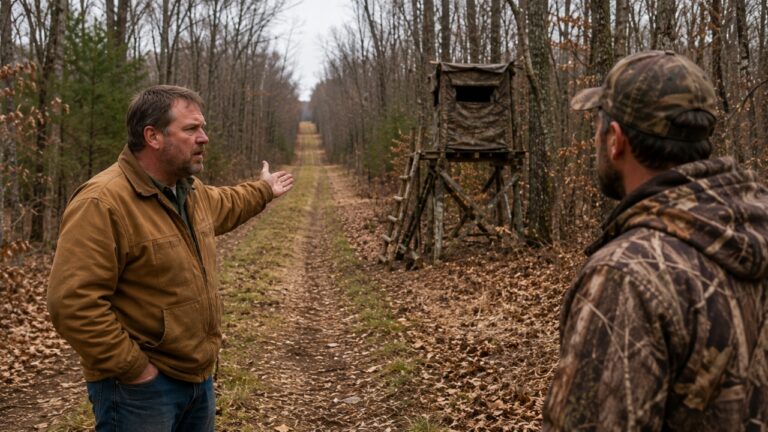
By the time the second and third warnings happened, the landowner was no longer dealing with a simple misunderstanding. He was dealing with a trespasser who had been told—more than once—to exit the property. Folks close to the situation say the landowner tried to keep space between them, staying near the edge of the field and angling the conversation toward the nearest access road so the hunter would simply walk out the way he came in.
How it escalated from words to a physical allegation
When a trespasser won’t leave, the landowner has two competing concerns: protecting his place and not getting sucked into a mess that turns into criminal accusations. This is where emotions and adrenaline betray people.
In this incident, the hunter later reported to authorities that the landowner put hands on him. The allegation wasn’t that a weapon was fired, but that the landowner assaulted him while trying to force him off the property. The landowner’s side, as relayed by others, is that he was trying to usher the hunter away from buildings and livestock and stop him from cutting through a gate line.
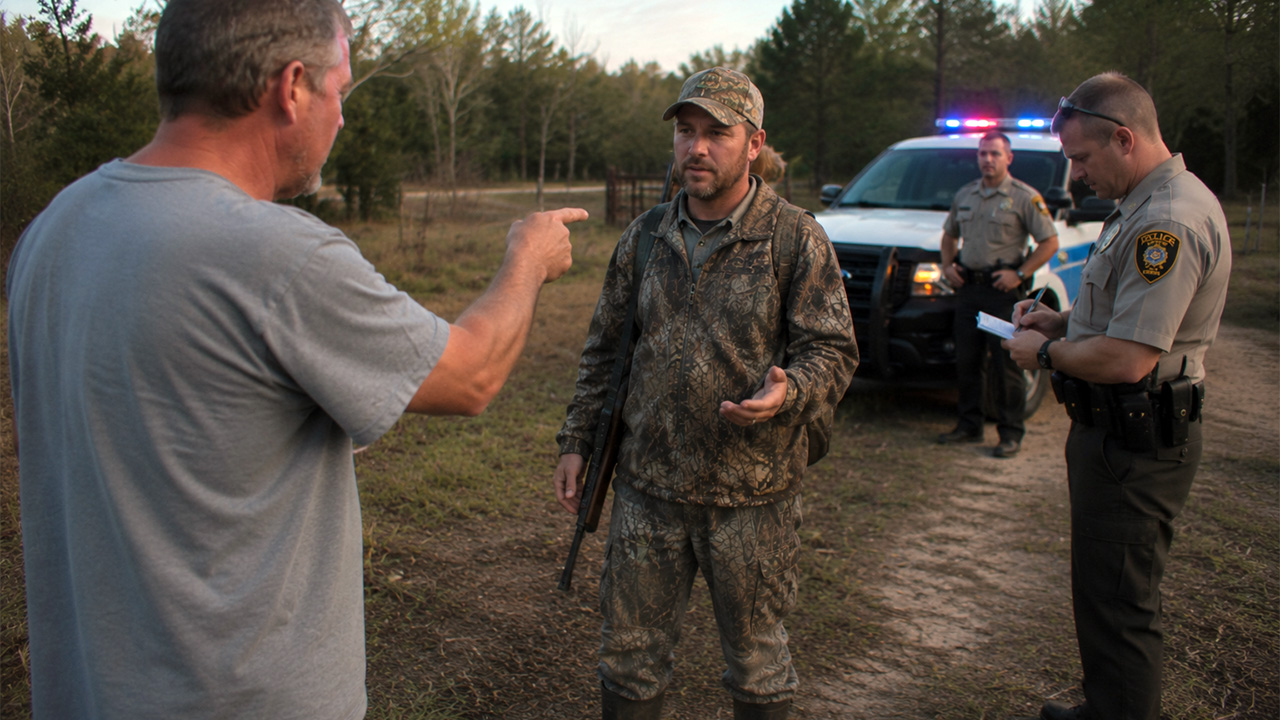
Either way, the moment there’s physical contact—grabbing an arm, blocking a path, shoving, or even getting chest-to-chest—the whole thing changes. What started as “get off my land” becomes an argument about who was the aggressor, who felt threatened, and whose story sounds cleaner when a deputy shows up on a dirt road.
Why the landowner ended up in cuffs
A lot of outdoorsmen assume “my property” automatically means “my rules,” and practically speaking that’s true. But when law enforcement responds to a call, they aren’t just sorting out property boundaries. They’re sorting out a complaint, an injury claim, and whether a fight crossed a line.
In many rural disputes, the first person to call and the first person who looks like the “victim” controls the initial narrative. If the hunter had visible marks, torn clothing, or even a convincing description of being knocked down, that can steer a responding officer toward an arrest—especially if the landowner admits there was contact.
Another factor is how tense these encounters get when firearms are present. Even if both men kept muzzles pointed at the ground and fingers off triggers, the mere presence of a slung rifle makes everyone more cautious and more likely to treat any scuffle as a serious threat. Landowners need to remember: you can be in the right about trespass and still get arrested over how you handled the removal.
Commenters zeroed in on cameras, signs, and the “third warning” problem
When word of the arrest circulated locally, the reactions were predictable. Hunters and landowners mostly agreed on one thing: if a person is told to leave private property, the right move is to leave immediately and sort it out later with maps, OnX, county plats, or a phone call.
Plenty of folks also pointed out that giving three warnings might feel fair, but it can also trap you in a longer confrontation. The longer a trespasser stays in your personal space, the more likely someone gets frustrated and does something that looks bad on body cam—or in a written report.
And then there’s the camera talk. Rural people are big on documentation for a reason. Trail cams on gates, driveway cameras, and cell phone video can be the difference between “he said, he said” and “here’s exactly what happened.” Many outdoorsmen argued that calling law enforcement sooner and keeping distance would have been a better play than trying to physically manage the situation on foot.
The practical lesson for hunters and landowners in Texas
If you’re the hunter, treat fences and gates like loaded guns: assume they’re there for a reason. Don’t rely on “my buddy said” or “it looked like state land.” Know your access, pin your location, and if a landowner tells you to leave, you leave—no debate, no slow-walking, no last-minute “just let me grab my stand.” You can argue your case later when tempers aren’t hot and rifles aren’t involved.
If you’re the landowner, the hard truth is that being right doesn’t make you immune from the consequences of a physical encounter. Get plates if you can. Take a photo from a safe distance. Call it in. Keep your hands to yourself unless you’re in true self-defense territory, because the minute you start “escorting” someone with force, you’re gambling your freedom on how the other guy tells the story.
Property lines matter. So does self-control. This kind of dust-up is exactly how a morning that should’ve been about deer, pigs, or checking a feeder turns into jail time, lawyer bills, and a permanent headache for everyone involved.
Like The Avid Outdoorsman’s content? Be sure to follow us.
Here’s more from us: