Photo credit: AI-generated image created using ChatGPT. Illustrative only
A lot of hunting families have a “back home” gun cabinet. It’s where the old deer rifles, bird guns, and a couple handguns sit for decades—safe, familiar, and tied to memories. But the minute those firearms cross state lines, sentiment gives way to paperwork, and the rules can get confusing in a hurry.
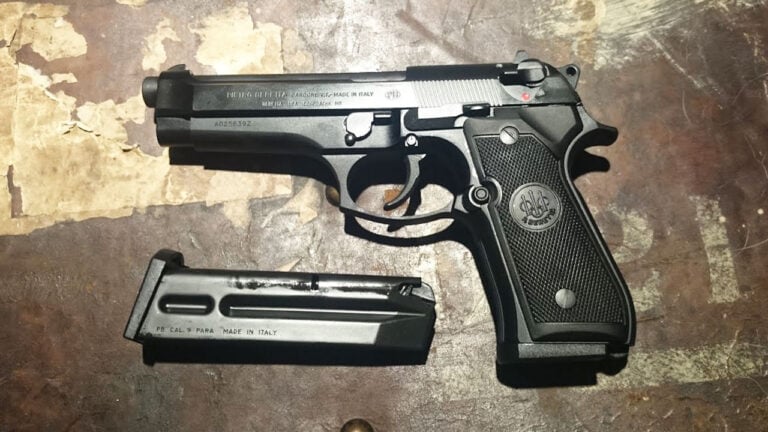
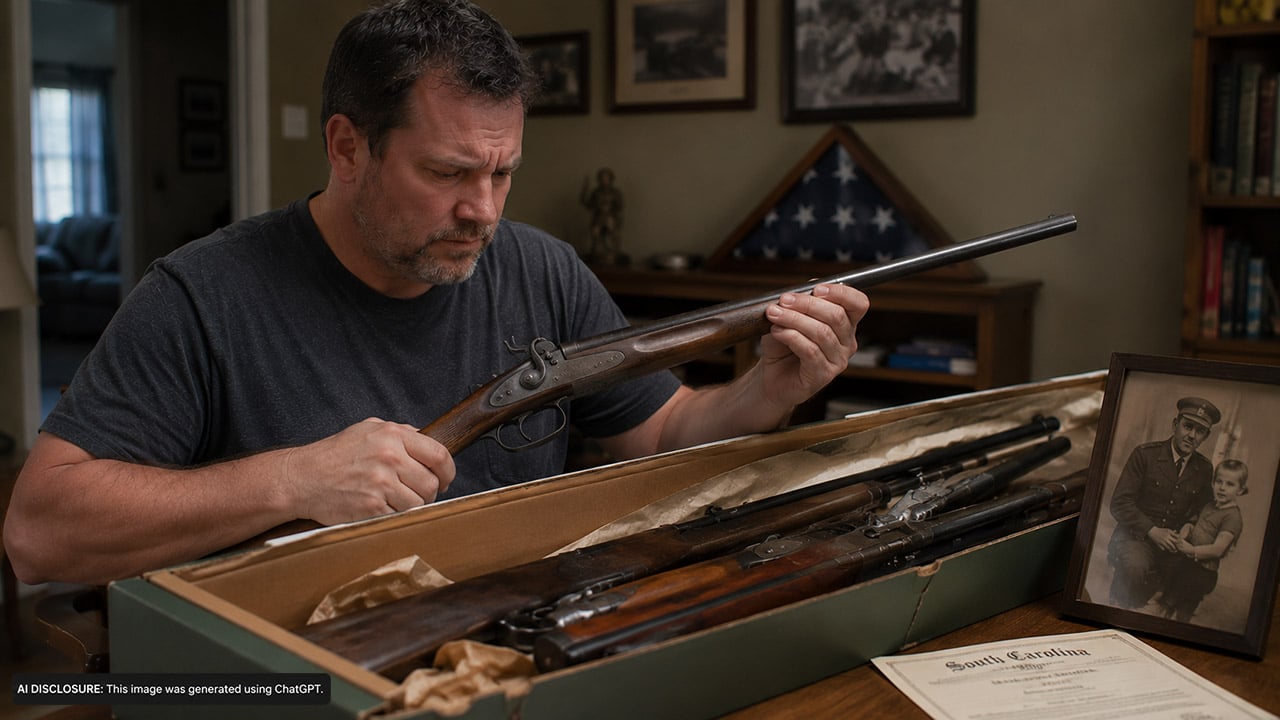
That’s the spot one Maryland gun owner found himself in when he posted the original post asking a plain question with big consequences: he inherited firearms after his father in South Carolina passed in 1999, left them stored at his mom’s place, and now—after she passed a few years back—he’s bringing them into Maryland. The collection is a mix of family history and modern stuff: seven “hunting type” rifles and shotguns, plus three handguns, including some that belonged to his great-grandfather.
He didn’t buy them—he inherited them, and that’s where the confusion starts
Most folks understand the basic idea of purchasing a gun in Maryland: there are processes, waiting periods for certain firearms, and state-specific hoops that can be different from your neighboring states. But inheritance feels like a different category, because you’re not “acquiring” a firearm in the same way you would at a gun counter.
In his case, the timeline adds another wrinkle. His father passed in 1999, and the guns stayed put in South Carolina for years, stored at his mother’s home. Only now are they physically coming into Maryland, and he’s seeing “different things from different years” when he tries to research whether they need to be registered.
Maryland’s reputation for paperwork makes people second-guess themselves
If you’ve lived in freer states and then moved into Maryland—or if you’ve hunted out of state and brought gear back and forth—you already know the feeling: you don’t want to accidentally step into a legal mess just because you’re trying to do the right thing.
This isn’t a guy talking about flipping guns or skirting rules. He’s talking about family firearms that have been in the family long enough to include a great-grandfather’s pieces, and he’s trying to figure out how Maryland treats inherited long guns versus inherited handguns, especially when the transfer happened years ago but the move is happening now.
The mix of long guns and handguns is what makes it feel high-stakes
Seven hunting rifles and shotguns generally fit into the “normal sporting guns” category most outdoorsmen picture—deer rifles, a squirrel gun, a bird gun, maybe a slug gun. But he also mentioned three handguns, and handguns are where a lot of states draw harder lines.
Even within a pile of family guns, the legal treatment can be different depending on what each firearm is and how the state classifies it. That’s why a lot of gun owners get uneasy when they can’t even tell which law applies: the rules can change based on type, features, and when/how it was acquired. When you’re looking at a cabinet full of mixed firearms, it’s easy to feel like you’re one misunderstanding away from trouble.
The real-world problem: you want to store them safely, but you also want to be right on the law
There’s a practical side to this beyond paperwork. Bringing inherited guns into your home usually means you’re also taking over responsibility—safe storage, keeping them away from unauthorized access, making sure they’re maintained, and figuring out what you actually want to do with them long-term.
Plenty of inherited hunting guns are ready to keep hunting with, but others might need a once-over before you ever think about the range. Old oils congeal. Springs get tired. Wood stocks swell and shrink. And with handguns that have been sitting a long time, you’re smart to treat them like unknowns until you’ve checked them carefully and had them inspected if anything seems off.
But none of that feels comfortable if you’re still wondering whether the state expects some kind of registration step first. That uncertainty tends to freeze people in place—guns stay boxed up, nobody wants to transport them, and a family heirloom turns into a stressor.
What most gun owners focus on in situations like this
Even without a long back-and-forth included in the source material, you can predict what experienced Maryland gun owners tend to zero in on when someone asks this question. The first is separating the issue into two lanes: (1) what the firearms are, and (2) how they’re coming into the state—inheritance versus purchase, and long guns versus handguns.
The second thing folks focus on is documentation and specifics. Not because anyone expects you to have a perfect paper trail from 1999, but because details matter: make and model, whether any of the guns fall into restricted categories under state rules, and whether the handguns were ever processed through any Maryland system previously. When people say “it depends,” this is what they mean—it depends on the exact firearms and the exact pathway they’re taking to get from South Carolina into Maryland possession.
The third focus is the safest “next move” that doesn’t create new problems. In the outdoors world, we’re used to doing things clean: tagged deer, permission slips, recorded property lines, and keeping it simple. The same mindset applies here—figure out the correct steps before you start hauling guns across state lines and hoping for the best.
The options that usually make sense before you move a single gun
For most hunters and gun owners, the best play in a situation like this is to slow down and sort the collection on paper first. Make a list of each firearm, including type (rifle/shotgun/handgun), make, model, and serial number. That’s not “registering” anything by itself—it’s just getting organized so you can ask informed questions and avoid mixing up Grandpa’s old shotgun with a newer handgun that might be treated differently.
From there, the common-sense path is to confirm Maryland’s current requirements for inherited firearms and interstate movement, and to do it through reliable channels. People often start by checking official state resources, and many will also contact a Maryland FFL or an attorney familiar with Maryland firearms law for clarity on the handguns and any potentially restricted firearms. That may feel like overkill, but it’s cheaper than guessing wrong.
And while you’re sorting it out, treat storage like it matters—because it does. Lock them up. Keep ammunition separate if that’s your normal practice. If you’ve got younger family members or frequent visitors, don’t rely on “it’s up high” or “it’s unloaded.” A simple safe or locking cabinet buys you peace of mind while the legal questions get answered.
Family guns are a link to the people who taught us to hunt, shoot, and respect firearms in the first place. When you inherit that responsibility, you owe it to them—and yourself—to do the move carefully, stay square with Maryland’s rules, and keep those heirlooms protected for the next generation.
Like The Avid Outdoorsman’s content? Subscribe to our newsletter so you never miss an article.
Here’s more from us: