Photo credit: AI-generated image created using ChatGPT. Illustrative only
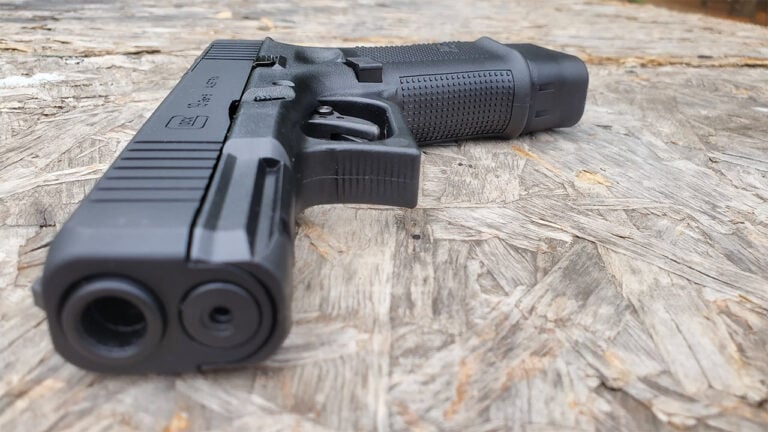
Four years is a long time to wonder where a stolen gun ends up. For one Glock 26 owner, the answer came back in the worst kind of way: his pistol was recovered by law enforcement, but only after it had been tied to a shooting—and after he’d spent years getting no real updates.
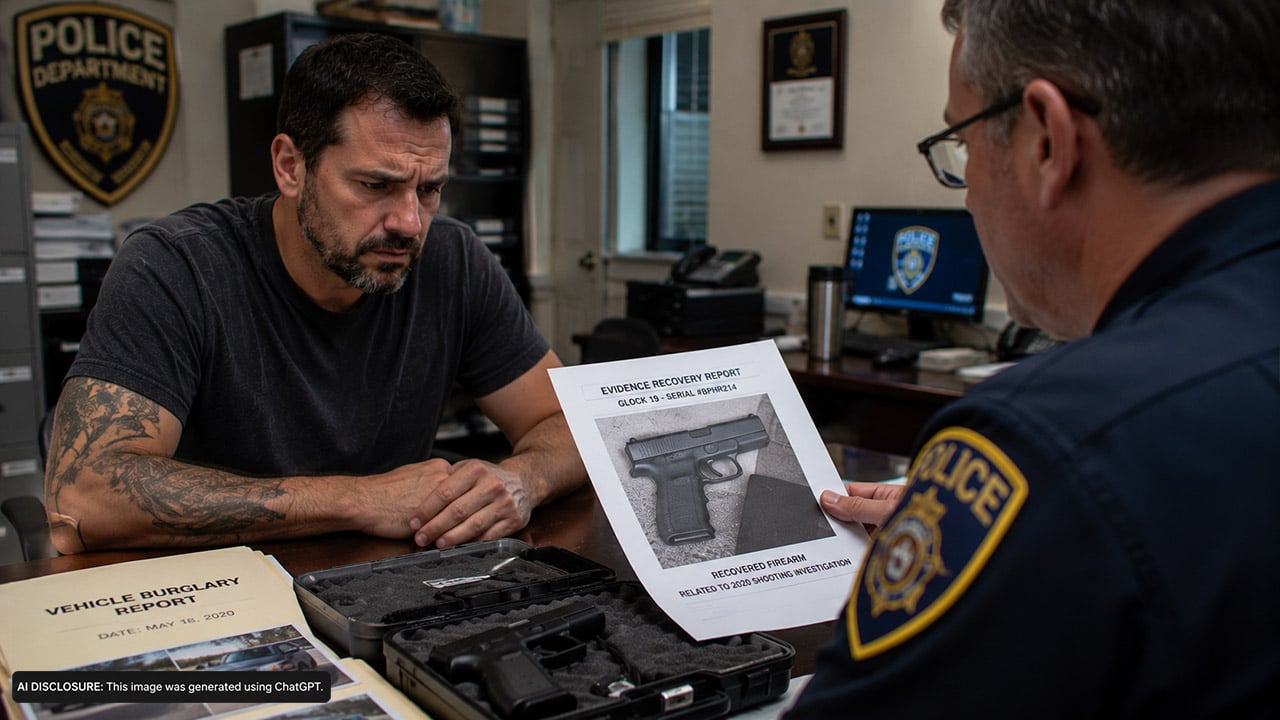
In the original post, the owner explained that the subcompact 9mm was stolen out of his truck and reported to the local police department. The gun was apparently recovered about a week after he made the report, but he says he never got a call telling him it had been found.
The recovery happened fast, but the notification didn’t
The part that’ll frustrate most gun owners isn’t that a stolen firearm got used in a crime—that’s always a possibility once it’s out of your control. It’s that the pistol was reportedly recovered within about a week of the theft, yet the owner stayed in the dark for years.
He said he called every year looking for an update and got nowhere. Anyone who’s ever tried to follow up on a report number knows how that can go: you do your part, you check in, and the system still doesn’t connect the dots back to you.
It took an in-person visit to find out who actually had the gun
Eventually, he stopped in at the police department instead of calling. That’s when he was told the sheriff’s department had the firearm. After he went and spoke with them, he had the Glock back two weeks later.
That timeline matters. A lot of folks assume “recovered” automatically means “returned,” but in the real world there’s property rooms, evidence holds, paperwork, and agencies that don’t always share information cleanly. If you’re waiting on a stolen gun, sometimes showing up—calm, respectful, and prepared with the report info—gets more traction than another phone call that goes to voicemail.
Finding the exact same carry ammo still in the magazine
One detail from the post hits hard if you’ve ever set up a carry gun and then had it disappear. The owner said the Glock had been loaded with 13 rounds of Hornady XTPs, and when it was returned, the magazine still contained that same type of ammunition in the same order.
Think about what that suggests. The gun moved around for years, got used in a shooting, and still came back with the original defensive ammo sitting there like a time capsule. Whether that means it was stored most of that time, traded hand-to-hand, or just never topped off, nobody can say from the post alone. But it’s a reminder that when a gun gets stolen, it may not be “gone” the way you imagine—it might be sitting in a vehicle console, a drawer, or an evidence locker much sooner than you’d ever guess.
Getting it home meant treating it like evidence, not just a range toy
When he got the Glock back, he didn’t just wipe it down and call it good. He said he disassembled everything and cleaned it, and he noticed one spot that looked like dried blood. Other than that, the pistol looked the same as it did before it was stolen.
That’s a pretty sobering moment for any owner. A gun you carried—or at least trusted enough to keep loaded—comes back with signs it may have been involved in violence. Even if you’re legally in the clear because you reported it stolen, it can still feel personal. It’s also a practical reminder to handle a recovered firearm carefully: treat it as potentially contaminated, document its condition for your own records, and don’t assume it’s mechanically sound until it’s been inspected and function-checked in a safe, lawful way.
What this says about “truck guns” and storage habits
This isn’t a lecture, but it’s the exact scenario that makes people rethink leaving a handgun in a vehicle. Trucks get broken into—at trailheads, at boat ramps, at big-box parking lots, even in driveways. And a small, easy-to-carry pistol like a Glock 26 is exactly what thieves hope to find.
If you do keep a firearm in a vehicle, the only common-sense move is to lock it up in a real, vehicle-secured lockbox and keep it out of sight. “Hidden” isn’t the same as “secured,” and a center console doesn’t slow down anybody with a screwdriver and two minutes. The other piece is paperwork: record the serial number, keep your purchase info, and file the report immediately if it’s taken—because that report is what separates you from the mess that comes later.
In this case, the owner did report it stolen. And even with that, he still dealt with years of uncertainty and a recovery that apparently didn’t circle back to him until he pushed it across the finish line himself.
For outdoorsmen and gun owners, that’s the lesson that sticks: secure your gear like it’s going to be tested, because sooner or later it will. And if the worst happens, don’t assume the system will automatically call you when something turns up—keep your case information, follow up periodically, and be willing to go in person if you’re getting nowhere.
Like The Avid Outdoorsman’s content? Subscribe to our newsletter so you never miss an article.
Here’s more from us: