Photo credit: The Avid Outdoorsman
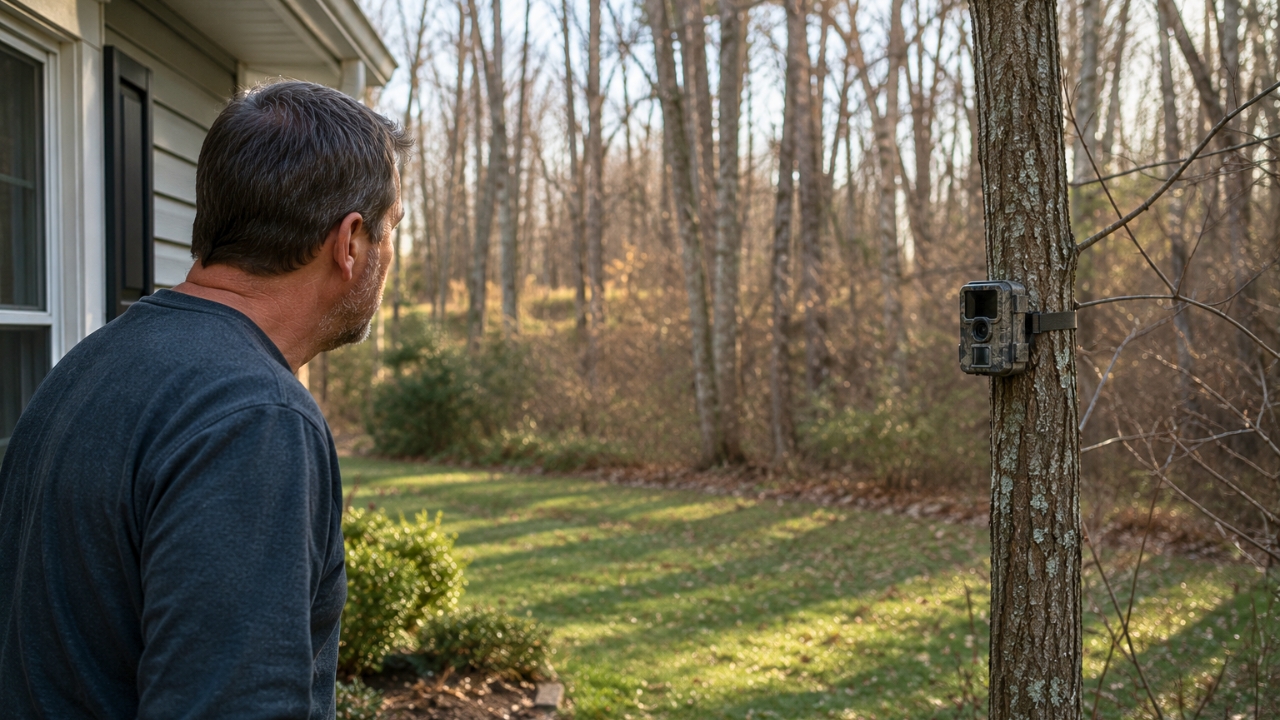
The homeowner said the discovery started with a camera, but the uncomfortable part was where it was pointed. According to the Reddit post, they found a camera facing toward their house and were trying to figure out whether it was a hunter’s trail cam, a neighbor issue, or something more personal.
The original Reddit post can be found here: https://www.reddit.com/r/legaladvice/comments/1iwqpc9/what_can_i_do_about_a_camera_pointing_at_my_house/
Trail cameras are normal in hunting country. People set them near deer trails, food plots, fence lines, creek crossings, feeders, and property edges. Most of the time, they are not there to watch people. They are there to figure out what is moving through the woods when nobody is around.
But a camera pointed toward a house feels different.
The homeowner had to think about intent, location, and ownership. Was the camera on their property or someone else’s? Was it aimed at a deer trail that happened to line up with the home, or was it clearly aimed at windows, doors, vehicles, or daily activity? Was there a nearby property line or hunting access that could explain why it was there?
Those details matter because not every camera near a house is automatically illegal, but the placement can make it feel invasive. A trail cam on private land watching game is one thing. A hidden camera set up to capture a person’s home life, family routine, driveway, or backyard is another.
The homeowner also needed to be careful about touching it. If the camera belonged to someone else and was not on their property, taking it could create a new dispute. If it was on their land without permission, they still needed to document it before removing it. Photos of where it was placed, what direction it was facing, and how it was attached could matter later.
That is especially true if hunting was involved. A camera on private land without permission can be part of a bigger pattern: scouting without permission, preparing to hunt a property line, watching access points, or setting up for trespass. If the homeowner already had concerns about unknown people coming through the area, the camera might be more than a privacy issue.
The smartest first step would be documentation. Take photos from a safe distance, mark the location, note the date, and figure out whose property the camera is actually on. If it is on the homeowner’s land, they may have a stronger reason to remove it or turn it over to authorities. If it is on a neighbor’s land but pointed in a suspicious direction, the answer may involve talking to the neighbor, checking local privacy laws, or contacting law enforcement if it looks intentional.
Commenters focused on the property line first. Several said the homeowner needed to determine whether the camera was on their land or someone else’s before touching it. That one fact could change the entire situation.
Others said the direction of the camera mattered. A trail cam pointed at woods, a path, or wildlife movement may be explainable. A camera pointed straight at windows, doors, a pool, a backyard, or a family’s private space would raise a much different concern.
Some commenters suggested taking photos of the camera in place before doing anything else. If the homeowner later needed to show police, a neighbor, or a property owner what was happening, documentation would be stronger than just saying a camera was there.
A few people warned against destroying it or throwing it away. Even if the camera felt creepy, damaging someone else’s property could create a separate problem. If it was on the homeowner’s land, removing it and preserving it may be better than smashing it.
The post ended with the homeowner trying to sort out whether they had found a normal hunting camera or a privacy problem aimed at their house. In rural areas, trail cams are common. But when one is pointed at a home instead of the woods, it is fair to start asking who put it there and why.
Like The Avid Outdoorsman’s content? Subscribe to our newsletter so you never miss an article.
Here’s more from us: