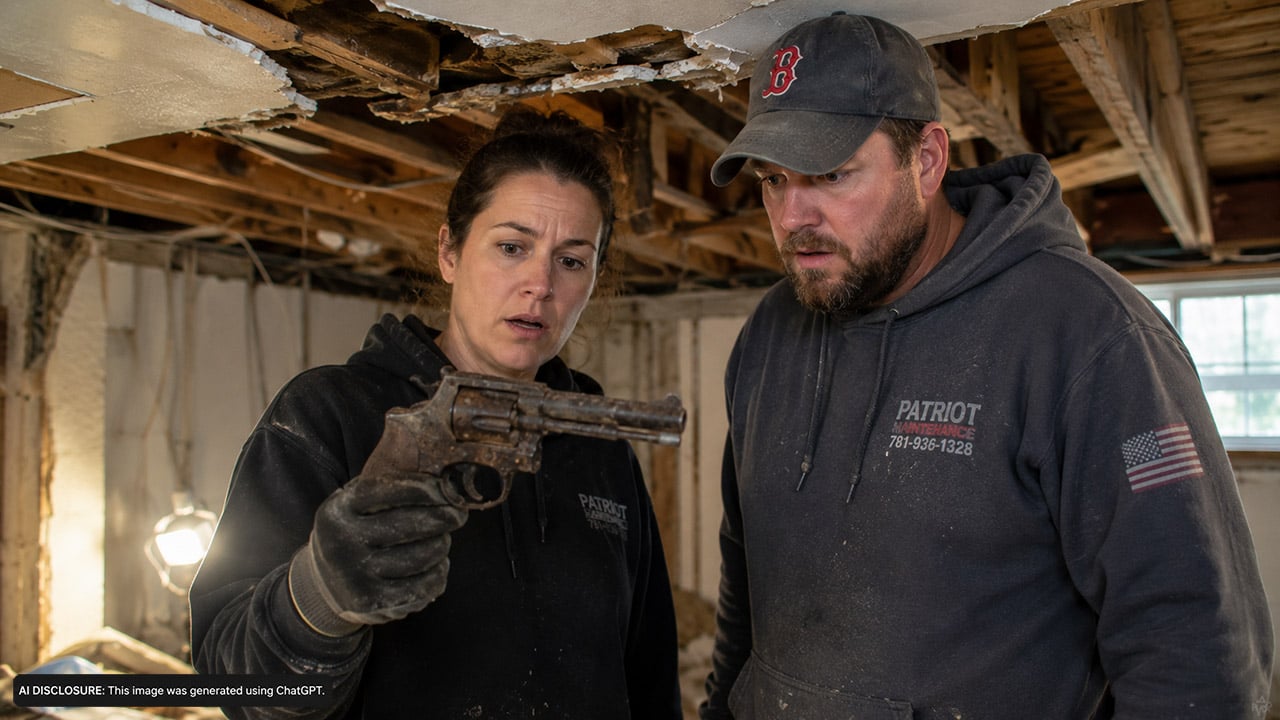
Photo credit: AI-generated image created using ChatGPT. Illustrative only
Most basement renovations are a mix of dust, old nails, and the occasional surprise left behind by the last owner. A Massachusetts couple doing cleanup work in their 1940s-era home got a surprise with real consequences: a fully loaded, badly rusted .38 revolver shoved up into a corner of the basement ceiling.
In the original post, the homeowner explained that the gun was so corroded they could see cartridges in the cylinder, but they couldn’t open it because it was “completely rusted shut.” They also said neither of them has a Massachusetts gun license, which immediately turned a weird find into a stressful one.
A basement find that went from “old house weird” to “real safety issue”
The details matter here: this wasn’t an empty relic or a harmless chunk of steel. It was a loaded revolver, stuffed overhead, and it sounded like it had been sitting there long enough to rust itself shut.
The boyfriend pulled it down to show his partner, then put it back where it was. That’s a pretty normal human reaction—back away and figure it out later—but it also means a loaded firearm was still sitting in a spot that could get bumped, dropped, or forgotten until the next round of work.
Rust doesn’t make a gun “safe,” and a stuck cylinder is its own problem
A lot of folks see heavy rust and assume the danger has passed. But “rusted” and “unloaded” are two different things, and this one was reportedly still charged. Corrosion can freeze parts in place, but it can also make a gun more unpredictable if it’s handled roughly, especially if someone starts forcing things.
The fact they couldn’t open the cylinder is a big red flag. It takes away the simplest way to make the gun safe—removing the ammunition—and it leaves you with a loaded firearm that can’t be easily verified, cleared, or stored like a normal working revolver.
The license issue in Massachusetts changed the whole decision tree
The homeowner’s biggest concern wasn’t curiosity, it was legality. They said neither of them has a gun license, and they were uneasy having a loaded firearm in the house under those conditions. In Massachusetts, licensing is not a casual detail, and they clearly understood that “we found it in our house” doesn’t automatically equal “we’re in the clear.”
They also mentioned the boyfriend had been talking about getting an LTC, but COVID-era hurdles made classes hard to find. He’d taken an FID course as a teenager but never followed through to pick up the actual card. In other words, they weren’t anti-gun. They were just unlicensed at the moment they discovered a gun nobody expected to be there.
The home’s history offered clues, but no easy answer
The house was built in 1942, and the previous owners bought it in the 1960s. A family of five lived there; the kids grew up and moved out. The father died around 20 years ago, and the youngest daughter moved back to care for the mother until she passed a little over a year before the sale.
The couple said they’d been in contact with the seller since buying the house, and noted she is a nun who lives at a church. That’s an interesting detail, but it doesn’t solve the big question: did the seller know the revolver was up there, and if she didn’t, who put it there and why?
The options they considered: leave it, call the seller, or hand it to family
With the gun stuck and loaded, they started running through the same choices a lot of homeowners would. One option was simply leaving it where it was—out of sight, out of mind. But that doesn’t make it safer, and it doesn’t make it go away. Renovations have a way of revisiting old corners.
They also wondered if they should call the woman they bought the house from. That might answer the mystery, but it also introduces another variable: now you’re involving someone else in a loaded-gun situation, and you still have to decide what physically happens to the firearm.
The third idea was giving it to the boyfriend’s dad, who they said has a firearms license and multiple gun safes. From a common-sense standpoint, that’s the first “responsible adult storage” option mentioned, but Massachusetts rules can be strict about transfers and possession, and this wasn’t a normal handoff of a boxed-up, unloaded firearm with paperwork.
What other gun owners zero in on in situations like this
When experienced gun folks hear “loaded revolver, rusted shut, found in a ceiling,” they tend to focus on two things: safety and exposure. Safety is obvious—nobody wants an un-clearable, loaded gun getting dropped off a ladder or jostled during demo work. Exposure is the legal side: unlicensed possession is the kind of headache that can snowball if it’s handled casually.
There’s also the mechanical reality. A heavily rusted firearm isn’t something you “mess with” using household tools. When a gun is seized up and loaded, the smartest approach is usually to avoid forcing it and get qualified help so nobody gets hurt trying to solve a problem with brute strength.
The original poster’s instinct not to handle it much—and not to start taking pictures while holding it—reads like a person who understood the seriousness, even if they weren’t sure what the cleanest next step was.
A practical way to think about it if it happens in your own house
For homeowners, especially in states with strict licensing, the lesson is simple: old houses can come with old problems you didn’t bargain for. If you ever find a firearm during a renovation, treat it like it’s loaded until it’s safely confirmed otherwise, and prioritize getting it secured and dealt with the right way instead of treating it like an interesting antique.
This couple didn’t go looking for trouble—they were cleaning up a basement and found a rusty .38 revolver hidden overhead. But once it’s in your orbit, you’ve got to make decisions that keep everyone safe and keep you from stepping into a legal mess you can’t easily unwind.
Like The Avid Outdoorsman’s content? Subscribe to our newsletter so you never miss an article.
Here’s more from us: