Photo credit: Theavidoutdoorsman.com
It’s one thing to hear shots in the distance on a Saturday afternoon. It’s another to have your doorbell camera catch a neighbor stepping onto a front porch, lifting a rifle, and touching one off like it’s no big deal.
That’s the spot one homeowner found themselves in after a string of late-day gunfire started sounding a little too close for comfort. The area was semi-rural—big yards, woodlines behind the houses, and just enough space that folks assume “nobody’s over there.” But homes had crept in over the years, and what used to be a safe direction to shoot wasn’t safe anymore.
The tension built the same way it always does in the country
For a couple weeks, the homeowner noticed the same pattern: sharp cracks around dusk, sometimes in quick pairs, sometimes single shots spaced out. It didn’t sound like a formal range. It sounded like somebody popping at something—maybe coyotes, maybe a groundhog, maybe just “checking a rifle.”
Normally, people talk it out. But the last few years have taught a lot of us the hard lesson that you don’t walk into a neighbor dispute without knowing who you’re dealing with. So the homeowner did what plenty of folks do now: they leaned on cameras instead of confrontation.
Between the doorbell cam and a couple of exterior cameras watching the driveway and yard line, they were already covered for package thieves and trespassers. They didn’t expect those same cameras to become their only “witness” in a shooting complaint.
The clip showed a shot, but not enough for a clean case
One evening, the homeowner’s phone pinged with a motion alert. The porch camera across the way caught a neighbor stepping out, shouldering what looked like a long gun, and firing once from the porch area toward a tree line. The muzzle flash was visible, and you could hear the crack clearly.
But camera angles are funny. The clip didn’t show where the round went, what was behind the target area, or whether there was any kind of backstop. It also wasn’t crystal clear on the exact firearm or even the person’s face, thanks to distance, low light, and the way porch LEDs blow out details at night.
To the homeowner, the big issue wasn’t the make and model of the rifle. It was the direction. In the clip, the barrel orientation looked uncomfortably close to lining up with neighboring properties—exactly the kind of thing that gets people hurt, livestock killed, or a kid scared to play in their own yard.
When police got involved, “not clear enough” became the sticking point
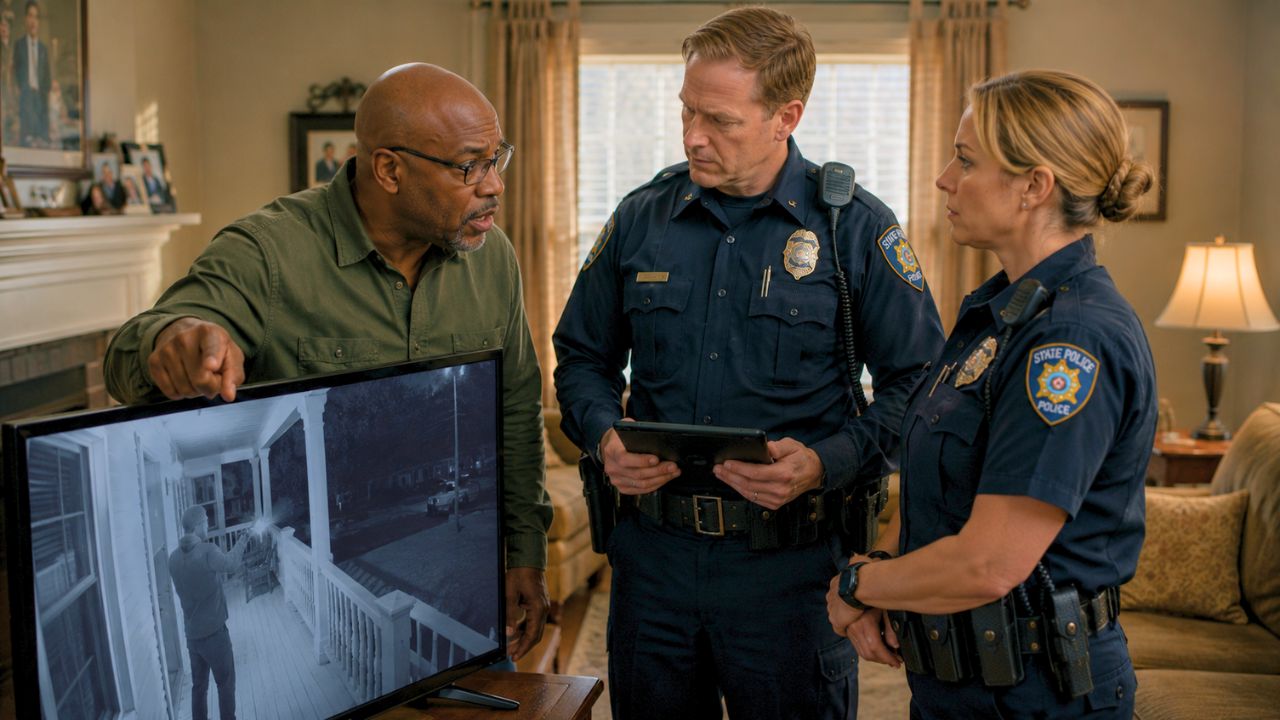
The homeowner reported it and shared the video, expecting a quick knock on the neighbor’s door at minimum. Instead, the response landed with a thud: the video wasn’t clear enough to take enforcement action on its own.
That doesn’t mean officers didn’t believe a shot happened. It means the clip didn’t tie enough specifics together—who, what, where, and whether a law was actually broken. If you can’t clearly establish the shooter’s identity and can’t show the round’s path or an unsafe discharge in a legally defined way, it gets hard to move from “concerning” to “chargeable.”
In a lot of places, it’s not illegal to shoot on private property. The illegal part is shooting within certain distances of occupied structures, shooting across a roadway, shooting recklessly, or firing in a way that endangers others. A short video from a fixed camera often won’t capture the one detail that matters most: what was beyond the muzzle.
It’s also a reality that local departments aren’t staffed like they used to be. Calls that don’t involve an active threat can get handled with a quick report, a drive-by, and “call us if it happens again.” That’s cold comfort when the “again” could be a round smacking a barn roof.
The homeowner’s real problem was safety, not “winning” a neighbor fight
Most reasonable gun owners understand the difference between lawful shooting and safe shooting. You can be inside the law and still be doing something dumb. Firing from a porch in a neighborhood with mixed lot sizes is one of those things that instantly makes people wonder about judgment.
There are safer ways to handle predator control or pest issues: a known backstop, a dedicated shooting lane, daylight visibility, and—if it’s close quarters—tools that reduce risk, like controlling angles and using purpose-built setups. “From the porch” suggests convenience over planning, and that’s what raises eyebrows.
The homeowner also had to think through the practical realities. If they walked over angry, they could escalate it. If they did nothing, they’d be waiting for another shot and hoping it didn’t land somewhere it shouldn’t. And if they started posting cameras and signs everywhere, they might just crank up hostility on the property line.
In situations like this, the safest play is usually documentation and distance. Keep recording. Note dates and times. Save original files. Add a second camera angle if you can, especially one that captures the direction of fire and any obvious “no-shoot” zones like roadways, neighbor driveways, or occupied structures.
People zeroed in on cameras, game wardens, and “what counts” as proof
The conversation around cases like this always splits into two camps. One side says, “That video is enough—go handle it.” The other side points out that video evidence isn’t magic if it doesn’t prove the elements that matter.
A lot of outdoorsmen also bring up game wardens, and for good reason. If there’s any indication someone is firing at animals out of season, shooting from a residence at night, spotlighting, or taking potshots across property lines, wildlife officers tend to take a hard look. They’re used to investigating in the dark, piecing together angles, and reading a scene.
Others focused on audio. Some cameras record sharp sound, but audio alone usually won’t carry a case. Still, consistent audio with visible muzzle flash can help establish a pattern, especially if multiple cameras pick it up.
The most practical advice was also the least exciting: keep it calm, keep it documented, and don’t try to solve it with a face-to-face argument while tempers are hot. A neighbor who thinks porch shooting is normal isn’t always the neighbor you want to corner in the driveway.
What a landowner can do when the first report goes nowhere
When a complaint doesn’t get immediate traction, you’re left with the slow, responsible options. Start by improving your evidence the right way—legal cameras on your own property, good lighting that doesn’t blind the lens, and enough coverage to show direction and context. If your system allows, set it to keep higher-resolution clips instead of ultra-compressed “alert” video.
It also helps to document your own property layout. A simple sketch with distances to your house, barns, and property lines isn’t overkill. If shots are coming in a direction that could violate local setback rules, those measured distances matter a lot more than how loud it sounded.
And if there’s an HOA or a local ordinance against discharging firearms in that neighborhood—some “country” subdivisions have them—then it’s not just a safety issue. It’s a rule issue. Those are often enforced differently than criminal statutes, but they can still create leverage.
The key is keeping yourself on the right side of the line. Don’t trespass to “prove” anything. Don’t brandish. Don’t return fire. If you’re genuinely worried about an immediate threat, that’s a 911 call while it’s happening, not a next-day complaint.
Out in the woods, we all accept that gunfire is part of life. Around homes, it has to be paired with clear thinking and a real backstop. If a camera clip isn’t enough to trigger action the first time, the best move is to keep your head, tighten up your documentation, and push the issue through the proper channels before somebody gets hurt.
Like The Avid Outdoorsman’s content? Be sure to follow us.
Here’s more from us: