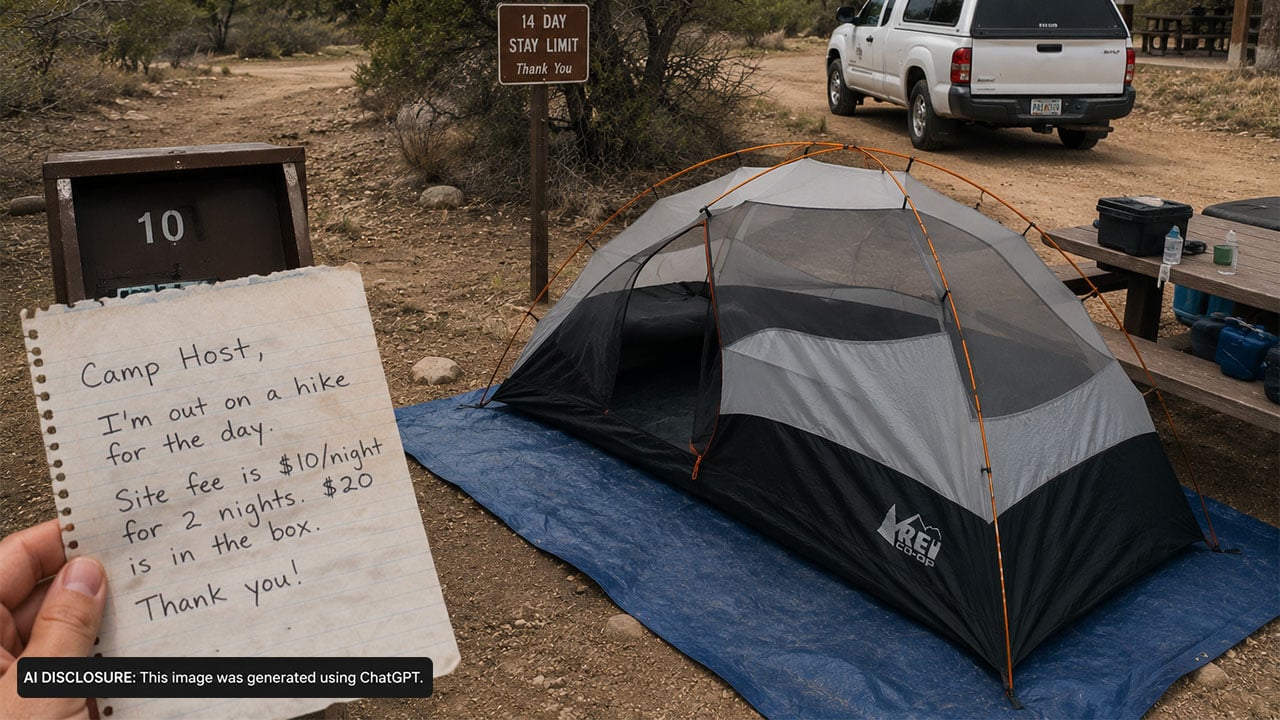
Photo credit: AI-generated image created using ChatGPT. Illustrative only
Most folks who camp public land try to do things the right way, even when the timing is off. One Texas camper says he rolled into an LCRA park near Marble Falls after hours, set up at Shaffer Bend, and left a note in the pay drop promising he’d run into town the next morning to pull cash and pay for two nights.
What happened next—described in the original post—is the kind of situation that makes outdoorsmen leery of handing gear to anybody. The camper says the park host demanded his tent as “collateral,” then the tent was suddenly gone when he returned with the money.
A late arrival, a note in the box, and a reserved site
According to the camper, he arrived after hours, drove in, and set up without being able to pay immediately. Instead of trying to slide by, he says he left a note for the host explaining he’d be running into town at daylight to withdraw cash and cover the stay.
In the morning he noticed the site was reserved for that day. So he did what most of us would do to avoid a headache: he packed up to clear the spot and prepared to head into town to get money. That’s when the simple “go pay and come back” plan turned into a mess.
A dead battery turned a quick errand into a confrontation
Right as he went to leave, he found his vehicle battery was dead. The new tenants for the reserved site arrived and helped troubleshoot, then called the camp host to ask if she had jumper cables.
The host eventually drove down, and while they waited for the battery to take a charge, the camper says she asked if he was part of the new group. He told her no and explained he was leaving to get cash. After the vehicle was running, he says she demanded he follow her back to her RV near the entrance.
That’s where the situation gets unusual. The camper says the host demanded he leave his tent with her as collateral. He says he complied—loading only the tent itself, not the flooring, anchors, or the rest of his setup—and then headed into town to get money.
Cash in hand, and the “collateral” is suddenly missing
About two hours later, the camper says he returned with cash. He knocked on the host’s RV door and paid her. He says she told him he could find the tent “on the side of the structure next to her RV.”
When he went looking, it wasn’t there. He knocked again and says she repeated the same directions. When he told her the tent was missing, he describes her response as calm: “Oh. Well, I guess someone took it.”
From an outdoorsman’s perspective, this is the point where your stomach sinks. A tent isn’t just fabric and poles when you’re living out of it—or planning to. The camper said the tent was roughly a $1,000 setup and that he had recently ended his lease intending to live on the road out of that tent.
Why the details matter: “abandoned” doesn’t fit the gear left behind
He immediately drove around the park asking if anyone had seen the tent. He says nobody he spoke with had seen it or noticed it sitting out at check-in.
He then contacted LCRA dispatch to request a ranger and also contacted the Burnet County Sheriff’s Office. He says law enforcement spoke with both of them separately. According to the camper, the host told officers that he had abandoned the tent and left it at the campsite, then changed her story and said it was left at the side of a building.
The camper’s point is one most seasoned campers will understand: people don’t typically “abandon” a quality tent while carefully packing the rest of the kit. He notes he had the flooring, anchors, and other parts with him—just not the tent body itself—because that’s what the host took. He also argues the timing doesn’t match the story of abandonment, since the incoming campers arrived to a packed vehicle and an otherwise cleared site.
What other outdoorsmen zero in on: documentation, authority, and the “collateral” trap
There aren’t commenter quotes included in the source material, but the questions the camper asks at the end tell you what people tend to focus on in situations like this: small claims court, whether the agency is responsible for the host’s actions, whether additional costs like hotel stays can be recovered, and what kind of case this becomes.
From a practical standpoint, the big issues are pretty plain. First, a camp host generally isn’t law enforcement, and “hand me your gear as collateral” should set off alarms for anyone who spends time on public land. The camper also says he later learned hosts aren’t allowed to do that and that she should have called rangers and had him fined if payment was the problem.
Second, gear handoffs are where stories go sideways. If you ever find yourself in a dispute over a fee, a reservation, or a rules issue, it’s usually safer to keep your property with you and sort the payment with the actual agency staff or law enforcement—especially when the “collateral” is the very thing you need to sleep under.
The hard reality: replacing gear is fast, but getting made whole is slow
The camper says he contacted LCRA the next day and spoke with a director, who allegedly told him there wasn’t anything they could do. That’s a tough answer to hear when you’re staring at the cost of a replacement shelter and possibly paying for a hotel on top of it.
He’s now weighing small claims court and asking whether LCRA is responsible for a host’s actions as an employee. He also asks whether the case could go to a jury and whether he can seek damages beyond the value of the tent, including hotel nights.
There’s the legal side—and then there’s the outdoorsman side. When your shelter disappears, you don’t just lose a piece of equipment. You lose your plan for the week, your ability to stay on the move, and sometimes your confidence that the next stop won’t bring another surprise.
The clean lesson here is simple: pay as soon as you can, document everything you do to pay, and don’t surrender expensive gear to “prove” you’ll come back. If a park needs enforcement, let the folks with badges handle enforcement. Your tent should stay with you.
Like The Avid Outdoorsman’s content? Be sure to follow us.
Here’s more from us: