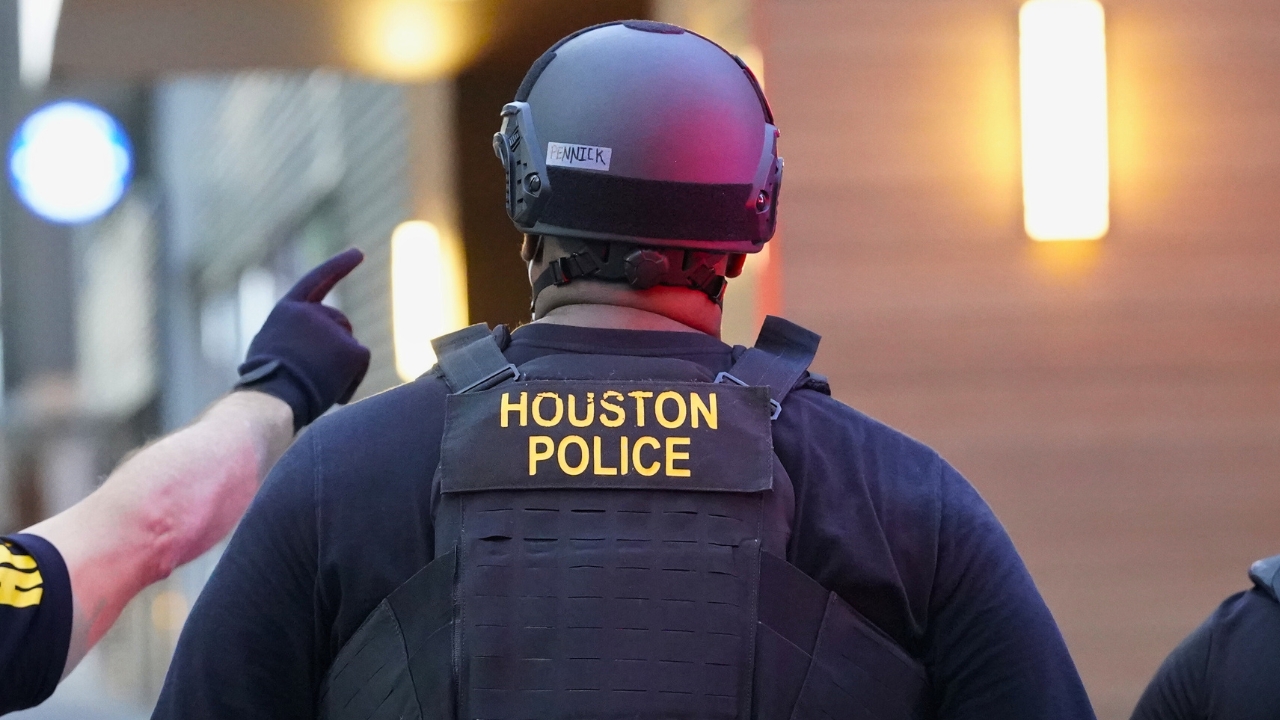
Photo credit: Grindstone Media Group/Shutterstock.com
Houston police have moved to phase out the Sig Sauer P320 as an approved duty weapon, a decision tied to a lawsuit from an officer who alleges his holstered pistol fired without a trigger pull. The Houston Chronicle reported the department’s decision to prohibit the model came after attorneys for Officer Richard Fernandez Jr. filed suit, alleging an unintentional discharge while he was directing traffic ahead of the Martin Luther King Jr. Day Parade in January 2025. The move puts one of the nation’s largest police departments into a growing list of agencies reevaluating the P320 amid ongoing litigation and claims of unintended discharges.
What Houston police cited in pulling the P320
The Houston Chronicle reported the department’s decision followed a lawsuit alleging Fernandez’s holstered P320 discharged without a trigger pull and that the incident sent a bullet through his calf and into his ankle. The suit, as described in the Chronicle and local reporting, centers on the claim that the pistol fired while holstered during a traffic-control assignment connected to a major public event, an allegation similar to claims raised in other P320 lawsuits nationally. Department decisions on duty weapons often weigh more than mechanical performance alone, because administrators also evaluate training implications, liability exposure, and the risk that disputed equipment can complicate prosecutions or civil defense if an incident occurs, and Houston’s action was framed in reporting as a response to a case in which the officer alleged the discharge occurred without his hands on the gun.
What the department’s change means for officers and procurement
Houston’s move was described in local reporting as a directive affecting roughly 1,200 officers and setting a deadline for transitioning away from the P320 by the end of September 2025, a timeline that signals an operational phase-out rather than an immediate emergency confiscation. In practice, that kind of schedule typically requires agencies to manage logistics beyond simply buying a replacement pistol, including holster compatibility, qualification schedules, armorer support, and the administrative process for approving specific models and configurations, and it can also create a ripple effect in officer-owned duty weapon programs where personnel may have purchased gear based on department approval lists. While the department’s internal procurement details were not fully laid out in the public reporting, the fact that the weapon was being removed from duty approval is the key operational point, because it changes what officers can carry under policy and can influence what models agencies consider for future contracts.
How Houston fits into the broader agency trend
The debate around the P320 has played out for years in court filings and media coverage, with Sig Sauer disputing claims of unintended discharge and plaintiffs alleging the gun can fire while holstered in specific circumstances. Stateline reported in March 2025 that multiple law enforcement agencies across several states had pulled the P320 from their arsenals due to concerns over misfires or unintentional discharges, a trend driven by a combination of reported incidents, lawsuits, and risk management decisions by city attorneys and command staff. That broader context matters because duty pistol choices are often conservative and liability-sensitive, and once a weapon becomes the center of recurring litigation, agencies may decide the simplest option is to move to a platform that avoids the controversy even if the agency has not documented a similar incident internally. Houston’s decision, as described by the Chronicle, is therefore likely to be read as both a response to a specific officer’s lawsuit and a signal that the department considers the legal and reputational risk significant enough to justify a change in approved equipment.
What gun owners should take from a department-level phase-out
Houston’s action does not by itself resolve the factual dispute at the center of the lawsuits, and it does not function as a product recall or an engineering determination; it is an agency policy decision made in a climate shaped by litigation and public scrutiny. For civilian owners, the most direct takeaway is that law enforcement agencies often make decisions based on risk tolerance and liability, and those factors can move faster than the courts. The same dynamic is evident in other jurisdictions considering replacements, where officials cite national reports, pending cases, and training complications as reasons to move away from the P320 despite the manufacturer’s position that the pistol is safe when properly handled. As the litigation continues, agency decisions like Houston’s are likely to remain a recurring part of the story because they show how allegations translate into policy changes even before final court outcomes, and they can influence market perception among buyers who track what police departments will and will not carry.
Like The Avid Outdoorsman’s content? Subscribe to our newsletter so you never miss an article.
Here’s more from us: