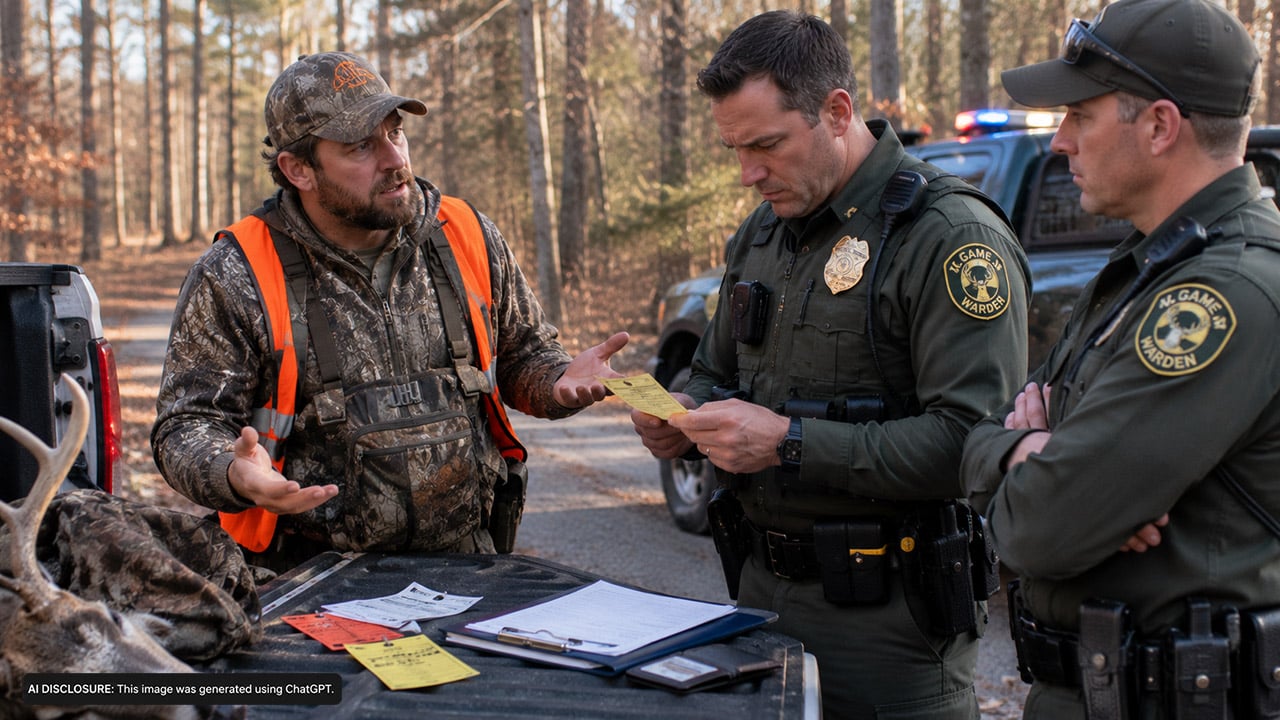
Photo credit: AI-generated image created using ChatGPT. Illustrative only
A new deer hunter thought he did everything right: bought his license, picked up an antlerless tag at a big-box counter, hunted his own ground, and tagged a doe before dropping it at the butcher. Then the game wardens showed up and told him the tag didn’t match his region—and now he’s looking at court over a mistake he says started at the register. The account was shared in the original post, and it’s the kind of scenario that makes every hunter’s stomach sink.
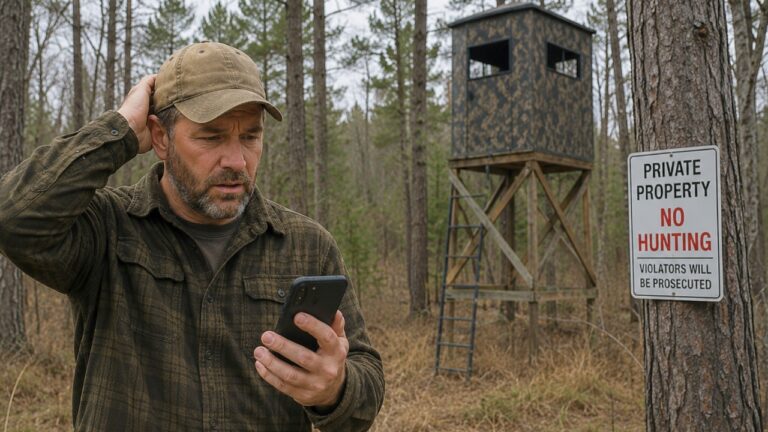
The hunter says the tag he received was for a region about two hours away. He didn’t notice at the time and used it on his home property, only to learn later that the paperwork didn’t line up with where the deer was taken.
The mistake happened at the point of sale
According to the hunter, he bought his hunting license and antlerless deer tag earlier in the year at Walmart. Instead of receiving a tag for his home region, he says the employee issued him a tag for a different region.
That detail matters because deer tags aren’t just “one-size-fits-all.” In many states, region, zone, unit, season dates, weapon type, and sex of animal are all tied to specific rules. One wrong box checked—or one wrong tag printed—can turn a legal deer into a problem fast.
He only hunted his own property, but the tag didn’t match
The hunter says he’s only hunted on his own property, and this was the first year he “seriously tried.” He harvested a doe, tagged it, and took it to a butcher—pretty normal routine for a lot of folks who don’t process their own deer.
That drop-off is often where things become more visible. When an animal changes hands, gets logged, or sits in a cooler where other people can see the paperwork, small errors don’t stay private for long. In this case, game wardens showed up afterward and told him the tag he used wasn’t valid for his region.
Game wardens visited, and court is now on the table
He says the wardens believed it was an honest mistake, but he was still told he had to go to court and enter a plea—guilty or not guilty. That’s the hard part for a lot of hunters to understand the first time they get tangled up in game law: intent and enforcement aren’t always the same thing.
Even if an officer thinks you didn’t mean to break a rule, the citation can still get written. After that, it’s in the court system, and the outcome can hinge on what’s provable, what the statute says, and what a judge is willing to do with a “paperwork violation” attached to a dead deer.
Why this turns into “poaching” in a hurry
Hunters hear the word “poaching” and think spotlighting, trespassing, shooting from the road—real bad behavior. But in the eyes of many game codes, “poaching” can also mean taking an animal outside the license privileges you actually held at that moment, even if you paid money and thought you were covered.
A mismatched region tag can look, on paper, like someone intentionally bought a cheaper or easier tag elsewhere and used it at home. That’s why these cases get treated seriously. From an enforcement standpoint, officers see that angle all the time, so an honest first-timer can get lumped into the same legal bucket as somebody gaming the system.
And while the hunter says the wardens thought it was a mistake, he’s still left facing the same basic decision: take the hit and pay a fine, or fight it and try to show the error wasn’t his doing.
The practical choices a hunter is staring down
The hunter asked whether he should plead guilty and accept a fine or plead not guilty and argue the tag issue wasn’t his fault. There’s no one perfect answer for every state and every judge, but there are some practical realities hunters should keep in mind.
Pleading guilty may feel like the fastest way to end the headache, but it can also lock in consequences beyond the fine—depending on how the violation is classified. Some states tie points, suspensions, or future license issues to certain offenses, even when the underlying event was a “wrong tag” scenario.
Pleading not guilty can create room to explain what happened, especially if there’s documentation showing you bought the tag in good faith and the region printed on it doesn’t match what you asked for. The tradeoff is time, stress, and potentially higher cost if you need legal help. But if the outcome affects your ability to hunt, that leverage matters.
The hunter also noted that he now works at a sporting goods store and understands how important it is to double-check tags—something he didn’t appreciate when he was trusting the counter person. That’s a lesson a lot of new hunters learn the hard way: the clerk isn’t the one paying the fine.
What other hunters tend to focus on in cases like this
Even without a pile of back-and-forth comments included, the pressure points are pretty predictable. When a tag is wrong, everyone immediately wants to know: Do you still have the receipt? Do you have the paperwork that shows what you intended to buy? Did the system print a region code you didn’t notice? Is there any record in the licensing system that shows what was issued and when?
Hunters also tend to focus on whether the person has a history. This hunter said he’s never shot a deer before and that his previous tags were correct for the region. That kind of “clean track record” isn’t a magic shield, but it can support the idea that this wasn’t someone trying to pull one over.
Another thing seasoned folks bring up is the butcher drop-off. If an animal is already processed or mixed in a cooler, it can complicate things. Not because a hunter did anything wrong by using a butcher, but because the chain of custody and documentation gets scrutinized.
At the end of the day, most outdoorsmen land in the same place: game laws are strict, and they’re written that way because too many people have tried to exploit gray areas. That doesn’t make it feel fair when you’re the one holding the bag for a bad printout.
There’s a tough lesson here for anyone buying tags at a counter: before you walk away, check the unit or region, season, and what the tag actually allows—right there in the store. It takes 30 seconds, and it can save you months of headaches later.
Like The Avid Outdoorsman’s content? Subscribe to our newsletter so you never miss an article.
Here’s more from us: