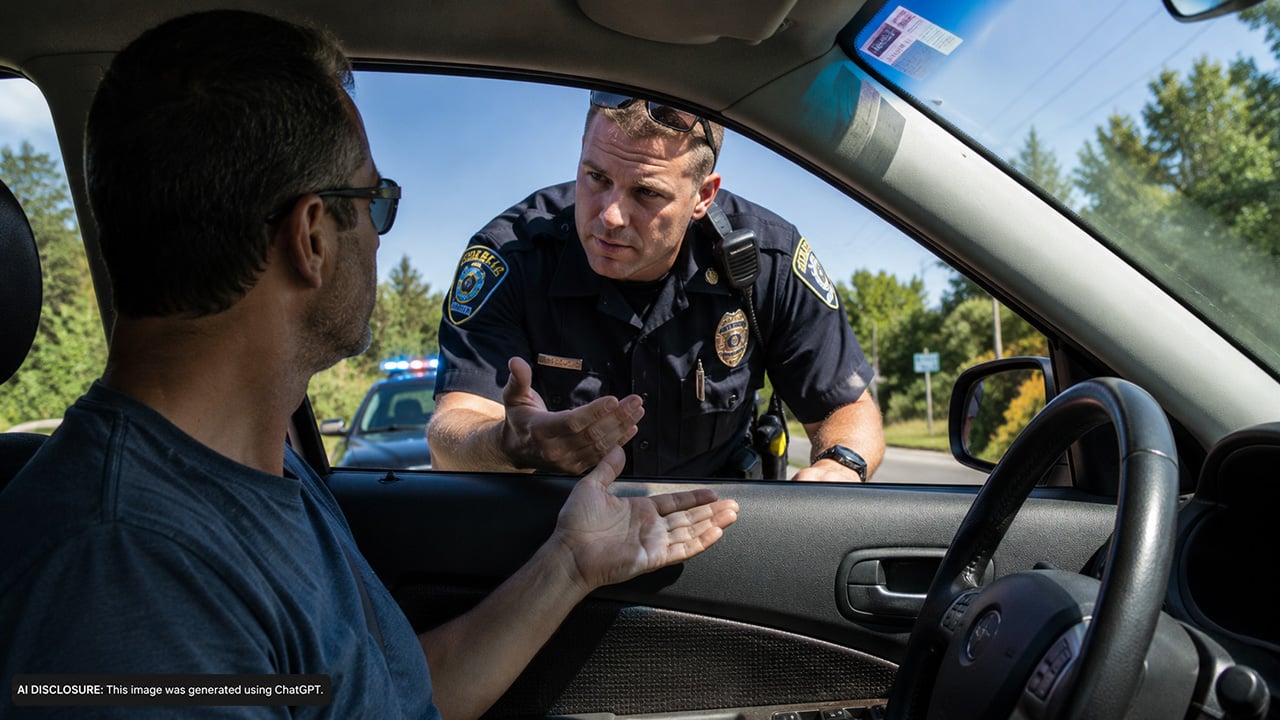
Photo credit: AI-generated image created using ChatGPT. Illustrative only
Traffic stops are already tense when you know you were wrong. Add a firearm to the mix—especially one stored in a glove box—and the whole thing can go sideways fast if either party gets sloppy. That’s why one Florida driver’s question after a recent stop is worth chewing on, even for folks who’ve carried for years.
In the original post, the driver said he was pulled over for speeding—90 mph in an HOV lane during HOV hours. He didn’t wait to get chased; he pulled onto the shoulder before the trooper even lit him up. When the trooper walked up, the driver did what a lot of gun owners think is the “safe play”: he disclosed that he had a legal, holstered firearm in the glove box before reaching for his documents.
How the stop unfolded, moment by moment
According to the driver, the trooper asked him to hand over the gun. The driver complied, and the trooper took the firearm back to the cruiser. There was no argument on the shoulder, no dramatic back-and-forth—just a request and compliance.
After running the stop, the trooper returned and issued a warning for the speeding/HOV issue but wrote a ticket for an outdated address on the driver’s license. Then the trooper returned the firearm without further trouble. From a pure “nobody got hurt and everyone went home” standpoint, it worked.
The real friction point: surrendering a legal gun without documentation
Here’s where the driver’s concern comes in. He complied in the moment, but afterward he wondered where the legal line actually sits in Florida. Could he have refused to hand it over if it was lawfully possessed and properly stored?
That question matters because handing a firearm to an officer—especially one that’s been in a glove box—adds handling steps at the worst possible time: roadside, traffic zipping by, nerves elevated, and people moving their hands around a car interior. Even when everybody means well, the more handling you introduce, the more chances you create for a negligent discharge, a dropped gun, or a misunderstanding about what someone’s reaching for.
The headline angle a lot of readers lock onto in situations like this is simple: if an officer takes your property, you want a paper trail. A “receipt” isn’t a magic word, but the instinct is sound—documentation protects everyone when something gets lost, damaged, or later disputed. In this case, the driver’s firearm was returned “no issue,” but the question lingers because not every stop ends that cleanly.
Why “officer safety” and “your rights” collide on the shoulder
Most gun owners understand the competing pressures. On one side, you’ve got a citizen who’s legally armed and doesn’t want to be treated like a criminal for it. On the other, you’ve got a trooper standing inches from a vehicle, alone, watching hands and trying to keep the situation predictable.
The driver even acknowledged the practical side of it: he figured that resisting—even if he were within his rights—could have earned him more tickets or a worse day. That’s the hard truth about roadside decisions. There’s “what you can argue,” and there’s “what keeps the temperature down right now.”
He also described the gun as being “securely encased per FL law” and kept in the glove box. That detail is important for outdoorsmen because it’s exactly how a lot of folks run errands: pistol secured in the vehicle, not on the belt. But a glove box gun creates a specific problem during a stop—your registration is often in that same compartment. If you and the officer aren’t communicating clearly, reaching for paperwork can look like reaching for a weapon.
The ticket that actually landed: an address issue
The driver didn’t walk away with a speeding ticket; he got a citation for an outdated address on his license. That’s a reminder a lot of hunters and anglers learn the annoying way: the small administrative stuff can be what gets you, even when the bigger event feels like the main issue.
Outdated address problems pop up at the worst times—traffic stops, checking into a new lease, buying a firearm, even dealing with a game warden when you’ve got a tag or license tied to your identity. It’s not exciting, but it’s one of those “keep your gear squared away” habits, like fresh batteries in your headlamp or a current spare tire.
And if you’re the kind of person who carries or keeps a pistol in the truck, keeping your ID clean matters even more. Any little discrepancy can change the tone of an encounter, even when the gun itself is legal.
What gun owners tend to focus on after a stop like this
The driver’s post wasn’t chest-thumping. It was the kind of after-action review most experienced outdoorsmen do in their head after any close call—on the road, in a boat, or in a treestand. “I did what I thought was right. What were my actual options?”
The big takeaways people usually chase in these situations are predictable: Do you have to volunteer that you’re armed? If you disclose, should you ever physically hand the gun over? If the officer insists on taking it temporarily, what’s the cleanest and safest way to make that transfer without anyone touching triggers or sweeping anyone? And if the gun goes into the cruiser, how do you make sure you get back the same gun, in the same condition, with the same magazines and ammo?
That last one is where the “receipt” mindset comes from. Plenty of lawful gun owners aren’t worried about getting their pistol back most of the time—they’re worried about the one time it comes back with a dinged sight, a missing mag, or a round chambered when it wasn’t before. Documentation helps keep everybody honest, even when nobody is trying to be dishonest.
A practical way to think about it next time
This Florida driver did several things right that are worth copying. He didn’t make the trooper chase him. He communicated before reaching. He kept the interaction calm. And he left with a warning for the big stuff, which is about as good as it gets when you’re doing 90 in the wrong lane at the wrong time.
The lingering question—whether he could have refused to surrender the gun—doesn’t have a one-size-fits-all feel on the side of the road, because the “best” decision is usually the one that keeps hands still, voices low, and movements predictable. If you’re carrying legally, the goal isn’t to “win” the traffic stop. It’s to get through it safely, with your rights intact and your gear accounted for.
And if you take anything from this, let it be this: keep your paperwork up to date, store your vehicle gun securely, and think through how you’ll handle that glove box moment before a trooper is standing at your window. In the outdoors, we plan ahead because conditions change fast. The roadside is no different.
Like The Avid Outdoorsman’s content? Subscribe to our newsletter so you never miss an article.
Here’s more from us: