Photo credit: Theavidoutdoorsman.com
He thought he’d done everything right. He booked a “private ranch” pheasant hunt months out, paid the premium price, and showed up with a well-trained dog, a couple boxes of the good shells, and the kind of expectations you only get when you’ve got serious money on the line.
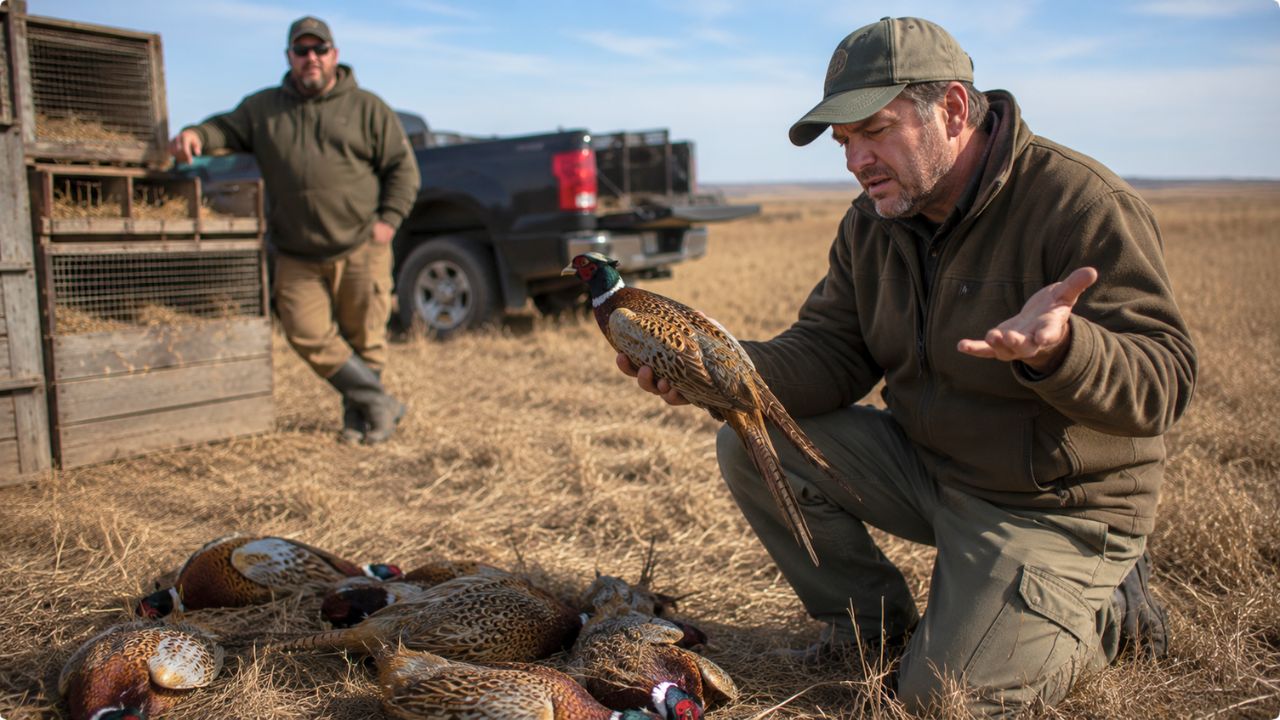
Instead of a quick safety brief and a walk into wild cover, he walked into a pen-and-release operation that looked like it had been slapped together the night before. Crates stacked by the barn. Feathers in the dirt. And birds that were already dead before a single shot was fired.
A high-dollar booking with low-dollar reality
The hunter reportedly paid around $9,000 for what was pitched as an all-inclusive ranch experience: lodging, guides, dogs if needed, and a pheasant hunt on “managed habitat.” The marketing leaned hard on words like “private,” “exclusive,” and “limited pressure.” That’s the language guys expect when they’re trying to avoid the crowded public areas and the occasional circus at a roadside game farm.
On arrival, the first red flag was how the day was structured. Instead of a plan based on wind and cover—where to push, where to post, how the dog would work—the staff were focused on timing a “release.” That’s when it clicked: the birds weren’t holding because they lived there. They were holding because they’d just been tossed out.
The birds were fresh out of crates—and it showed
Pen-raised pheasants have a look to them if you’ve been around a few. They flush late, fly heavy, and sometimes run like they’re confused about the whole program. There’s nothing “sporting” about watching a bird wobble up like a softball and glide into the nearest fence line.
What pushed this situation from disappointing to ugly was the condition of the birds. The hunter found multiple pheasants dead or dying in the grass near the release area—birds that likely overheated, got piled up in transport, or were handled rough. When you’re paying ranch money, you expect healthy birds, good cover, and a clean operation. Dead birds in the field before the hunt even starts is a bad sign, no matter what kind of hunt it is.
It also creates a practical problem for the hunter and the dog. A dog that’s trained to find birds and retrieve birds doesn’t understand the difference between a hunt and a clean-up job. Dead birds lying around can distract a dog, create bad habits, and introduce disease risk if the birds were sick or spoiled.
“Private ranch hunt” can mean a lot of things
Here’s the truth that a lot of folks learn the expensive way: a “private pheasant hunt” is not the same thing as a wild bird hunt. Plenty of ranches manage real habitat and have birds that carry over, nest, and act like pheasants are supposed to act. Other places are basically guided shooting preserves with a nicer website and a bigger invoice.
There’s nothing automatically wrong with a preserve-style hunt. If a guy is bringing kids, breaking in a young dog, or just wants a controlled day with a high chance of birds in the bag, a well-run preserve can be a good time. The problem is when the hunt is sold like a wild-bird experience and delivered like a rushed release with birds that shouldn’t have left the barn in the first place.
And that price tag matters. Nine grand isn’t “we’ll put out a few birds and see what happens” money. That’s “the operation is dialed, the guides are pros, the birds are strong, and you won’t feel cheated” money.
What the hunter could do right then, without turning it into a scene
In the moment, the best move is usually to slow things down. Walk back to the lodge or the office. Ask direct questions and get clear answers: How many birds were released today? When were they delivered? What’s the bird-source policy? What happens if birds are found dead before the hunt? And most important—what exactly was promised in writing?
If the ranch staff start dancing around it, that’s your answer. A reputable outfitter will explain their program without getting defensive. They’ll also have a plan when something goes wrong, whether that’s a rescheduled hunt, an adjusted bird count, or a refund that matches the reality on the ground.
Documenting the condition of the birds matters, too. A few photos of the crates, the dead birds, and the general setup can keep the conversation honest later. It’s not about “gotcha.” It’s about making sure the facts don’t change once money starts getting argued over.
Another smart move is to be careful about taking birds you didn’t shoot. On some operations it’s allowed; on others it can tangle up tagging rules, preserve regulations, or ranch policies. Nobody wants their bad hunt to turn into a mess with paperwork and phone calls.
Commenters zeroed in on money, ethics, and the line between hunting and shooting
Most hunters don’t mind paying for access. What they mind is paying for one thing and getting another. The biggest reaction in situations like this usually lands on transparency: if birds are released, say so. If the hunt is a preserve shoot with stocked birds, price it and market it that way. Let people choose.
The second point folks always hammer is animal welfare. Dead birds on site aren’t just “waste.” They signal sloppy transport, poor holding conditions, or staff that aren’t paying attention. It’s also the kind of thing that can draw the wrong attention from neighbors, local authorities, or anyone already suspicious of private shooting operations.
And then there’s the reputation damage. In the hunting world, word moves fast. A single group leaving angry can cost a place a season’s worth of bookings, especially when the complaint isn’t “we didn’t shoot enough,” but “the whole thing felt like a cash grab.”
How to avoid getting burned on a premium pheasant hunt
If you’re spending real money, ask real questions before you send a deposit. “Are birds wild, holdover, or stocked?” “Do you release birds the day of the hunt?” “What’s the minimum and typical bird count per hunter?” “What’s the refund policy if weather, dog issues, or bird health becomes a problem?” Get it in an email. A verbal promise is worth exactly what it costs when the day goes sideways.
Also, ask for specifics about cover and acreage. A quality operation will talk about food plots, shelterbelts, cattail sloughs, CRP-style grass, rotations, and how they rest fields. A weak operation will talk in circles about “lots of birds” and “great shooting.”
Finally, trust your gut when you arrive. If you see birds piled in small crates in the sun, waterers that look neglected, or staff who seem rushed and irritated, you’re not being picky—you’re noticing the same things that will shape your entire day.
Paying for a private hunt should buy you more than a gate code and a handshake. It should buy you professionalism, decent ethics, and an honest hunt—whatever style of hunt it is. When a premium price delivers dead birds and a last-minute release, it’s not just a disappointing weekend. It’s a reminder to get clear terms up front and to walk away when the operation in front of you doesn’t match what you paid for.
Like The Avid Outdoorsman’s content? Be sure to follow us.
Here’s more from us: